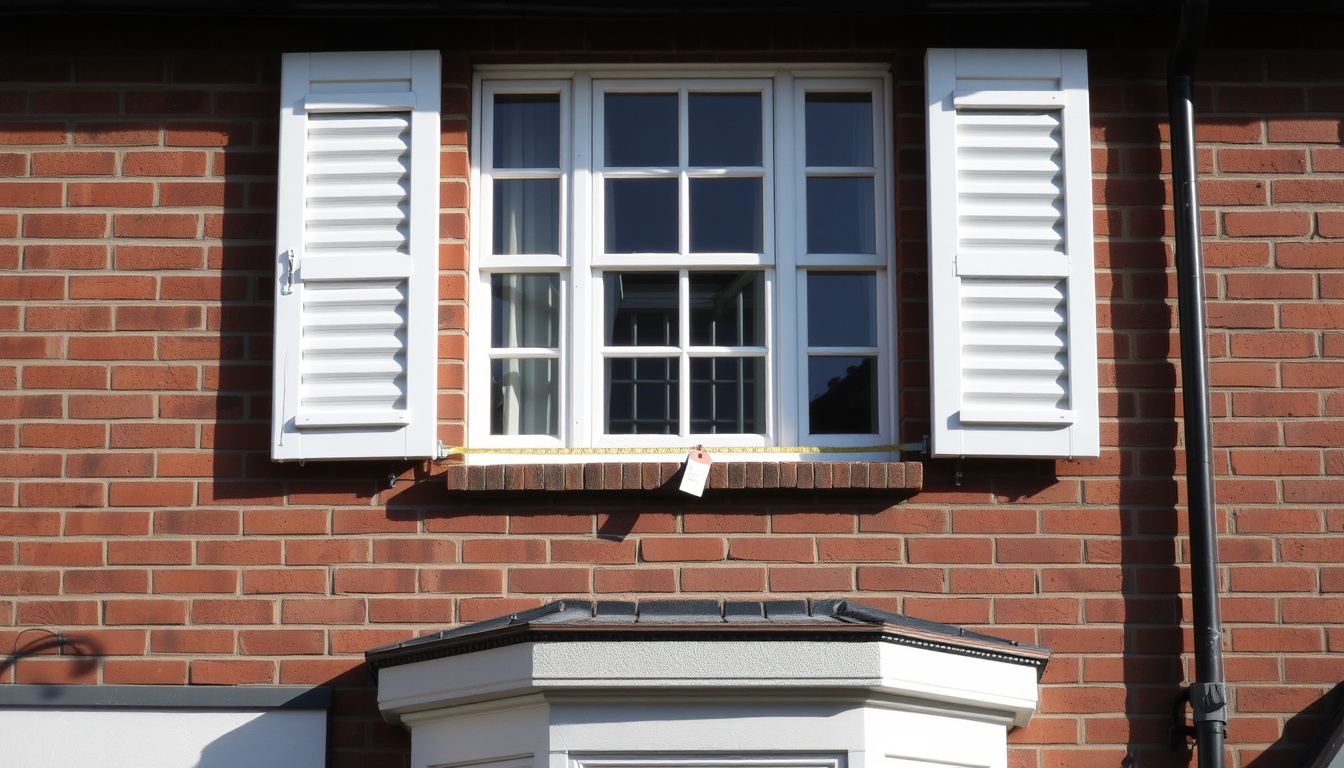
Window shutters are among the most durable window treatments available to UK homeowners, combining adjustable light control, privacy and a fixed architectural finish. They are also a significant purchase, with the final price depending on window size, material, panel configuration and whether professional fitting is included.
In the UK, shutters typically cost about £180–£1,200 per window supplied and fitted, with many standard installations around £450. Budget options can start near £200–£300 per m², while hardwood, shaped, bay and fully bespoke installations can exceed £1,000 per window. Because the price range is so wide, most buyers start by narrowing down the style, material and buying route that suit their home.
Shutter styles, material trade-offs, price ranges and measurement requirements vary widely, so most buyers weigh several options before placing an order.
What Types of Window Shutters Are Available?
Shutters are grouped by how much of the window they cover, how the panels move and what they are made from. The most common interior styles are full-height, café-style, tier-on-tier and solid-panel, with tracked and special-shaped versions used for less standard openings.
Interior, exterior, solid, shaped, full-height, café-style
Natural wood, faux wood (PVC/composite), aluminium
Size, material, made-to-measure versus standard, installation
Specialist online retailers, DIY stores, local showrooms
Key insights
- Made-to-measure shutters provide the best fit and finish but cost more than standard sizes.
- Faux wood is recommended for kitchens and bathrooms because it resists moisture.
- Wooden shutters offer a premium look but require more maintenance and can warp in humidity.
- Interior shutters are primarily for light control and privacy; exterior shutters protect against weather.
- Local specialists may offer a bespoke service but often have limited online ordering.
Key facts about window shutters
| Fact | Typical figure |
|---|---|
| Common materials | Hardwood, MDF, PVC, aluminium |
| Popular styles | Full-height, tier-on-tier, café-style |
| Made-to-measure price range | About £180–£1,200 per window supplied and fitted |
| Installation time | 1–3 hours per window (professional) |
| Expected lifespan | 15–20 years with proper care |
| Installation labour | £100–£200 per window |
Main shutter types
- Full-height: Covers the entire opening and offers strong privacy, light control and insulation. Suitable for most casement windows and living rooms.
- Café-style: Covers only the lower section, keeping the upper part open for daylight. Useful for street-facing ground-floor rooms, kitchens and lounges.
- Tier-on-tier: Separate upper and lower panels operate independently, which makes them particularly suitable for tall sash windows because the top can open while the bottom stays closed.
- Solid-panel: Uses solid panels rather than louvres, providing greater blackout and insulation but less adjustable daylight.
- Tracked or bi-fold shutters: Designed for wide openings, patio doors and bifold doors.
- Special-shaped shutters: Made for arches, angled windows, bays and other irregular openings; they require specialist templating and generally cost more.
- Perfect Fit or frame-mounted shutters: Attach to the window frame, often without drilling, and can suit tilt-and-turn windows, inward-opening windows and bifold doors.
Materials compared
| Material | Advantages | Limitations | Best suited to |
|---|---|---|---|
| Hardwood / real wood | Lightweight, attractive, premium finish and suitable for large windows | Usually most expensive; may require more care in damp conditions | Living rooms, bedrooms and large openings |
| Faux wood / PVC | Moisture-resistant, hardwearing, easy to clean and usually cheaper than hardwood | Heavier and may have a less natural appearance | Kitchens, bathrooms and busy households |
| MDF / composite | Affordable, stable and available in painted finishes | Less suitable for prolonged moisture exposure; can be heavier | Dry rooms and budget-conscious installations |
| Vinyl / ABS / waterproof composite | Resistant to water and low maintenance | Fewer premium finish options in some ranges | Bathrooms, kitchens and utility rooms |
| Aluminium-reinforced shutters | Adds strength to louvres and supports frequent use | Can cost more than basic PVC products | Wide panels and high-use areas |
Real wood is lighter and generally better for large windows, while faux wood or PVC is more moisture-resistant and often more affordable. Waterproof PVC or ABS is the safer choice for bathrooms, although product specifications should be checked carefully before ordering.
Where Can I Buy Window Shutters Near Me?
Buyers can choose between specialist online retailers, DIY stores, local showrooms and direct-to-consumer brands. The right route depends on the window type, the budget and whether a home survey is needed for an accurate fit.
Does B&Q sell window shutters?
B&Q is one of the DIY chains shoppers often associate with window shutters, and it appears in many UK local searches for the product. Availability and ranges differ between stores and online, so current stock should be checked directly before relying on it. For most made-to-measure projects, shoppers still end up comparing a DIY-store price with quotes from shutter specialists.
What is Window Shutters Direct?
“Window Shutters Direct” reflects the popularity of direct-to-consumer made-to-measure suppliers in the UK. These online businesses often sell without a local showroom, and the headline price can look attractive because surveys, delivery and fitting may be optional extras. Consumer guidance from Which? recommends checking exactly what a quote includes before ordering.
Should I buy from an online specialist or a local showroom?
Online specialists such as BlindsDirect and SwiftDirect offer made-to-measure ordering, free samples and fast delivery. Local firms such as Perfect Shutters bring showrooms and hands-on surveys but may offer limited online ordering. National retail options also exist; made-to-measure shutter ranges are available through stores such as Dunelm. Professional fitters often follow standards set by the British Blind and Shutter Association.
Check whether each quotation includes survey, manufacture, delivery, fitting, VAT, removal of existing blinds, warranty and adjustments. A low headline price can look different once the full installation package is added.
How Do I Choose the Right Window Shutters for My Home?
Start with the room and the window type. The material, panel style and mounting position all follow from those two decisions.
What are the best window shutters for bedrooms?
Bedrooms generally suit full-height shutters because they cover the whole opening and provide strong privacy and light control. For darker rooms, solid-panel shutters offer greater blackout but less adjustable daylight, while tight-fitting frames minimise light gaps around the edges.
How do I choose shutters for high moisture areas?
Faux wood, PVC and ABS are the practical choices for kitchens, bathrooms and utility rooms because they resist water and are easy to clean. Waterproof PVC or ABS is the safer option for bathrooms, although product specifications should be checked before ordering. MDF and composite are less suitable for prolonged moisture exposure and tend to be used in dry rooms.
What size window shutters do I need?
Made-to-measure panels provide the best fit, but the measurements have to be right. A condensed buying sequence looks like this:
- Identify the window type. Record whether each opening is casement, sash, tilt-and-turn, bay, arched, bifold or another configuration.
- Choose the mounting position. Inside-recess fitting looks integrated but requires adequate depth; outside-recess fitting can cover uneven reveals and reduce visible gaps.
- Check clearance. One retailer recommends at least 5 cm of recess depth where the shutter sits inside the opening, while handles and opening sashes must not hit the louvres.
- Measure every window separately. Even apparently identical windows can differ by several millimetres. Take multiple width and height measurements in millimetres and use the smallest measurement for a recess fit without rounding.
- Confirm frame and handle details. Handle projections, obstructions, sill shape and opening direction can determine whether a standard frame will work.
- Request a home survey for complex windows. Bays, arches, sloping heads and uneven openings should generally be templated by a professional.
- Compare quotes, order samples and check lead times. Check what the quote includes, compare colour and louvre size in the room, and allow several weeks for manufacture; some retailers advertise fitting from about three weeks.
A 2–3 mm measuring error can stop panels opening correctly or leave visible gaps. Inside-recess fittings need around 5 cm of depth, and projecting handles or opening sashes must clear the louvres before the order is placed.
For families planning a shared bedroom, the Bunk Bed – How to Choose the Right One for Your Family guide covers another practical buying decision for the same room.
How Much Do Window Shutters Cost in the UK?
Published UK prices are broad guide figures rather than fixed quotes. Size, material, louvre width, number of panels, frame type, window shape, access and regional labour rates can all materially change the final price.
Typical UK costs
| Project or product | Indicative 2025 UK cost |
|---|---|
| Wooden shutters | £200–£350 per window |
| Standard plantation shutters | Around £200–£300 per m² |
| Installation labour | £100–£200 per window |
| Typical supplied-and-fitted window | About £180–£1,200 |
| Typical single-window project | Around £450 |
| Hardwood or bespoke shutter | From roughly £700; premium designs can exceed £1,000 |
| Three-bedroom house, professionally installed | Approximately £2,500–£3,500 |
| Supply-only DIY orders | From around £180 per m² in some ranges |
These are broad guide prices rather than fixed quotes. Size, material, louvre width, number of panels, frame type, window shape, access and regional labour rates can materially change the final price.
Window and frame factors
- Window size: Larger areas require more material, stronger panels and sometimes additional divisions.
- Window shape: Bay, bow, arched and angled windows require templates and bespoke manufacturing.
- Material: Hardwood and premium finishes cost more than MDF, composite or PVC.
- Configuration: Tier-on-tier and tracked systems are more complex than simple full-height shutters.
- Frame choice: L-frame, Z-frame, inside-recess and outside-recess mounting affect both appearance and price.
- Louvre size: Smaller louvres provide more privacy; larger louvres admit more light and create a cleaner appearance.
Installation and service factors
- Installation conditions: Uneven walls, deep reveals, handles, radiators and inward-opening windows can increase labour.
- Location: London and other high-cost areas may have higher fitting rates.
- Guarantee and aftercare: Longer product and workmanship guarantees may be reflected in the price.
Installation labour typically runs to £100–£200 per window according to Checkatrade’s installer price guide. For a full project, a three-bedroom house professionally installed comes to approximately £2,500–£3,500, based on figures from MyBuilder’s shutters price guide.
Should I install shutters myself or use a professional?
DIY is most suitable when:
- The windows are standard rectangles.
- The buyer can measure accurately.
- The chosen system is designed for straightforward fitting.
- The recess is square, unobstructed and deep enough.
- The order includes clear fitting instructions.
Detailed installation instructions are available from This Old House’s shutter installation guide, which walks through the basic fitting sequence for standard windows.
DIY can reduce the overall cost by roughly 40% in some cases, while supply-only prices can begin around £180 per m². However, a measuring or fitting error can be costly because made-to-measure shutters may be difficult to return or modify.
Professional fitting is preferable when:
- The window is a bay, arch, sash or irregular shape.
- Walls or reveals are uneven.
- Windows open inward or have projecting handles.
- Several panels must align across a wide opening.
- The shutters are hardwood, heavy or unusually large.
- The product warranty depends on professional installation.
Made-to-measure shutters can be difficult to return or modify, so a measuring or fitting error can be expensive. Standard-size panels on simple rectangular windows are the safer DIY projects; complex openings are best left to professional fitters.
How Long Does It Take to Get Window Shutters Made and Fitted?
Made-to-measure shutters are not an off-the-shelf product. The process runs from measurement to installation in a fairly predictable sequence.
- Survey or self-measurement. For complex windows, a professional template is recommended before the order is placed.
- Order confirmation and manufacture. Made-to-measure panels commonly take several weeks to produce after the survey is approved.
- Lead time to fitting. Some retailers advertise fitting from approximately three weeks after the survey.
- Installation day. Professional fitting typically takes 1–3 hours per window.
- Ongoing use. With proper care, shutters can last 15–20 years.
What Do We Know and What Remains Uncertain About Window Shutters?
Some claims about shutters are well established, while others depend on installation quality, usage and local market conditions.
| Established information | Information that remains unclear |
|---|---|
| Wooden shutters can warp in high humidity; faux wood is more stable. | Exact cost comparisons require personalised quotes; published prices vary by location and promotion. |
| Made-to-measure shutters offer better light sealing than standard sizes. | Long-term durability differences between premium and budget materials depend on usage conditions. |
| Shutters can improve home insulation when fitted correctly. | — |
What Should I Consider Before Buying Window Shutters?
The first decision is interior versus exterior. Interior shutters are primarily for light control and privacy, while exterior shutters protect against weather and need weather-resistant materials. In some areas, exterior shutters may also require planning permission.
Room function should guide material choice. Bedrooms benefit from room-darkening options, while kitchens and bathrooms need moisture-resistant surfaces. Natural wood looks elegant but is high maintenance; faux wood is cheaper and easier to care for; aluminium adds durability for exterior or high-use positions.
Two wider considerations are insulation and sustainability. Shutters can improve home insulation when fitted correctly, a benefit also highlighted in guidance on window coverings from the U.S. Department of Energy. For buyers choosing real wood, Forest Stewardship Council certification confirms the timber comes from responsibly managed sources.
What Do Shutter Specialists and Industry Guides Say?
Suppliers and specialist blogs consistently emphasise material choice and installation quality as the two biggest decisions.
“We offer quality shutters made from both ethically sourced natural wood, and faux wood which is a better choice for moisture rich spaces including kitchens.”
BlindsDirect.co.uk
“Window shutters come in various shapes, sizes, and materials.”
Shuttercraft.co.uk blog
“Trusted Window Shutters Specialist. Over 30 years experience.”
PerfectShutters.co.uk
What Is the Best Way to Choose Window Shutters?
Start with the window type and the room it serves, choose a material that suits the environment, then measure carefully or commission a survey before comparing quotes that include fitting and warranty. Motorized controls and more energy-efficient materials are becoming more common across UK ranges, and the same like-for-like comparison applies to every option. Homeowners finishing a room often pair shutters with wall decor, so the Picture Rail – Complete Guide to Types, Materials, and Kits is a useful companion for that part of the project.
What Else Do Buyers Ask About Window Shutters?
Are window shutters in style for 2025?
Yes, shutters remain a popular window treatment due to their timeless look, durability and light control. Modern designs include clean lines and neutral colours.
How do I clean window shutters?
Dust regularly with a microfiber cloth or duster. For deeper cleaning, use a damp cloth with mild soap; avoid excessive moisture on wooden shutters.
Can I install window shutters myself?
Yes, if you buy standard sizes and have basic DIY skills. Made-to-measure shutters often require professional fitting to avoid voiding warranties.
Do window shutters block out light completely?
Most shutters allow some light through the slats. For blackout, choose shutters with tight-fitting frames and minimal louvre gaps, or add a blackout lining.
What is the difference between shutters and blinds?
Shutters are rigid, fixed to the window frame, and offer better insulation and durability. Blinds are flexible and usually less expensive but less durable.

Oliver Arthur Morgan Harrison is a staff writer for StoryShift.uk, covering UK news, culture, politics and technology. He works under Editor-in-Chief Maarika Tamm and UK Managing Editor Oliver Grant, following the newsroom standards for sourcing, verification and fact-checking set out in our editorial policies.