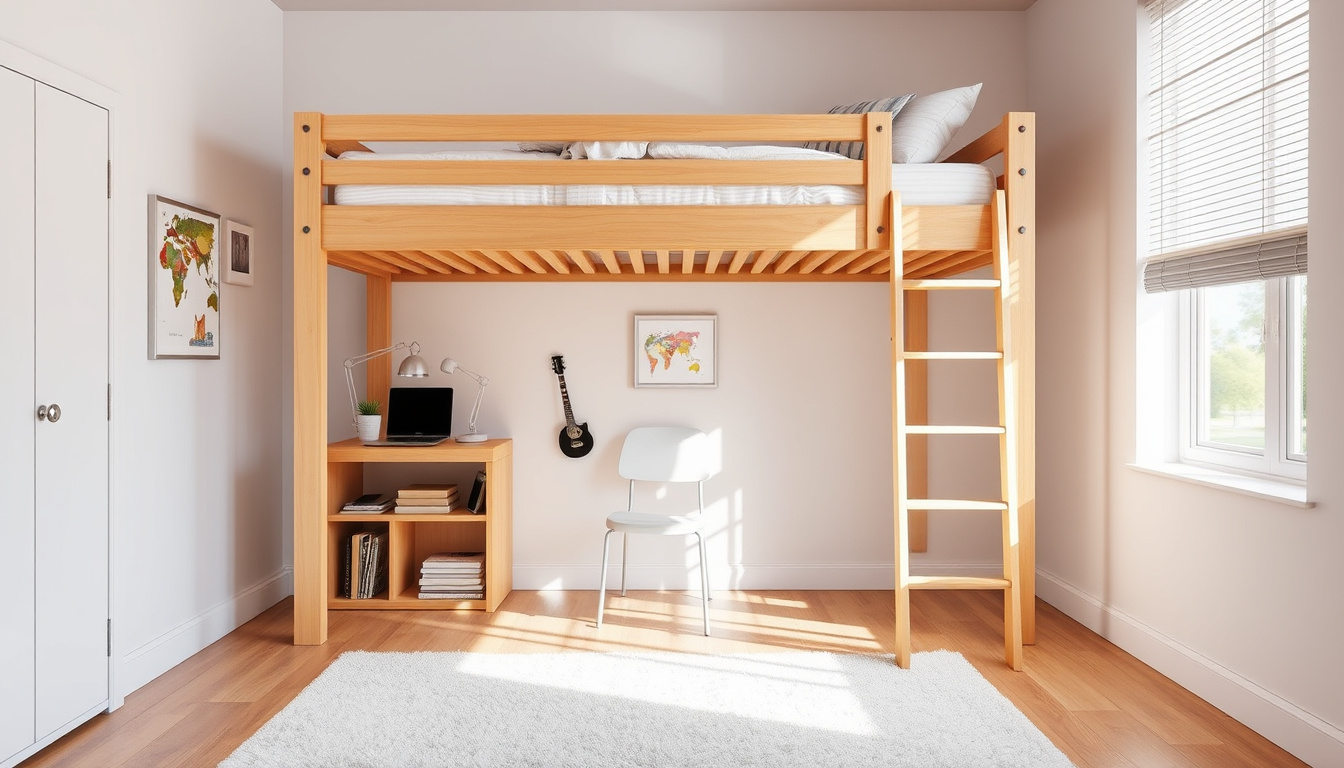
Loft beds, known as high sleepers in the UK, offer a practical solution for maximising floor space in small bedrooms. Suitable for adults, teenagers, and children aged six and above, these elevated sleeping frames come with varying weight limits, safety features, and configurations. This guide provides a fact-based overview of the best loft beds for different users, the key features to consider, and how to choose a safe model for your home.
Whether you are looking for a loft bed with a desk for a teenager, a heavy-duty frame for an adult, or a space-saving option for a child’s room, understanding the differences in weight capacity, construction materials, and safety standards is essential. The UK market offers a wide range of options, from budget-friendly IKEA frames to custom solid hardwood designs.
This article draws on manufacturer specifications, UK safety standards, and expert recommendations to help you make an informed decision. No speculation is included; all information is based on verified sources.
What Are the Best Loft Beds for Adults?
Adult loft beds require higher weight capacities and often longer bed bases. The following overview covers the main types, key features, safety considerations, and price ranges for adult buyers.
| Types | Key Features | Safety | Price Range |
|---|---|---|---|
| High sleeper, mid sleeper, cabin bed, adult loft bed | Built-in desk, wardrobe, shelves, sofa underneath | Weight limit, guard rails, ladder type, anchoring | From £200 (budget IKEA) to £1,500+ (custom solid wood) |
Key Insights for Adult Loft Bed Buyers
- Loft beds maximise floor space by raising the sleeping area, ideal for small bedrooms.
- Adult loft beds require higher weight capacity (typically 200–300 kg) and often longer bed base (200 cm).
- Integrated desks and storage make loft beds a popular choice for teens and homework areas.
- Safety certifications (BS EN 747) ensure guardrail height and ladder strength for children.
- IKEA loft beds are affordable but may have lower weight limits than specialist brands.
Quick Facts: Loft Bed Specifications
| Fact | Detail |
|---|---|
| Standard mattress size (UK single) | 90×190 cm; adult versions often require 90×200 cm |
| Typical weight limit (kids) | 100–150 kg |
| Typical weight limit (adults) | 200–300 kg |
| Guard rail height standard (UK) | At least 160 mm above mattress surface |
| Minimum ceiling height recommended | 2200 mm to allow sitting up on bed |
| Assembly time | 1–3 hours depending on complexity |
| Warranty | Usually 1–10 years; IKEA offers 10 years on some frames |
Are Loft Beds with Desks or Storage Good for Small Rooms?
Loft beds that incorporate desks and storage are particularly effective in small bedrooms, as they combine sleeping, studying, and storage into a single footprint. The following subsections address common questions about these multi-functional designs.
Do Loft Beds Come with Wardrobes or Storage?
Many loft beds include built-in wardrobes, underbed drawers, and shelving. According to product manuals, wardrobe shelves typically support up to 10 kg each, and combined storage for children’s belongings can reach up to 50 kg, as noted by Roomix. These features make high sleepers a practical choice for maximising limited space.
What Are the Best Loft Beds with Built-in Desks?
Desk-equipped loft beds are ideal for teenagers who need a study area. The desk surface typically supports around 15 kg, enough for a laptop or PC, according to manufacturer specifications. Brands like Room to Grow and Little Folks Furniture offer models with integrated desks and storage.
Can You Put a Sofa Under a Loft Bed?
Some loft beds are designed to accommodate a sofa or seating area underneath, but this depends on the bed’s height and clearance. For a standard loft bed, the space beneath is usually around 33–36 inches, which can fit a low sofa or bean bags. Taller adults may need at least 40 inches of clearance to sit comfortably, as recommended by TalkBeds.
How Much Space Is Needed Under a Loft Bed?
A loft bed with a desk requires approximately 28 square feet of floor space, as reported by Mattress Nut. This footprint allows for a comfortable desk and chair setup. For storage-only configurations, the space requirement may be slightly less.
When measuring your room, include the bed’s total footprint (including ladder and any protruding drawers). A loft bed with a desk works best in rooms that are at least 2.4 metres wide and 2.4 metres long.
Loft Bed vs Bunk Bed: What’s the Difference and Which Is Right for You?
Understanding the distinction between loft beds and bunk beds is crucial for making the right purchase. Although both are elevated sleeping solutions, they serve different purposes.
What Is the Difference Between a Loft Bed and a Bunk Bed?
A bunk bed consists of two or more sleeping platforms stacked vertically, providing multiple beds in a single footprint. A loft bed, by contrast, has only one elevated sleeping area, with the space underneath left open for other uses such as a desk, storage, or seating. This makes loft beds more suitable for single-child rooms or adult spaces where a second bed is not needed.
Are Loft Beds Safer Than Bunk Beds?
Both types of beds carry similar safety considerations, including guardrail requirements and fall risks. However, loft beds are generally considered safer for younger children because there is no risk of a person falling from a top bunk onto a lower occupant. The CPSC advises that children under six should not sleep in beds raised more than 30 inches, and loft beds typically meet this guideline when used for children aged six and older.
Which Is Better for a Single Child: Loft Bed or Bunk Bed?
For a single child, a loft bed is often the better choice because it frees up floor space for play, study, or storage. Bunk beds are more appropriate when two children share a room. Many UK retailers, such as Cosybunks, offer high sleeper loft beds specifically designed for children aged six and above.
A common misconception is that loft beds and bunk beds are the same. In reality, bunk beds have two sleeping levels; loft beds have only one elevated sleeping area. This distinction affects weight limits, safety, and room layout.
How to Choose a Safe Loft Bed: Weight Limits, Assembly, and Anchoring
Safety is the foremost consideration when purchasing a loft bed, especially for children. The following subsections cover the key safety factors based on UK standards and manufacturer guidelines.
How Much Weight Can a Loft Bed Hold?
Weight limits vary significantly by user group and construction. For children aged 6–12, typical weight limits are 68–90 kg (150–200 lbs), according to Cool Kids Bed. Teenagers can expect limits of 113–181 kg (250–400 lbs). Adult loft beds, especially heavy-duty steel or solid wood models, can hold 136–272 kg (300–600 lbs), with some specialised industrial models rated up to 907 kg (2,000 lbs), as reported by AdultBunkBeds. Always check the specific model’s rating; most UK high sleepers are weight-tested for children only (80–100 kg).
Are IKEA Loft Beds Safe for Children?
IKEA loft beds, such as the Nebbis and Vita models, are designed for children aged six and above. They meet UK safety standards and typically have weight limits of 68–90 kg. However, IKEA’s UK loft bed selection is limited; many models are discontinued or rebranded. It is advisable to check the current IKEA website for available high sleeper options.
How to Assemble a Loft Bed Safely
Assembly time for a loft bed ranges from one to three hours. Critical steps include following the manufacturer’s instructions, using the correct tools, and ensuring all bolts are tightened. For metal frames, avoid over-tightening to prevent stripping. Many retailers offer professional assembly services for an additional fee.
Do Loft Beds Need to Be Anchored to the Wall?
Yes, wall anchoring is recommended to prevent tipping, especially for children’s loft beds. The Roomix guide advises anchoring the bed to a wall stud using the provided brackets. This is a standard safety measure for all elevated beds.
What Safety Features Should I Look for in a Loft Bed?
- Full-perimeter guardrails that extend at least 5 inches above the mattress surface.
- Angled ladder or staircase for safer climbing.
- Solid wood or steel construction (avoid particleboard with cam-locks).
- Weight capacity that exceeds the user plus mattress and bedding.
- Compliance with BS EN 747-1:2019, the UK safety standard for bunk beds and high beds.
Loft beds are not suitable for children under the age of six. The CPSC and UK manufacturers recommend that only children aged six and older use elevated beds due to fall risks and balance concerns.
How Have Loft Beds Evolved Over Time?
The loft bed has transformed from a simple storage solution into a multi-functional piece of furniture. The following timeline highlights key milestones in its development.
- 1990s: IKEA popularises loft beds with designs like Stora, bringing the concept to mainstream consumers.
- 2000s: Rise of high sleeper beds with desk combos for children, driven by the need for study areas in small bedrooms.
- 2010s: Adult loft beds gain traction in small city apartments as urban living spaces shrink.
- 2020s: Focus on heavy-duty, custom-designed loft beds for home offices and micro-living, with weight capacities exceeding 200 kg.
Common Misconceptions About Loft Beds: What’s Certain and What’s Unclear?
Several misconceptions surround loft beds. The table below separates established facts from areas that remain uncertain or require individual verification.
| Established Information | Information That Remains Unclear |
|---|---|
| Loft beds free up floor space; safety rails are required for children; weight limits vary by manufacturer. | Exact weight limits for all brands (users should check product specs); whether a loft bed can fit a specific ceiling height (measure before buying). |
| Loft beds and bunk beds are different: bunk beds have two sleeping levels; loft beds have only one elevated sleeping area. | Whether a loft bed can accommodate a particular mattress thickness (manufacturer guidelines should be consulted). |
| All loft beds are not designed exclusively for kids; many brands now offer adult versions. | Long-term durability of budget models vs premium models (depends on usage and materials). |
Why Are Loft Beds Becoming More Popular in the UK?
In the UK, the average bedroom size is shrinking, with many rooms measuring between 9 and 12 square metres. This makes loft beds a practical space-saving solution. With more adults working from home, loft beds that incorporate desks and storage are increasingly marketed to adults. Retailers are expanding their ranges to include heavy-duty metal frames and larger mattress sizes. Consumer reviews frequently highlight ease of assembly and sturdiness as key differentiators when choosing a model.
The growth of micro-living and the trend toward dual-purpose rooms have further driven demand. Loft beds allow a single room to function as both a bedroom and a home office, without sacrificing floor space for furniture.
Where to Find Reliable Information on Loft Bed Safety and Standards?
Official safety standards provide the most authoritative guidance. The BS EN 747-1:2019 standard outlines safety requirements for bunk beds and high beds, including guardrail height and ladder specifications. Manufacturers’ product pages and user manuals also contain essential information on weight limits, assembly, and anchoring.
“BS EN 747-1:2019 – Furniture – Bunk beds and high beds – Safety requirements” – British Standards Institution
Source: BSI Shop
Consumer reviews on platforms like Trustpilot can provide real-world feedback on sturdiness and ease of assembly. The British Furniture Confederation also offers quality standards information for furniture buyers.
What’s Next: Your Loft Bed Buying Checklist
Before purchasing a loft bed, measure your room dimensions and ceiling height, decide on the primary use (sleeping, studying, or storage), choose between desk, storage, or open under-bed areas, check the weight limit and required mattress size, compare prices across UK retailers, and read assembly guides or consider professional assembly. For further reading on space-saving furniture, see Stool Bar – Ultimate UK Buying Guide 2025 and Capsule hotels in Britain: efficient innovation or cramped compromise?.
Frequently Asked Questions About Loft Beds
What is the best loft bed for a small room?
For small rooms, a loft bed with a built-in desk or storage maximises floor space. Brands like Room to Grow and EzSpace offer compact high sleeper designs suitable for rooms as small as 9 square metres.
Can loft beds be used by adults?
Yes, many loft beds are designed for adults. Look for models with a weight capacity of at least 200 kg and a mattress length of 200 cm. Heavy-duty steel frames from brands like Zinus or AdultBunkBeds are popular choices.
Do I need a special mattress for a loft bed?
Most loft beds use standard UK single (90×190 cm) or double (135×190 cm) mattresses. Adult versions may require 90×200 cm. Check the bed’s specifications for maximum mattress thickness, typically 15–20 cm.
How do I assemble a loft bed?
Assembly usually takes 1–3 hours. Follow the manufacturer’s instructions, use the correct tools, and tighten all bolts. It is advisable to have a second person assist with lifting and alignment.
Are loft beds easy to take apart and move?
Most loft beds can be disassembled and reassembled, but the process can be time-consuming. Metal frames are generally easier to dismantle than solid wood models. Keep all hardware and instructions for future moves.
What is the difference between a high sleeper and a mid sleeper loft bed?
A high sleeper has a raised sleeping area with enough clearance underneath for a desk or wardrobe. A mid sleeper is lower, with a smaller gap underneath, typically used for storage or low seating. High sleepers are more common for older children and adults.
How much weight can an IKEA loft bed hold?
IKEA loft beds for children typically have a weight limit of 68–90 kg (150–200 lbs). Check the specific product page for exact limits, as older models may vary.
Do loft beds require wall anchoring?
Yes, wall anchoring is recommended to prevent tipping, especially for children’s loft beds. Use the provided brackets and attach to a wall stud.
Can you put a desk under a loft bed?
Yes, many loft beds are designed with a desk underneath. The desk surface typically supports up to 15 kg. Ensure the bed height allows comfortable seating—at least 33–36 inches of clearance.
What are the safety standards for loft beds in the UK?
The primary standard is BS EN 747-1:2019, which covers guardrail height, ladder strength, and structural integrity. Always check that the bed complies with this standard before purchase.

Oliver Arthur Morgan Harrison is a staff writer for StoryShift.uk, covering UK news, culture, politics and technology. He works under Editor-in-Chief Maarika Tamm and UK Managing Editor Oliver Grant, following the newsroom standards for sourcing, verification and fact-checking set out in our editorial policies.