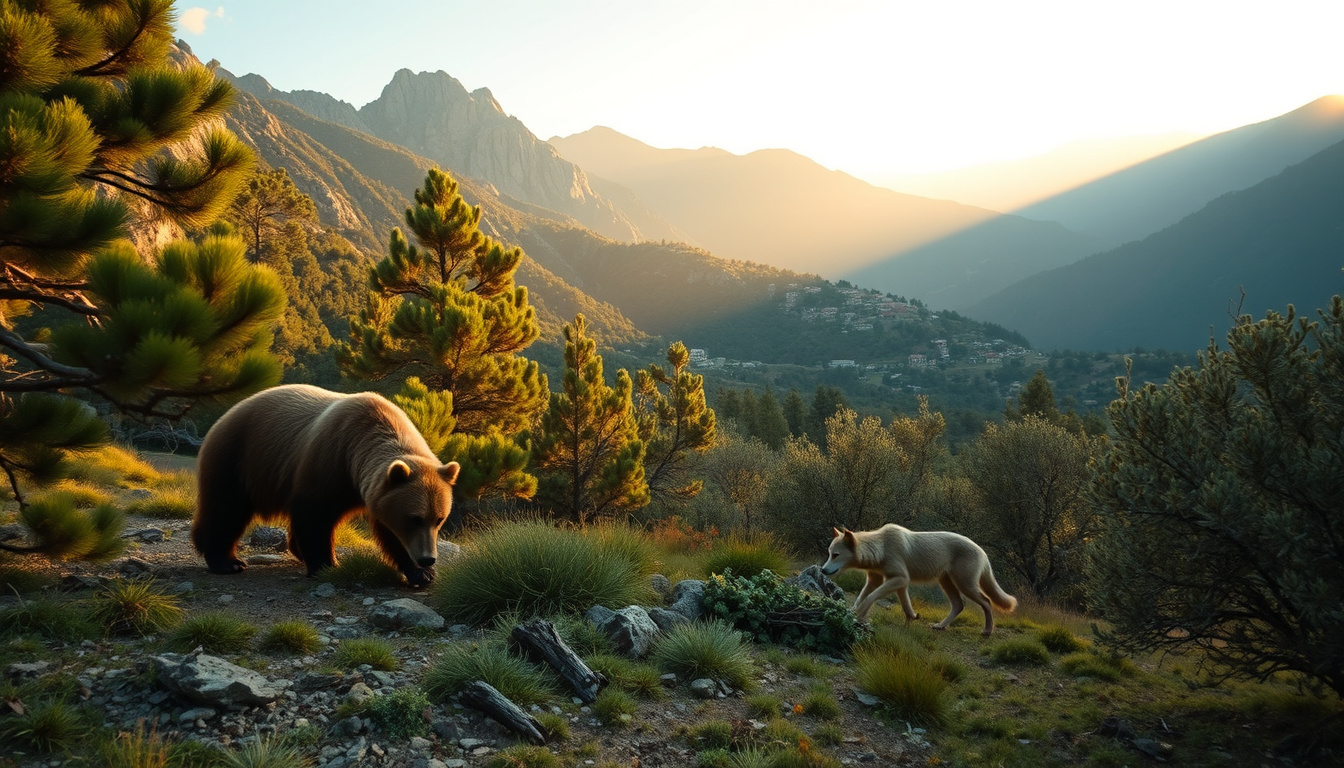
Greece’s large predators, particularly brown bears and wolves, are staging a remarkable comeback after decades of decline. Brown bear populations have grown nearly fourfold since the 1990s, with surveys estimating approximately 870 individuals now roaming northern Greece. Wolves have expanded their range from central regions into southern areas, including the Peloponnese. This wildlife recovery represents a significant conservation achievement, yet it has sparked growing tensions in rural communities where encounters with predators have increased.
What Is Greece’s Large Predator Comeback?
The revival of Greece’s large predators reflects decades of conservation work and protected-species legislation. However, the surge in predator numbers has brought them into closer contact with rural populations, resulting in livestock attacks, crop damage, and occasional human injuries.
- Protected-species laws banning hunting have been the primary driver of predator population recovery
- Human-wildlife conflicts have risen proportionally with increasing predator numbers
- Wild boar population growth has contributed to predator expansion by providing additional food sources
- Habitat changes including wildfires and drought have pushed predators closer to human settlements
- EU policy shifts on wolf protections may influence future management approaches
- Tourism impact remains limited due to the remote nature of most encounter areas
- Scientists advocate for non-lethal coexistence measures rather than predator removal
| Predator | Estimated Population | Change Since 1990s | Primary Conflict Issues |
|---|---|---|---|
| Brown Bear | ~870 in northern Greece | Fourfold increase | Livestock attacks, human injuries |
| Wolf | Unspecified count | Range expanded southward | Livestock predation, human encounters |
| Wild Boar | Population surge noted | Significant increase | Crop damage, attracting predators |
| Fox | Common sightings reported | Frequently observed | Minor livestock concerns |
Are There Bears in Greece?
Brown bears remain Greece’s largest predator and are thriving after decades of protective measures. According to surveys conducted by Arcturos, a conservation organization operating bear and wolf sanctuaries since 1992, the brown bear population has grown to approximately 870 individuals concentrated in northern Greece. This represents a nearly fourfold increase from population levels recorded in the 1990s.
The recovery has brought challenges alongside its conservation success. Reports from northwestern Greece describe encounters in rural areas including Levea and Valtonera, where residents have witnessed attacks on livestock and, in some cases, on people. One documented case involved a farmer whose three sheep were mauled by a bear, with paw prints confirming the predator’s involvement. Elderly residents have been injured in their own yards, and hikers have faced dangerous encounters, including one fatality that occurred after a bear attack drove a person down a ravine.
Human Injuries and Attack Patterns
Documented human injuries include a child bitten by a wolf, an elderly man hurt by a bear in his yard, and two hikers attacked by bears. The fatalities remain rare, but the frequency of close encounters has changed daily life for many rural Greeks. Local leaders have noted that residents increasingly avoid nighttime walks and report constant vigilance when working in fields.
Scientists recommend practical precautions for residents in predator-prone areas: installing motion-activated lights around properties, securing trash and food waste, properly disposing of livestock carcasses, and avoiding solitary walks during dawn or dusk hours when large predators are most active.
What Animals Live in Greece’s Wildlife?
Greece supports a diverse array of wildlife species, ranging from marine turtles nesting on Mediterranean beaches to snakes and lizards inhabiting its rocky landscapes. The country encompasses multiple ecosystems, from mountain forests in the north to coastal wetlands and island scrubland, each supporting distinct animal communities.
Beyond large predators, Greece’s fauna includes numerous species that residents encounter regularly. Wild boars have become particularly problematic, causing extensive damage to crops, digging through farmland, and even entering residential areas. The surge in boar populations, driven by reduced hunting and milder winters, has created additional attractants that draw wolves and bears closer to human settlements.
Reptiles and Other Fauna
Greece hosts several snake species, including both venomous and non-venomous varieties. Lizards are common throughout the country, particularly in rocky areas and Mediterranean scrubland. Sea turtles, particularly the loggerhead turtle, nest on Greek beaches, and conservation programs have worked to protect nesting sites from development and human disturbance.
Lions and Other Predators in Greece?
Greece does not have wild lions today, though historical records indicate that the region once supported large carnivores. The absence of lions is a result of centuries of human activity, habitat loss, and hunting that eliminated these animals from European landscapes long ago. Brown bears and wolves represent the current apex predators in the Greek ecosystem.
Wolves, once primarily confined to central Greece, have dramatically expanded their range in recent decades. They have moved southward into regions including the Peloponnese, establishing populations in areas where they were previously absent. This expansion has been supported by abundant prey, particularly the thriving wild boar population that has benefited from reduced hunting pressure, warmer winters, and interbreeding with domestic pigs.
Comparing Large Carnivores in Greece
Brown bears and wolves occupy different ecological niches in Greece. Bears are primarily solitary omnivores that prefer forested mountain habitats, while wolves are pack-hunting carnivores capable of traveling longer distances and adapting to varied terrain. Both species face similar pressures from habitat fragmentation, vehicle strikes, and conflicts with livestock owners.
For households with dogs in these regions, understanding how to safely manage pets becomes particularly important. How to Remove a Tick from a Dog offers practical guidance for maintaining pet health and preventing parasite-related issues that can arise from wildlife encounters.
While brown bear numbers are estimated at approximately 870 individuals based on Arcturos surveys, precise wolf population figures are not provided in available sources. Similarly, wild boar population counts remain unspecified, though their surge is widely documented as contributing to predator expansion by providing additional food sources.
Timeline of the Predator Recovery
The comeback of Greece’s large predators did not happen overnight. Decades of conservation work, legal protection, and shifting land-use patterns have created the conditions for this remarkable recovery.
- — Brown bear and wolf populations at historically low levels due to hunting and habitat loss
- — Arcturos founded, beginning systematic conservation efforts including bear and wolf sanctuaries
- — Protected-species legislation begins showing measurable results in predator populations
- — Brown bear population reaches approximately four times 1990s levels, estimated at 870 individuals
- — Wolf populations confirmed expanding into Peloponnese and areas near Athens outskirts
- — EU reduces wolf protections, reflecting broader European policy shifts on large carnivores
- — Reports emerge of increased human-wildlife conflicts in rural northwestern Greece
What We Know and What Remains Uncertain
Established Information
- Brown bear populations have grown approximately fourfold since the 1990s
- Arcturos surveys estimate approximately 870 brown bears in northern Greece
- Wolves have expanded from central Greece into southern regions including the Peloponnese
- Wild boar populations have surged significantly
- Protected-species laws banning hunting have driven the recovery
- Human-wildlife conflicts have increased in rural areas
- EU policy changes on wolf protections occurred in May 2025
Information That Remains Unclear
- Exact current wolf population numbers in Greece
- Specific number of livestock killed or injured by predators
- Whether official government compensation programs have been expanded
- Long-term impact of EU wolf protection policy changes on Greek wolf populations
- Future funding allocations for conservation programs
- Precise geographic distribution of wolf packs outside documented regions
Context: Conservation Achievements and Rural Challenges
Greece’s predator comeback represents a conservation success that many European nations envy. Strict protected-species legislation, combined with organizations like Arcturos operating sanctuaries and running public awareness campaigns, has created conditions for large carnivores to rebound after decades of decline. The situation mirrors broader European trends, where species like wolves are recovering across the continent following years of protective measures.
Yet the recovery has created friction with rural communities who bear the costs of living alongside large predators. Farmers have lost livestock, residents have sustained injuries, and daily life in some areas has been altered by the need for constant vigilance. Local authorities in communities like Amyntaio have called for extended wild boar hunting seasons to reduce prey populations that attract predators.
The European context is significant. In May 2025, the EU reduced wolf protections following pressure from farming groups, a shift backed by officials including Ursula von der Leyen after a personal encounter with a wolf. How these policy changes will affect Greek predator populations remains to be seen, but they signal potential shifts in how Europe approaches large carnivore management.
Similar dynamics unfold in other regions where large canids interact with human communities. King Cane Corso Dogs represent another large canine species whose interactions with wildlife raise comparable questions about predator management and domestic animal safety in areas where wild predators roam.
Sources and Expert Perspectives
“Arcturos warns against killing predators as a solution, emphasizing coexistence amid Greece’s conservation achievements.”
— Greek Reporter, November 2025
Coverage of Greece’s predator recovery has drawn from multiple sources including Greek Reporter, Ground News, and Human Progress. Conservation organizations including Arcturos and WWF Greece have contributed data on population trends, while local officials like Konstantinos Nikolaidis have documented the lived experience of rural communities adapting to predator presence.
The European Commission and the Greek Ministry of Environment provide policy context for how protected-species frameworks operate at national and EU levels.
Summary
Greece’s large predator comeback stands as a testament to what protected-species legislation and dedicated conservation work can achieve. Brown bears and wolves are thriving after decades of decline, with the brown bear population reaching approximately 870 individuals in northern Greece alone. However, this success has brought new challenges for rural communities who face livestock attacks, crop damage from boar populations, and occasional human injuries. Scientists advocate for non-lethal coexistence measures rather than predator removal, emphasizing that Greece has an opportunity to lead Europe in demonstrating how recovering carnivore populations can coexist with rural human communities.
Frequently Asked Questions
Are there dangerous snakes in Greece?
Greece is home to several snake species, including venomous varieties such as the nose-horned viper and Montpellier snake. However, serious snakebite incidents remain rare, and snakes typically avoid human contact.
What reptiles are found in Greece?
Greece hosts numerous lizard species, including the Balkan green lizard and various gecko species. Lizards are commonly found in rocky areas, gardens, and Mediterranean scrubland throughout the country.
Is there a bear sanctuary in Greece?
Yes, Arcturos operates bear and wolf sanctuaries in Greece. The organization was founded in 1992 and has been instrumental in conservation efforts that contributed to the current population recovery.
Has the EU changed wolf protection policies?
In May 2025, the EU reduced wolf protections following advocacy from farming groups. This policy shift reflects broader debates across Europe about balancing carnivore conservation with rural livelihoods.
How can residents protect livestock from predator attacks?
Scientists recommend installing motion-activated lights around livestock areas, securing trash and food waste, properly disposing of livestock carcasses, and in some cases using guard animals. Rare relocations of problematic individual animals have also been implemented.
What is Greece’s national animal?
Greece does not have an officially designated national animal, though the brown bear is often associated with the country’s mountainous northern regions and features in cultural symbolism and regional identity.
How do I safely remove a tick from a dog?
For guidance on pet care in areas where wildlife encounters are common, How to Remove a Tick from a Dog provides practical advice for maintaining pet health and preventing parasite-related issues.

Oliver Arthur Morgan Harrison is a staff writer for StoryShift.uk, covering UK news, culture, politics and technology. He works under Editor-in-Chief Maarika Tamm and UK Managing Editor Oliver Grant, following the newsroom standards for sourcing, verification and fact-checking set out in our editorial policies.