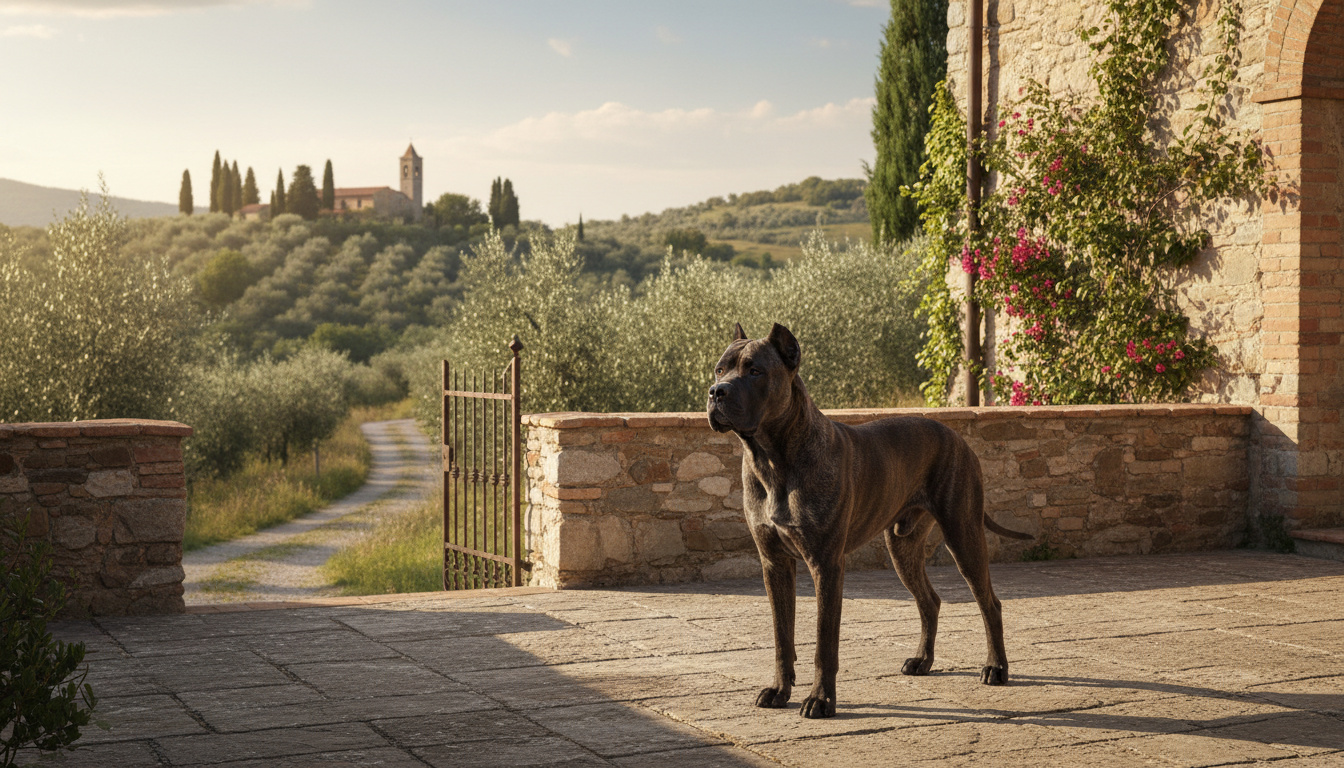
King Cane Corsos stand as an oversized variant of the Cane Corso, the formidable Italian mastiff descended from ancient Roman guardian stock. These dogs typically weigh between 90 and 110 pounds and reach 23 to 28 inches at the shoulder, with males consistently larger than females. Their imposing physique features a short, dense double coat, wide head, and square muscular jaw that contributes to their distinctly serious expression.
The lineage traces directly to Italy, where selective breeding preserved traditional bloodlines emphasizing substantial bone structure and working ability. Unlike nontraditional variants that incorporated Great Danes or Boxers for specific aesthetic traits, King Cane Corsos maintain pure Italian ancestry without external crosses.
Prospective owners encounter significant challenges in identifying authentic specimens, as this oversized variant lacks official recognition separate from the standard Cane Corso. Understanding the distinction between traditional preservation breeding and nontraditional modification remains essential for anyone considering this powerful guardian breed.
What Is a King Cane Corso?
The King Corso represents a specific breeding focus within the Cane Corso type, emphasizing the preservation of traditional Italian mastiff characteristics rather than show ring aesthetics. These dogs display what enthusiasts call a “linebacker” physique—substantially heavier bone structure and more pronounced musculature than many modern show lines developed for conformation events.
90-110 lbs, 23-28 inches at shoulder
Loyal, alert, protective guardian
Premium costs for specialized breeding
10-12 years average
Key Distinctions
- Represent oversized traditional Italian bloodlines, not a separate breed
- Lack official AKC recognition distinct from standard Cane Corso
- Maintain pure ancestry without Great Dane or Boxer crosses
- Exhibit more pronounced territorial instincts than nontraditional variants
- Require experienced handling due to significant strength and mass
- Demand consistent socialization from puppyhood to manage protective behaviors
Physical Comparison
| Characteristic | King Cane Corso | Standard Cane Corso |
|---|---|---|
| Weight Range | 90-110 lbs | 88-110 lbs (males), 80-100 lbs (females) |
| Bone Structure | Substantial, heavy “linebacker” build | Balanced, athletic working structure |
| Head Type | Wide, pronounced stop, square muzzle | Slightly refined, proportional to body |
| Temperament Focus | Maximum guardian instinct | Stable working companion |
Behavior and Temperament
King Cane Corsos embody the sharp territorial awareness of their Roman ancestors. They bond intensely with family members while remaining aloof or suspicious of strangers. This heightened protective drive demands early and continuous socialization to prevent over-guarding behaviors. Without structured training, their natural suspicion can escalate to unwarranted aggression, particularly in males reaching sexual maturity.
These dogs thrive under confident leadership. They read handler cues with remarkable accuracy and will assume dominant roles in the absence of clear boundaries. Training must emphasize respect-based methods rather than force, as physical confrontation can trigger defensive reactions in these powerful animals. Mental stimulation proves as critical as physical exercise; bored King Corsos may develop destructive tendencies or excessive territorial barking.
Historical Development
The timeline traces these dogs from ancient Roman war camps to modern preservation efforts. Understanding this progression clarifies why physical standards vary between working breeders and show enthusiasts.
- : Roman legions utilize ancestor breeds as war dogs and battlefield guardians, selecting for size and ferocity
- : Following the empire’s collapse, regional Italian populations maintain guardian types on rural estates and farms
- : Italian enthusiasts initiate formal breed recovery programs, locating remaining traditional specimens in remote southern regions
- : The Fédération Cynologique Internationale grants full recognition to the Cane Corso Italiano
- : The American Kennel Club admits the breed to its Working Group, establishing conformation standards
- : Divergence increases between show lines favoring refined features and preservation breeders maintaining heavier traditional types
Recognition Standards
No major kennel club recognizes the King Cane Corso as distinct from the standard breed. The United Kennel Club and AKC maintain single breed standards that technically encompass the size range these dogs represent, though show ring preferences increasingly favor lighter specimens. This creates a registration paradox: authentic King Corsos appear in pedigrees as standard Cane Corsos despite their significant phenotypic differences.
Buyers seeking these specific traits must research bloodlines rather than registry papers. Reputable preservation breeders prioritize functional ability and historical accuracy over show ring success. They typically health-test parent animals for hip dysplasia, cardiac conditions, and thyroid function—screenings essential given the strain that massive size places on physiological systems.
Functional Versus Aesthetic Priorities
Modern breeding philosophies split along functional lines. Traditional preservationists argue that excessive refinement compromises the breed’s working ability, selecting instead for the robust anatomy capable of deterring predators and handling livestock. Show breeders often prefer more elegant proportions, narrower heads, and lighter bone that move gracefully in the ring but may lack the stopping power of classic watchdogs.
This divergence creates distinct populations within the same gene pool. King Corsos represent the extreme end of functional breeding—dogs bred primarily for intimidation presence and physical capability rather than cosmetic appeal. Owners must recognize that these working priorities affect behavior; dogs bred for maximum guardian instinct require more intensive management than companion-oriented lines.
Breeder Perspectives
“We select for the old-fashioned farm guardian—the dog that could stop a wild boar or hold an intruder until the owner arrived. That requires substance and nerve that you can’t achieve by breeding for pretty heads alone.”
— Traditional Italian Breeder
“The King Corso isn’t about creating a monster. It’s about preserving the bone and breadth that existed before show trends narrowed the standard. These dogs should look like they mean business because historically, they did.”
— North American Preservationist
Ownership Summary
The King Cane Corso suits experienced owners committed to intensive training and socialization protocols. Their substantial size and protective instincts demand secure fencing, supervised interactions with visitors, and ongoing leadership reinforcement. These dogs excel in homes where they receive specific jobs or responsibilities, whether property guardianship or structured protection sports.
Potential buyers should budget for premium acquisition costs from specialized breeders, elevated food expenses given their size, and potential veterinary costs associated with large-breed conditions like advanced joint care. The investment returns a devoted guardian capable of serious deterrence, but only for households prepared to manage a dog with profound protective instincts.
Frequently Asked Questions
Is a King Cane Corso a separate breed from the standard Cane Corso?
No. King Cane Corsos represent a specific size and type variation within the single breed, emphasizing traditional Italian bloodlines with heavier bone structure. They lack separate recognition from major kennel clubs and register as standard Cane Corsos.
Why do King Corsos cost more than standard Cane Corsos?
Specialized preservation breeding involving larger, rarer bloodlines increases costs. These breeders typically conduct extensive health testing and maintain smaller breeding programs focused on working ability rather than volume production.
Are King Cane Corsos suitable for first-time dog owners?
Generally no. Their size, strength, and pronounced protective instincts require handlers experienced with guardian breeds. Inadequate training can result in dangerous behavioral issues given their physical capability.
How do I verify authentic King Cane Corso bloodlines?
Request documentation of Italian import pedigrees or working lines known for substantial size. Avoid breeders citing Great Dane or Boxer ancestry. Authentic specimens trace directly to Southern Italian working stock without crossbreeding.
What health problems affect King Cane Corsos?
Like all large mastiff types, they face elevated risks of gastric dilatation-volvulus (bloat), hip dysplasia, and cardiac issues. Their substantial size may contribute to shorter lifespans compared to smaller working breeds.
Do King Corsos require different training than standard Corsos?
They require more intensive early socialization due to heightened territorial tendencies. Training must establish calm, consistent leadership before protective instincts fully mature around 18-24 months.

Oliver Arthur Morgan Harrison is a staff writer for StoryShift.uk, covering UK news, culture, politics and technology. He works under Editor-in-Chief Maarika Tamm and UK Managing Editor Oliver Grant, following the newsroom standards for sourcing, verification and fact-checking set out in our editorial policies.