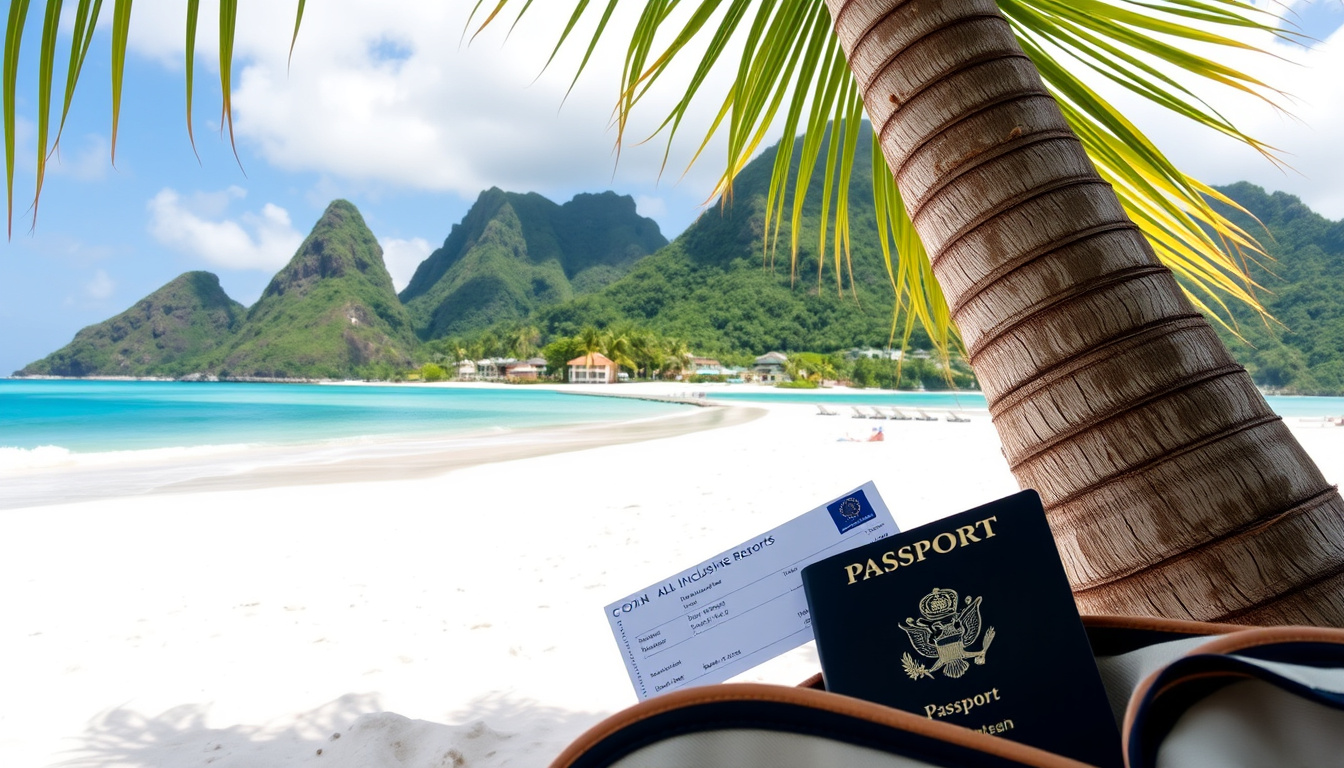
St. Lucia is frequently marketed as a tropical paradise of twin volcanic peaks, luxury resorts, and verdant rainforests. For anyone planning a holiday in 2025, the reality is more nuanced. This guide provides a balanced look at travel requirements, safety considerations, and accommodation choices, drawing on official advice and on-the-ground reporting to help you decide if this Caribbean island is the right destination for you.
The island nation in the eastern Caribbean has a complex identity. Known officially as Saint Lucia, it is a Commonwealth realm with King Charles III as head of state. Its dual French and British colonial past has shaped everything from its flag to its language. Tourists are drawn to the iconic Pitons, the world’s only drive-in volcano, and the promise of secluded, high-end resorts. However, serious safety warnings from the UK Foreign Office present a significant counterpoint to the paradise narrative.
This article synthesises the available information to answer the key questions potential visitors have about St. Lucia in 2025, from entry requirements and flight times to the real picture of safety and the best places to stay.
What is St. Lucia? Island Profile, Flag, Population and People
Eastern Caribbean, Capital: Castries. Pop: ~184k. English & Creole.
Passport needed. No visa for UK/US up to 6 weeks. Flight: 8-9 hrs from UK.
Luxury all-inclusives dominate. Best time: Dec-May. Known for the Pitons.
High crime risk in Castries. Resorts are generally secure. Stay vigilant.
St. Lucia is a mountainous island home to the Grand Pitons, volcanic beaches, and rainforests. Its population, estimated at around 184,000 people in 2024, is concentrated in the capital, Castries, and the northern part of the island. The official language is English, but Antillean Creole (Kwéyòl) is widely spoken, reflecting the island’s layered cultural history.
Key Insights for the Traveller in 2025
- The UK Foreign Office crime warning is stark, but the vast majority of tourist crime is within local areas, not resort bubbles.
- St. Lucia’s dual French/British history gives it a unique flag, culture, and Creole language (Kwéyòl) that sets it apart in the Caribbean.
- Tourism is the main economic driver, but the island struggles with gang violence in Castries, skewing national crime statistics.
- 2025 sees a clear trade-off: authentic local experiences in Soufrière vs. secure luxury resort bubbles in the north.
- The island is the only country in the world named after a woman (Saint Lucy).
- Travellers should not plan to drive themselves; roads are tight, winding, and dangerous for visitors.
- A local guide is required for all attractions, dive sites, and snorkeling spots.
St. Lucia Fact Table
| Fact | Value |
|---|---|
| Official Name | Saint Lucia |
| Capital | Castries |
| Largest City | Castries |
| Population | ~184,000 (2024 est.) |
| Official Language | English (Antillean Creole widely spoken) |
| Ethnic Groups | African descent 85%, mixed 11% |
| Government | Unitary parliamentary constitutional monarchy |
| Monarch | King Charles III |
| Prime Minister | Philip J. Pierre |
| Currency | Eastern Caribbean Dollar (XCD) |
| Drives on the | Left |
| Time Zone | AST (UTC -4) |
| Main Airport | Hewanorra International Airport (UVF) |
| Flight Time from UK | Approximately 8 to 9 hours direct |
Do I Need a Passport for St. Lucia and How Long is the Flight?
For most Western tourists, including those from the United Kingdom, the United States, and the European Union, the entry process is straightforward. A valid passport is required for all travellers and must be valid for the duration of the stay. No visa is needed for visits up to six weeks. These rules can change, and travellers are advised to check the IATA interactive map or official government advice in the weeks leading up to departure.
Entry Requirements
- Passport: Required for all travellers.
- Visa: Not required for UK, US, or EU citizens for stays up to 6 weeks.
- Documents: Check for potential requirements like return tickets or travel insurance.
- Language: Almost everyone speaks English.
Flights and Airports
Most international flights arrive at Hewanorra International Airport (UVF) in the south of the island. A smaller airport, George F. L. Charles Airport (SLU) near Castries in the north, mostly handles regional flights. Flight time from London is approximately 8 to 9 hours non-stop. From New York, the flight is about 5 to 6 hours.
Best Time to Visit
The peak tourist season runs from December to April, offering the most sunshine and minimal rain but also the highest prices. The best window for a balance of good weather and fewer crowds is considered to be February to May, or May to June. The hurricane season runs from July to November, a period when many travellers prefer to avoid the region.
What Are the Best All-Inclusive Resorts in St. Lucia and Is It Safe?
St. Lucia offers a wide range of accommodation. The island is divided into two main resort areas: the lively north (Gros Islet/Rodney Bay) and the scenic, quieter south (Soufrière/Marigot Bay). Travel between these two areas takes 2 to 2.5 hours due to winding mountain roads.
| Resort Type | Recommended Options | Best For |
|---|---|---|
| All-Inclusive | Sandals Grande St. Lucian, Sandals Halcyon, Ambergris | Families, couples seeking convenience |
| Luxury/High-End | Sugar Beach (near Pitons), Jade Mountain, The Royalton | Honeymoons, dramatic views |
| Budget/Value | Coconut Bay, Rendezvous, Avani | Flat terrain, affordability |
| Boutique/Nature | Anse Chastanet, Ladera | Rainforest access, diving |
Prices for top-tier luxury can range from $1,400 to $5,000 per night. A one-week trip, including transport, food, activities, and accommodation, typically ranges from $1,000 to $3,000 USD, depending on the resort tier.
Safety in St. Lucia
The safety picture in St. Lucia is complex and requires careful consideration. The UK Foreign Office Travel Advice (St Lucia) warns of “a continuing serious risk of homicides.” These incidents are not specifically targeting tourists, but the advice stresses that visitors should remain vigilant and avoid isolated areas.
The high crime statistics are heavily skewed by gang-related violence in inner-city Castries. The vast majority of resort areas in the north, such as Rodney Bay and Cap Estate, operate as highly secure, gated environments. The direct impact of violent crime on tourists staying within these resort bubbles is reported to be significantly lower than the national figures suggest.
Car rental is not recommended for outsiders; roads are described as tight, hectic, and dangerous. It is safer to hire local drivers or use the minibus system. A local guide is required for all attractions, dive sites, and snorkeling spots.
Using local minibuses is a cost-effective option, with fares ranging from $0.74 to $2.96 USD. However, visitors should carry cash for tips and avoid walking in isolated areas after dark, particularly outside the resort perimeters.
St. Lucia History and Culture
Understanding the island’s history provides essential context. The island was originally settled by the Arawak people, followed by the Caribs. The intense rivalry between the French and British saw St. Lucia change hands 14 times between 1660 and 1814, when the Treaty of Paris granted permanent British control. This rich, dual heritage is still visible today in the island’s place names, architecture, and the widespread use of a French-based Creole.
The capital, Castries, was founded in 1650 and is home to key historical sites like Fort Charlotte and Pigeon Island. Local food is a highlight, with dishes like hot patties and fresh coconut, and the Friday night street parties in Gros Islet are a major draw. Signature experiences include visiting the Sulphur Springs, Diamond Falls, Toraille Waterfall, and zip-lining through the rainforest.
Timeline of St. Lucia’s History
- 200-900 AD: Arawak people settle the island, calling it Iyanola.
- 800-1600 AD: Carib people arrive, displacing the Arawaks.
- 1660-1814: Intense Franco-British rivalry; St. Lucia changes hands 14 times.
- 1814: Treaty of Paris grants permanent British control over the island.
- 1979: Independence from the UK, becoming a Commonwealth realm.
- 2017-2020: Significant surge in homicides linked to gang activity, elevating travel safety concerns.
- 2024: UK Foreign Office updates travel advice to highlight a “continuing serious risk of homicides.”
- 2025: Government security initiatives in urban areas; tourism numbers remain strong despite safety warnings.
What is Known and What Remains Uncertain About St. Lucia?
Established Information
- St. Lucia is an independent country and a member of the Commonwealth.
- English is the official language, with widespread use of Antillean Creole.
- The UK Foreign Office warns of “a continuing serious risk of homicides” and advises vigilance.
- A valid passport is required for UK and US citizens, with no visa required for stays under 6 weeks.
- The island’s flag features a blue background with a white-edged black triangle pointing upward, containing two yellow stars.
Information That Remains Unclear or Mixed
- The direct impact of violent crime on tourists is debated; resort areas report far lower incidents than inner-city Castries.
- Future visa policy changes for St. Lucia citizens affecting UK travel remain uncertain post-Brexit.
- Online reviews vary widely on “expensiveness”—the cost gap between budget guesthouses and luxury all-inclusives is significant.
- Exact population figures for 2025 are not yet available; estimates place the number near 184,000.
What Makes St. Lucia Different from Other Caribbean Islands?
St. Lucia occupies a complex niche. Unlike some “all-inclusive factory” islands, St. Lucia heavily markets its natural beauty: the Pitons, rainforests, and drive-in volcano. However, its violent crime rate places it among the higher-risk nations in the region. The key challenge for a 2025 traveller is reconciling the paradise marketing with the official crime statistics. For those planning a holiday, it is also worth considering how the experience compares to other destinations like Barbados or Grenada. Another option for travellers interested in unique accommodation is considering a Capsule hotels in Britain: efficient innovation or cramped compromise? for a different kind of travel experience, though a Caribbean resort is a vastly different proposition.
What Do the Experts and Officials Say?
“There is a continuing serious risk of homicides. These incidents are not specifically targeting tourists, but you should remain vigilant and avoid isolated areas.”
— UK Government Foreign Travel Advice
“Explore the beauty, romance and adventure the Island of Saint Lucia has waiting for you…”
— Saint Lucia Tourism Authority
“St Lucia was fought over by the British and French 14 times, leaving a rich dual cultural heritage unmatched in the Caribbean.”
— Common historical reference (Lonely Planet)
Summary: Is St. Lucia the Right Holiday for You in 2025?
St. Lucia remains a viable destination for 2025, particularly for those seeking luxury, natural beauty, and a secure resort experience. The trade-off is the need for heightened vigilance outside resort zones and an awareness of the stark crime statistics that primarily affect the local population. Booking through reputable operators who offer secure airport transfers is standard practice. The June to November hurricane season remains a critical planning factor. The Saint Lucia Tourism Authority website offers further inspiration, while the CIA World Factbook — Saint Lucia provides neutral data. For those still planning their travel, a guide on Lufthansa Airlines – A Complete Guide for Travelers may be useful for booking the journey to a wide range of destinations.
Frequently Asked Questions About St. Lucia
What currency does St. Lucia use?
The Eastern Caribbean Dollar (XCD). US dollars are widely accepted, and credit cards are common in hotels.
Do I need a rental car in St. Lucia?
Not necessary if staying at a resort; most offer transfers. Driving is on the left and roads can be narrow and winding.
What power plugs are used in St. Lucia?
Type A and B (same as the United States). Voltage is 240V, so UK visitors will need an adapter.
What is the legal drinking age in St. Lucia?
16 for most establishments (18 for spirits in some venues).
What is the official name of St. Lucia?
Saint Lucia.
Is St. Lucia a British territory?
No. St. Lucia is an independent nation since 1979. It is a Commonwealth realm with King Charles III as head of state.
What is the best area to stay in St. Lucia for a first-time visitor?
Rodney Bay offers nightlife and amenities; Soufrière offers dramatic scenery and a quieter, authentic vibe.
What is St. Lucia known for?
The iconic Pitons (volcanic spires), the world’s only drive-in volcano, and high-end all-inclusive resorts.

Oliver Arthur Morgan Harrison is a staff writer for StoryShift.uk, covering UK news, culture, politics and technology. He works under Editor-in-Chief Maarika Tamm and UK Managing Editor Oliver Grant, following the newsroom standards for sourcing, verification and fact-checking set out in our editorial policies.