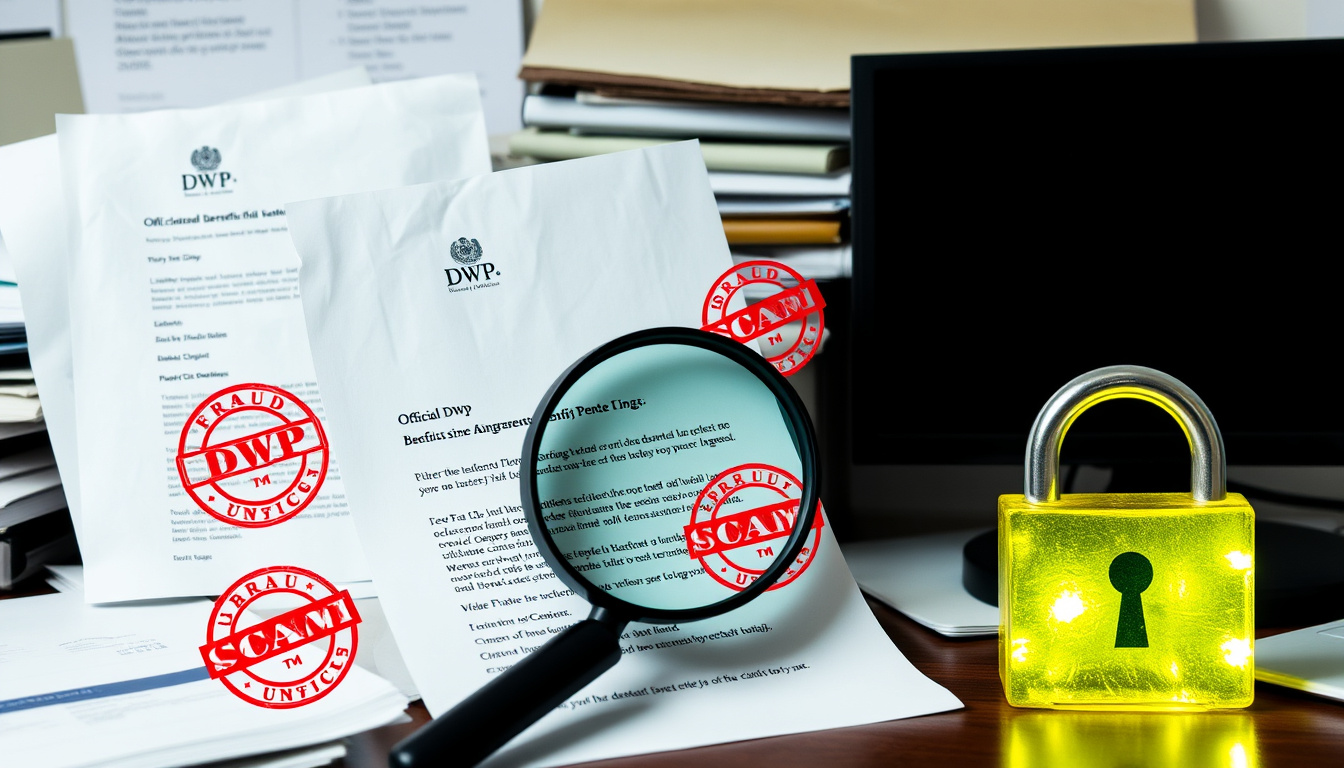
The Department for Work and Pensions has issued urgent alerts throughout 2024 as scammers increasingly target Universal Credit claimants and recipients of other benefits with sophisticated fake messages. These fraud attempts impersonate official DWP communications, exploiting confusion around cost of living payments and other support schemes. Officials are urging anyone receiving unexpected messages about benefits to verify before sharing any personal information.
Reports of DWP-related scams have risen sharply, with fraudsters using text messages, emails, phone calls, and even fake mobile applications to try to steal bank details and personal data. Understanding what the official warnings say—and how to protect yourself—is essential for every benefits claimant.
What is the DWP Fraud Warning for Benefits Claimants?
The DWP fraud warning is an official alert from the Department for Work and Pensions advising benefit recipients about ongoing scams designed to steal money and personal information. The warning specifically addresses fake communications that appear to come from DWP, Jobcentre Plus, or associated agencies.
According to the official guidance, DWP will never contact claimants asking for bank details, passwords, or national insurance numbers via text message, email, WhatsApp, or unsolicited phone calls. Any message making such requests should be treated as a scam.
DWP never requests payments, bank details, or personal information through SMS, email, or social media. Official communications come exclusively through GOV.UK or verified post.
Overview of the Warning
Official DWP alert about scams targeting benefits claimants
Universal Credit, PIP, and other benefits recipients
Sharp rise in fraud reports throughout 2024
Verify all communications via official channels only
Key insights on DWP Benefits Fraud
- Universal Credit overpayments reached 12.4% (£6,460 million) in the financial year ending 2024, with fraud accounting for 10.9% (£5,660 million) of that total
- Fraudulent messages often reference cost of living payments, Winter Fuel allowances, or Universal Credit advances to appear genuine
- A fake “Universal Credit UK” app, traced to developers in Nigeria, has targeted confused claimants; DWP is actively investigating
- Forwarding suspicious text messages to 7726 helps mobile networks identify and block scammers
- The DWP counter-fraud helpline can be reached at 0800 854 440 for reporting concerns
- Claimants who have shared banking information should contact their bank immediately
Fraud and Error Snapshot
| Fact | Details |
|---|---|
| FYE 2024 overpayment rate | 12.4% (£6,460 million total) |
| Fraud component | 10.9% (£5,660 million) |
| FYE 2023 overpayment rate | 12.7% (£5,500 million) |
| Common payment cited in scams | Cost of living and Winter Fuel allowances |
| Official DWP helpline | 0800 023 2635 |
| Citizens Advice Help to Claim | 0800 144 8444 |
How to Spot and Avoid DWP Benefits Fraud Scams
Scammers have refined their tactics to appear convincing. Spotting the warning signs requires knowing what legitimate DWP communications look like and what they will never ask for.
Fake Texts and Emails
Phishing messages typically claim that a problem exists with your benefit payment and ask you to click a link to resolve it. One example cited by authorities reads: “DWP Benefits Officers are issuing winter benefits… submit your application for the 2024-2025 allowance.” The embedded links lead to fraudulent websites designed to harvest login credentials and financial data.
Genuine DWP emails will come from addresses ending in gov.uk and will never ask you to enter sensitive information directly in a message. If you receive a suspicious text, forward it to 7726, the free reporting service run by mobile network operators.
Phone Calls and Online Impersonation
Fraudsters also pose as DWP or Jobcentre Plus officials during phone calls, claiming there is an issue with your claim that requires immediate action. They may pressure you to provide details before you have time to think. Social media accounts and messaging apps are also being used to approach claimants offering to help with Universal Credit applications outside official channels.
If someone claims to be from DWP, hang up and call back using the official DWP number: 0800 023 2635. Never use a phone number provided in the suspicious message.
The Fake Universal Credit App
One of the more sophisticated schemes involves a fake “Universal Credit UK” mobile application. Investigators have linked the app to developers operating outside the UK. The app mimics the official service interface and asks users to enter personal and financial information. DWP has warned claimants to use only the official GOV.UK portal or trusted platforms for managing their claims.
Staying safe online means downloading apps only from official stores and verifying that you are on the genuine GOV.UK website before entering any data. You can report concerns about unofficial apps and websites through the official channels listed below.
DWP Benefits Fraud Checks and Investigations
DWP has broad powers to investigate potential fraud within the benefits system. Understanding how these checks work can help claimants distinguish genuine official processes from scam approaches.
How DWP Checks for Benefits Fraud
The department uses a combination of data matching, cross-referencing with other government databases, and targeted investigations to identify potential fraud and error. This includes analysing patterns in claims, comparing information provided at different times, and following up on reports from the public or other agencies.
The rise in overpayment rates during the financial years ending 2023 and 2024 is partly attributed to the migration of claimants from Tax Credits to Universal Credit, as well as the high volume of Cost of Living Payments distributed during this period. Both factors created opportunities for both genuine errors and deliberate fraud to occur.
Can DWP Access My Bank Account?
DWP can request financial information from banks under certain legal powers, particularly when investigating suspicious claims. However, the department does not conduct routine or covert access to claimants’ bank accounts without following established legal procedures. Fraudsters exploit confusion around these powers by pretending to be from DWP and claiming they need to “verify” your account—something the real DWP would never do through a text or email.
Legitimate bodies, including DWP, HMRC, banks, and the police, will never ask you to transfer money or provide bank details through an unsolicited message or phone call to “protect” your account.
Send text messages requesting bank details, ask for payments via WhatsApp, email links to “secure” your account, or contact you through social media offering benefit assistance. These are hallmarks of scams.
Penalties and Consequences of Benefits Fraud
Being found guilty of benefits fraud carries serious consequences under UK law. At the same time, it is important to distinguish between deliberate fraud and genuine administrative errors, which are handled differently.
What Happens If You Are Accused of Benefits Fraud
If DWP determines that a claimant has received money they were not entitled to, the overpayment becomes recoverable. This means the department can deduct money from future benefit payments until the amount is repaid. The rate of deduction depends on the claimant’s circumstances and the size of the overpayment.
In cases where fraud is proven, DWP can refer the matter for criminal prosecution. Those convicted may face fines, a criminal record, and in the most serious cases, imprisonment. The maximum penalty for benefits fraud under UK law can reach up to ten years imprisonment, though this applies to the most severe and organised cases.
Recoverable Overpayments
Not all overpayments are the result of fraud. Some arise from changes in circumstances that are reported late, errors in assessment, or misunderstandings about entitlement. DWP distinguishes between fraud, negligence, and official error when deciding how to handle an overpayment and whether recovery is appropriate.
Claimants who receive a letter about a potential overpayment should seek advice promptly. Organisations such as Citizens Advice can help individuals understand their rights and obligations, and may be able to challenge or negotiate repayment terms in certain circumstances.
How to Report Suspected Fraud to DWP
Reporting suspected fraud—whether you have been targeted or you have witnessed a scam—helps protect the benefits system and other claimants from losing money to criminals.
Reporting Steps
- Action Fraud: Call 0300 123 2040 or visit actionfraud.police.uk to report scams and fraud. This is the national reporting centre for fraud and cybercrime.
- Text messages: Forward suspicious text messages to 7726 so your mobile provider can investigate.
- Benefit fraud: Report suspected fraud by a claimant anonymously through the dedicated page on GOV.UK.
- Bank details shared: Contact your bank or building society urgently to secure your account and monitor for unusual activity.
For genuine queries about your own claim, always contact DWP through official channels. The official DWP number is 0800 023 2635, and Citizens Advice offers free help with Universal Credit claims on 0800 144 8444.
Timeline: DWP Fraud Warnings and Key Developments
The scale of benefits fraud and the corresponding official response have evolved over recent years. Below is a chronological overview of key developments relevant to claimants.
- FYE 2023: Universal Credit overpayments reached £5,500 million, representing 12.7% of total payments, with fraud accounting for 11.4%
- 2023 onwards: DWP launches and expands counter-fraud campaigns targeting the increase in scam reports
- January 2024: Surge in fake DWP text messages referencing cost of living payments and Winter Fuel allowances
- 2024: Discovery of fake “Universal Credit UK” mobile application; DWP investigation underway
- FYE 2024: Overpayments rise to £6,460 million (12.4%), with fraud at £5,660 million (10.9%)
- Ongoing: Bank data sharing pilots and enhanced cross-department data matching to detect fraud and error
What Is Established and What Remains Unclear
Transparency about what is known and what is not helps readers make informed decisions. The following summary separates confirmed facts from areas where further information is not yet publicly available.
| Established information | Remaining unclear |
|---|---|
| DWP never requests bank details via text, email, or WhatsApp | Exact number of individual victims of DWP impersonation scams in 2024 |
| Universal Credit overpayment and fraud figures for FYE 2023 and FYE 2024 | Specific outcomes of investigations into the fake UC application |
| Forwarding texts to 7726 and reporting to Action Fraud are official reporting routes | Precise timeline for expansion of bank data sharing powers |
| Overpayments are recoverable and can lead to deductions from future benefits | Whether specific penalty guidance has been updated for 2024 |
| DWP is investigating the fake “Universal Credit UK” app | Official success statistics for scam reports leading to convictions |
Understanding the Broader Context of Benefits Fraud
The rise in benefits fraud warnings reflects a wider trend across the UK public sector, where organised criminal groups have increasingly targeted government payment systems. The pandemic and subsequent cost of living crisis expanded the number of people receiving state support, creating a larger pool of potential victims for scammers to exploit.
DWP has committed to investing in new technology and data-sharing agreements to catch fraud earlier and reduce overpayments. These efforts include closer working relationships with banks, the Department for Business and Trade, and other agencies. The goal is to identify suspicious patterns before payments are made rather than chasing repayments after the fact.
For individual claimants, the most effective defence remains vigilance. Knowing that official bodies will never ask for sensitive information through unexpected messages is the single most important fact to remember. As the old saying goes, if something feels wrong, it is worth taking a moment to verify through an official channel before acting.
Official Sources and Guidance
The following organisations provide authoritative information and support for benefits claimants concerned about fraud:
“The DWP will never ask you to provide bank details or make payments through text messages, emails, or social media. If you receive a message asking for this information, it is a scam.”
Department for Work and Pensions official guidance
“If you have shared your banking information with a suspected scammer, contact your bank immediately. Do not wait to see if money goes missing.”
DWP fraud awareness communications, 2024
For official guidance on reporting benefit fraud, visit the dedicated GOV.UK page for reporting benefit fraud. Further information about Universal Credit fraud and error is available through the DWP website.
Staying informed about the broader pressures affecting benefit claimants can also help put these warnings in context, particularly for those managing complex claims alongside other life challenges.
Summary: Key Takeaways
DWP fraud warnings issued in 2024 centre on sophisticated scams targeting benefits claimants through fake texts, emails, phone calls, and a fraudulent mobile application. The department has made clear that it never requests bank details or payments through unsolicited digital communications. Universal Credit fraud and error together accounted for over £6 billion in overpayments during the latest financial year, underscoring the scale of the problem.
Anyone receiving unexpected messages about their benefits should verify them by contacting DWP directly through official numbers or the GOV.UK portal. Suspicious messages can be reported to Action Fraud or forwarded to 7726. Those who have already shared information should contact their bank without delay. For those navigating the complexities of benefits claims, available support services and guidance can make it easier to avoid falling victim to these increasingly convincing scams.
Frequently Asked Questions
What are the most common DWP scams targeting claimants?
The most common scams involve fake text messages and emails claiming problems with benefit payments, impersonation phone calls from people posing as DWP officials, and a fraudulent “Universal Credit UK” mobile app. Messages often reference cost of living payments, Winter Fuel allowances, or Universal Credit advances.
What is DWP doing about Universal Credit fraud?
DWP is investigating the fake UC application, expanding data-sharing arrangements with banks and other agencies, and running public awareness campaigns. The department uses data matching and targeted investigations to detect fraud and recover overpayments.
Is the DWP fraud warning email legitimate?
Genuine DWP emails will come from a gov.uk address and will never ask you to enter bank details or passwords directly in the message. Any email requesting personal information or containing links to non-government websites should be treated with caution.
Can DWP access my bank account to check for fraud?
DWP has legal powers to request financial information from banks in specific investigation cases. However, it does not access accounts covertly or routinely, and it will never ask for your banking details through a text or email.
What should I do if I receive a DWP fraud warning?
Do not click any links or share personal information. Verify the message by contacting DWP directly on 0800 023 2635. Report the message to Action Fraud and forward suspicious texts to 7726. If you have already shared information, contact your bank urgently.
How do I report suspected benefits fraud to DWP?
You can report suspected fraud by a claimant anonymously through the GOV.UK page. Scams targeting you personally should be reported to Action Fraud on 0300 123 2040 or at actionfraud.police.uk.
What are the penalties for benefits fraud in the UK?
Overpayments are recoverable through deductions from future benefits. Serious fraud can lead to criminal prosecution, resulting in fines, a criminal record, or imprisonment of up to ten years in the most severe cases.

Oliver Arthur Morgan Harrison is a staff writer for StoryShift.uk, covering UK news, culture, politics and technology. He works under Editor-in-Chief Maarika Tamm and UK Managing Editor Oliver Grant, following the newsroom standards for sourcing, verification and fact-checking set out in our editorial policies.