Oskar Schindler was a German industrialist and member of the Nazi Party who saved approximately 1,100 to 1,200 Jews during the Holocaust by employing them in his factories and shielding them from deportation. His story, immortalized in the 1993 film Schindler’s List based on Thomas Keneally’s Schindler’s Ark, remains one of the most debated and compelling narratives of World War II. Schindler’s life—from a profiteering businessman to a rescuer recognized as Righteous Among the Nations—raises difficult questions about morality, complicity, and redemption.
Born on April 28, 1908, in Zwittau, Moravia (then part of Austria-Hungary, now Svitavy, Czech Republic), Schindler came to Kraków after the German invasion of Poland. He took over an enamelware factory, producing goods for the German military while relying on Jewish labor. Over time, his role shifted from opportunist to protector, as he bribed officials, used his influence, and spent his fortune to prevent his workers from being sent to extermination camps. The people he saved became known as Schindlerjuden (“Schindler Jews”).
After the war, Schindler’s finances collapsed. He failed in several businesses, divided his time between Germany and Israel, and depended on support from survivors. He died on October 9, 1974, in Hildesheim, West Germany, most likely from liver failure, and was buried in the Catholic cemetery on Mount Zion in Jerusalem, according to his wish. His legacy continues to be examined through historical records, books, and the enduring impact of the film that made his name famous.
Was Oskar Schindler a Good Person? Analyzing His Complicated Legacy
- Full Name & Lifespan: Oskar Schindler (1908–1974)
- Known For: Saving ~1,200 Jews (Schindlerjuden) during the Holocaust
- Key Affiliation: Industrialist, Nazi Party member (joined 1939)
- Primary Source: Story immortalized in Schindler’s List (1993 film) and numerous books
Key Insights
- Schindler’s motivations evolved from profit to genuine humanitarianism.
- He exploited his Nazi Party membership and his factory (Deutsche Emailwarenfabrik, or DEF) to protect workers.
- His post-war life was marked by financial failure and poverty.
- The exact number of lives saved varies between 1,100 and 1,300 depending on the source.
- His factory in Krakow now houses the Schindler’s Factory Museum, a branch of the Historical Museum of the City of Krakow.
Oskar Schindler: Key Facts at a Glance
| Fact | Detail |
|---|---|
| Born | April 28, 1908, Zwittau, Austria-Hungary |
| Died | October 9, 1974, Hildesheim, West Germany |
| Cause of Death | Liver failure (most reliable from multiple sources) |
| Spouse | Emilie Schindler (married 1928) |
| Award | Righteous Among the Nations (1963) |
| Number of Lives Saved | ~1,200 (commonly cited 1,200) |
Schindler’s membership in the Nazi Party and his initial profiteering complicate any simple judgment of his character. While he saved hundreds of lives, his actions were also driven by business interests and personal connections. Historians continue to debate the extent of his altruism, but the consensus is that his rescue efforts were genuine and substantial.
What Was Oskar Schindler’s List? The True Story Behind the Rescue
The term “Schindler’s List” refers to a series of lists of Jewish workers that Schindler compiled to protect them from deportation to Auschwitz and other extermination camps. These lists were not a single document but evolved over time, especially during the relocation of his factory from Kraków to Brünnlitz (now Brnenec, Czech Republic) in 1944. By keeping his workers employed and essential to the war effort, he shielded them from the SS.
How many Jews did Oskar Schindler save?
Most authoritative sources, including the Holocaust Encyclopedia (USHMM) and Yad Vashem, estimate that Schindler saved between 1,100 and 1,200 Jews. The exact number is difficult to verify precisely because of the chaotic conditions of the war and the multiple lists that were used. The group of survivors is collectively known as Schindlerjuden.
What happened to Oskar Schindler’s factories?
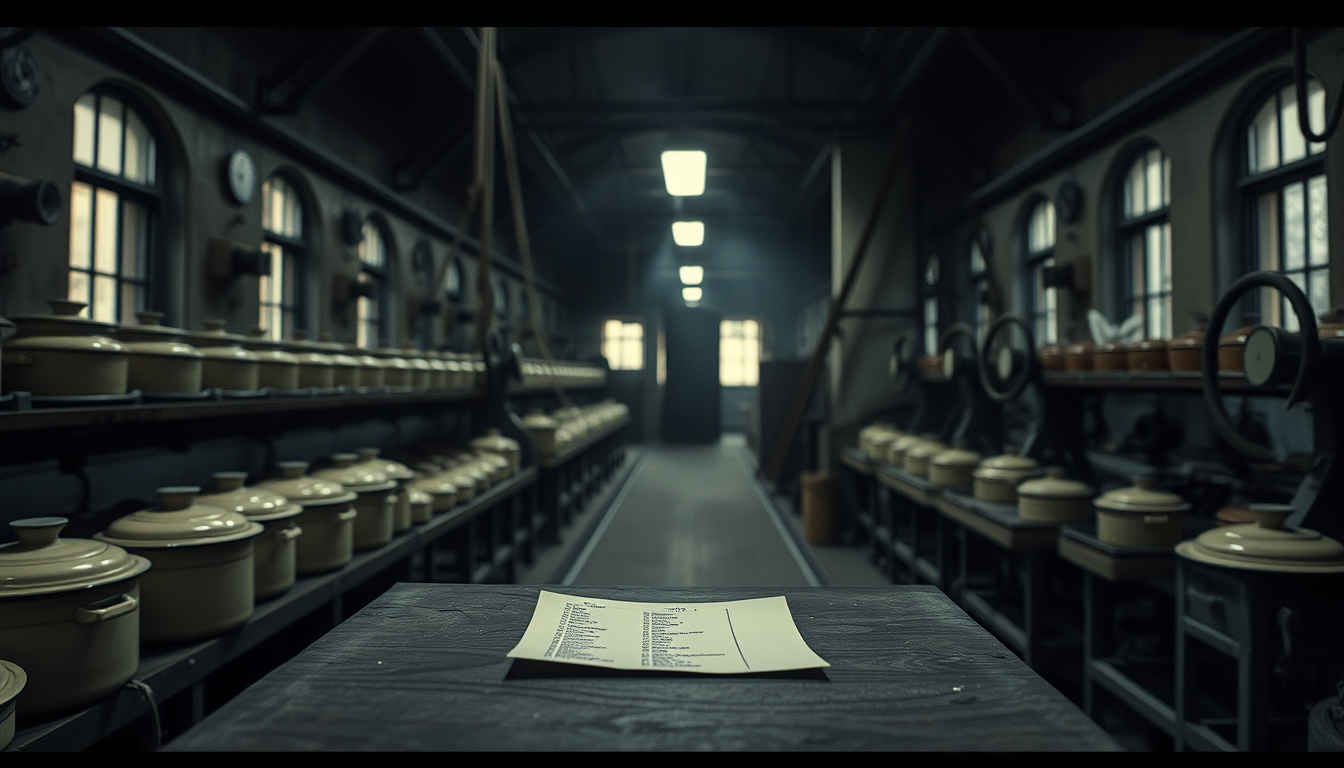
Schindler’s original enamelware factory in Kraków, the Deutsche Emailwarenfabrik (DEF), still stands today. It has been converted into the Schindler’s Factory Museum, a branch of the Historical Museum of the City of Krakow, which preserves the history of the factory and the Holocaust. His later factory in Brünnlitz also remains as a memorial.
The Schindler’s Factory Museum in Krakow offers an immersive exhibition on the history of Krakow under Nazi occupation and the story of Schindler’s rescue. It is located at 4 Lipowa Street and is one of the most visited historical sites in Poland.
Oskar Schindler: Cause of Death, Net Worth, and What Happened After the War
What was Oskar Schindler’s cause of death?
Schindler died on October 9, 1974, in Hildesheim, West Germany, at the age of 66. The most reliable medical explanation from multiple sources, including Wikipedia and Britannica, is liver failure. One video source claims a massive heart attack in Frankfurt, but this is less authoritative and conflicts with the documented written record.
What was Oskar Schindler’s net worth (or financial status)?
After the war, Schindler’s financial situation deteriorated sharply. According to the State Library of New South Wales and HistoryExtra, he “failed in a number of businesses” and depended on support from survivors he had saved. There is no evidence that he retained any meaningful wealth; his post-war life was marked by poverty and reliance on the Schindlerjuden.
Where is Oskar Schindler buried?
Schindler was buried in the Catholic cemetery on Mount Zion in Jerusalem, as he had expressed a wish to be laid to rest in Israel. His grave remains a site of pilgrimage for visitors who come to honor the man who saved so many lives.
The exact number of lives saved and the precise cause of death are not entirely settled. The range of 1,100–1,300 reflects different historical accounts, and while liver failure is the most cited cause of death, some sources omit it entirely. This uncertainty is common in wartime records.
Timeline of Oskar Schindler’s Life and Legacy
- 1908 – Born in Zwittau, Sudetenland.
- 1939 – Joins Nazi Party; acquires enamelware factory in Krakow.
- 1941–1944 – Protects Jewish workers; creates “Schindler’s List”.
- 1945 – Relocates factory to Brünnlitz; saves more workers.
- 1949 – Emigrates to Argentina with Emilie.
- 1958 – Returns to West Germany alone.
- 1963 – Recognized as Righteous Among the Nations by Yad Vashem.
- 1974 – Dies of liver failure in Hildesheim, Germany.
- 1993 – Schindler’s List film released, directed by Steven Spielberg.
For a broader look at historical biographies, you might also explore Julius Caesar – The Life, Death, and Literary Legacy and Buster Keaton – Biography, Death, Stunts and Legacy.
Clarifying Certainty vs. Uncertainty in Schindler’s Story
| Established Information | Information That Remains Unclear |
|---|---|
| He saved ~1,200 Jews through factory employment. | Exact number of lives saved (ranges from 1,100 to 1,300 depending on source). |
| He was a member of the Nazi Party. | The precise motivations for his actions (profit vs. altruism). |
| He died in 1974 from liver failure. | His net worth at death is not officially confirmed; often stated as minimal or bankrupt. |
| He is buried in Jerusalem on Mount Zion. | — |
How Should Schindler’s Actions Be Understood in Historical Context?
Schindler’s actions must be viewed in the context of Nazi-occupied Poland, where his factory became a haven in a genocidal landscape. He represents a rare case of a Nazi collaborator turning into a rescuer, challenging simplistic narratives of good versus evil. The film Schindler’s List, while powerful, simplified some historical complexities—such as the nature of his relationship with his wife Emilie and the extent of his Nazi Party involvement. Understanding Schindler requires acknowledging both his flaws and his extraordinary courage.
His story is a central case study of the “Righteous Among the Nations” designation, awarded by Yad Vashem to non-Jews who risked their lives to save Jews during the Holocaust.
What Do Official Sources Say About Schindler?
“Oskar Schindler, a German Righteous Among the Nations. His status and close relationship with the occupying authorities helped him to save hundreds of Jews…”
— Yad Vashem
“Oskar Schindler (1908–1974) is one of the most famous rescuers of Jews during the Holocaust. He helped more than 1,000 Jewish people survive.”
— Holocaust Encyclopedia (USHMM)
“Schindler was an industrialist and businessman who, despite having been a member of the Nazi Party, saved the lives of around 1,200 Jews.”
— HistoryHit
You can read more from The Holocaust Explained and HistoryHit for additional depth.
What is the lasting legacy of Oskar Schindler?
Oskar Schindler’s legacy is a reminder that individual acts of courage can emerge from the darkest contexts. While his life was complex and marked by contradictions, his rescue of over a thousand Jews has ensured that his name is remembered as a symbol of hope and humanity. For further reading, consider Julius Caesar – The Life, Death, and Literary Legacy and Buster Keaton – Biography, Death, Stunts and Legacy for more biographical explorations.
Frequently Asked Questions About Oskar Schindler
What was Oskar Schindler’s height?
Oskar Schindler’s height is not well-documented in standard historical records. He was of average build for a man of his era. The most commonly cited estimate places him around 5 feet 7 inches (approx. 170 cm), but this is not a verified fact.
What books are there about Oskar Schindler?
The most famous book is Schindler’s Ark (1982) by Thomas Keneally, which won the Booker Prize and was the basis for the film. Other notable works include Oskar Schindler: The Untold Account of His Life, Wartime Activities, and the True Story Behind the List by David Crowe, and Schindler’s List: A Novel by Thomas Keneally.
What happened to Oskar Schindler’s factories?
His original enamelware factory in Krakow (Deutsche Emailwarenfabrik, or DEF) still stands and has been converted into the Schindler’s Factory Museum, a branch of the Historical Museum of the City of Krakow. His later factory in Brünnlitz (Brnenec, Czech Republic) also stands and is a memorial.
What is the Schindler’s Factory Museum?
The Schindler’s Factory Museum is located at 4 Lipowa Street in Krakow, Poland. It houses a permanent exhibition about life in Nazi-occupied Krakow and the story of Schindler’s rescue, attracting hundreds of thousands of visitors each year.
Who was Emilie Schindler?
Emilie Schindler (1907–2001) was Oskar Schindler’s wife, married in 1928. She worked alongside him during the war, helping to care for the Jewish workers. She was also recognized as Righteous Among the Nations by Yad Vashem in 1993.

Oliver Arthur Morgan Harrison is a staff writer for StoryShift.uk, covering UK news, culture, politics and technology. He works under Editor-in-Chief Maarika Tamm and UK Managing Editor Oliver Grant, following the newsroom standards for sourcing, verification and fact-checking set out in our editorial policies.