Buster Keaton, born Joseph Frank Keaton in 1895, was one of the most influential figures in silent film comedy. Known for his deadpan expression, inventive physical comedy, and willingness to perform dangerous stunts, he created a body of work that continues to be studied and admired. His career spanned from vaudeville to the golden age of Hollywood, and his films remain benchmarks of visual storytelling.
Keaton’s life was marked by extraordinary highs and deep lows. He rose to fame in the 1920s with his own production company, producing classics such as The General and Sherlock Jr. But the arrival of sound films, combined with personal struggles, led to a long decline. Only in his final years did he receive the recognition he deserved, including an Honorary Academy Award in 1960.
What Was Buster Keaton’s Cause of Death?
| Who Was Buster Keaton? | Joseph Frank “Buster” Keaton (1895-1966) was an American actor, comedian, and filmmaker, famous for his silent films and deadpan expression. |
|---|---|
| Why Is He Known as ‘The Great Stone Face’? | Keaton earned the nickname for his impeccably stoic, unsmiling face during his performances, which contrasted with the chaos around him. |
| What Are His Most Famous Films? | The General (1926), Steamboat Bill Jr. (1928), and Sherlock Jr. (1924) are considered masterpieces of silent comedy. |
| How Did He Die? | Buster Keaton died of lung cancer on February 1, 1966, at age 70, in Los Angeles, California. |
- Buster Keaton’s deadpan persona was a deliberate choice to amplify the comedy of his physical stunts.
- He performed nearly all his own stunts, often risking serious injury, and never used stunt doubles.
- Despite his early success, Keaton’s career declined after the advent of sound films due to studio interference and personal struggles.
- His films were rediscovered in the 1950s and 1960s, earning him a lasting legacy as one of the greatest comedians in cinema history.
- Keaton’s influence extends to modern directors like Jackie Chan, who cite him as a major inspiration.
| Fact | Value |
|---|---|
| Full Name | Joseph Frank Keaton |
| Born | October 4, 1895, Piqua, Kansas, USA |
| Died | February 1, 1966, Los Angeles, California, USA |
| Cause of Death | Lung cancer |
| Height | 5 ft 5 in (1.65 m) |
| Spouse | Natalie Talmadge (1921–1932), Mae Scriven (1933–1936), Eleanor Norris (1940–1966) |
| Children | James Keaton, Robert Keaton |
| Notable Films | The General, Steamboat Bill Jr., Sherlock Jr., The Cameraman |
| Nickname | The Great Stone Face |
According to Britannica, Keaton died of lung cancer at his home in Woodland Hills, California. Some sources note that pneumonia was a complication, but the consensus remains lung cancer. The official Buster Keaton site confirms he died peacefully in his sleep.
What Are the Best Buster Keaton Movies and Stunts?
Buster Keaton’s Most Famous Films: The General, Steamboat Bill Jr., and Sherlock Jr.
Between 1920 and 1928, Keaton made 19 silent shorts and 10 silent features, according to the Buster Keaton official site. Among his most celebrated works are The General (1926), Steamboat Bill Jr. (1928), and Sherlock Jr. (1924). The General is often regarded as his masterpiece, a Civil War action-comedy that features a locomotive chase and some of the most ambitious stunts of the silent era.
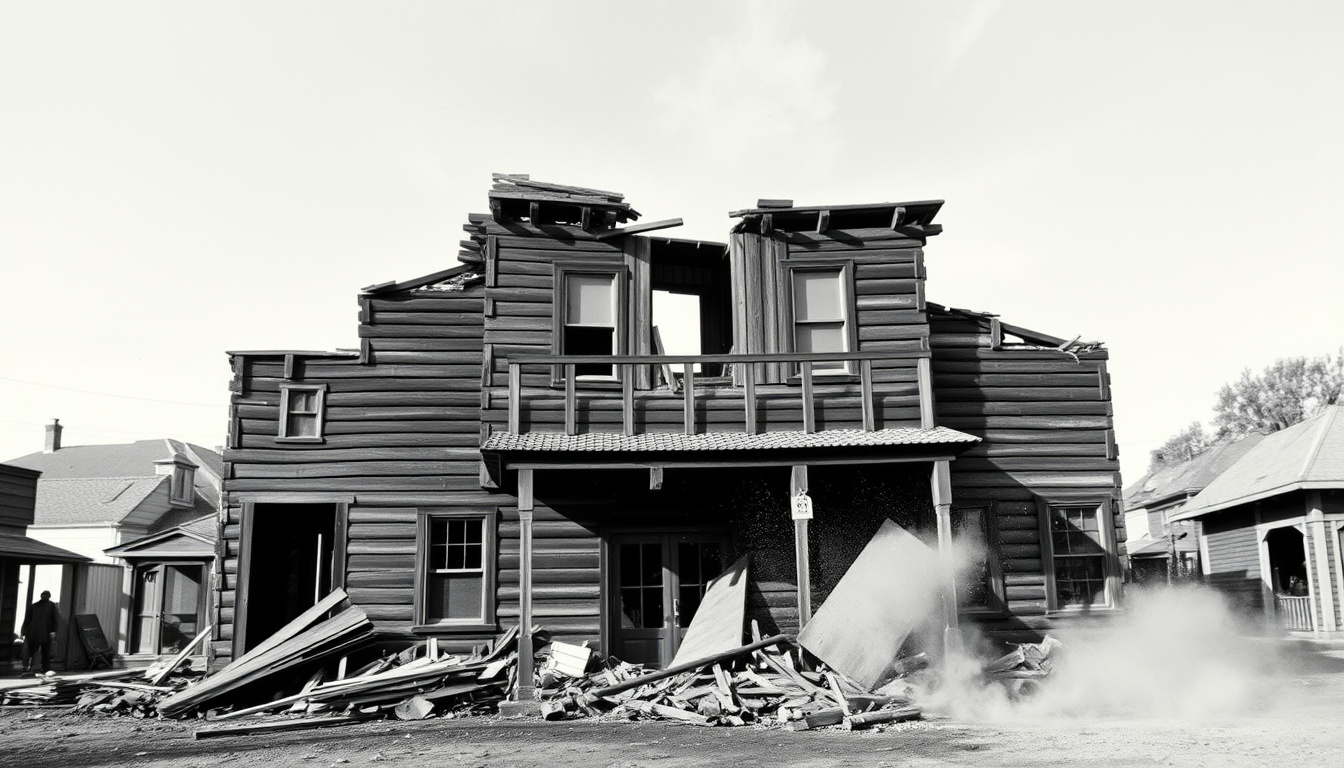
Sherlock Jr. showcases Keaton’s innovative use of special effects, including a scene where he walks through the screen into a film. Steamboat Bill Jr. contains the famous falling house facade stunt, where Keaton stood in the exact spot where a window frame would pass, risking his life. Britannica also highlights The Navigator (1924) as a classic from his peak period.
How Buster Keaton Pulled Off His Death-Defying Stunts
Keaton performed nearly all his own stunts, often without safety nets or padding. He was a trained acrobat from his vaudeville childhood, which gave him the balance and timing needed for complex physical gags. Wikipedia describes him as a stuntman as well as actor, comedian, and filmmaker. His stunts were carefully planned, but the risk was real: during the filming of Steamboat Bill Jr., he broke his neck when a water tank fell on him, though he did not realize the severity until years later.
Keaton’s stunts were not reckless. He storyboarded every gag and calculated distances, weights, and timing meticulously. The falling house facade in Steamboat Bill Jr. required him to stand exactly where a two-ton wall would collapse, with only a window opening to protect him. He performed the stunt in one take.
Keaton’s physical comedy inspired generations of filmmakers. Directors like Jackie Chan have acknowledged Keaton’s influence on their own approach to stunt work and visual humor.
Is Buster Keaton Related to Michael Keaton?
This is one of the most common questions about the silent film star. The answer is no: Buster Keaton and Michael Keaton are not related. Michael Keaton, born Michael Douglas, chose his stage name as an homage to Buster Keaton, but there is no family connection. Biography.com and Britannica both confirm that the two actors share only a surname, not a bloodline.
The confusion is understandable, given the identical last name. But Buster Keaton’s legal name was Joseph Frank Keaton, and his sons, James and Robert, did not use the name “Buster” professionally. Michael Keaton’s adopted surname is a stage-name coincidence, not evidence of kinship.
Many online sources incorrectly link Buster Keaton and Michael Keaton as family. All authoritative sources, including the actor’s own biographies, state there is no familial relationship. Michael Keaton has said in interviews that he chose “Keaton” simply because he liked the sound of it.
How Tall Was Buster Keaton and Other Physical Details?
Buster Keaton stood 5 feet 5 inches (1.65 meters) tall, according to IMDb. His compact build was an advantage for his acrobatic style, allowing him to move quickly and fit into tight spaces during stunts. Despite his small stature, he had a commanding presence on screen, enhanced by his expressive eyes and athletic grace.
His nickname “The Great Stone Face” refers to his deliberately emotionless expression during performances. Keaton never smiled or laughed on camera, even when executing the most ridiculous physical gags. This deadpan style was a revolutionary contrast to the exaggerated expressions of contemporaries like Geraldine Chaplin – Complete Biography, Age, Family and Movies (whose father Charlie Chaplin used pantomime and pathos). Keaton’s stoicism allowed audiences to project their own reactions onto his character, making the comedy more universal.
Keaton’s height (5’5″) was often a topic of curiosity. Some sources list him as 5’5″ or 5’6″, but the most consistent figure across authoritative sites is 1.65 m. He weighed around 140 pounds (63 kg) during his prime, which helped him perform stunts that taller actors could not attempt.
What Happened to Buster Keaton’s Career After Silent Film?
Keaton’s career trajectory is a classic cautionary tale of Hollywood’s transition to sound. When he signed with MGM in 1928, he lost creative control over his films. The studio system restrained his improvisational style, and his alcoholism worsened. Throughout the 1930s and 1940s, he appeared in low-budget shorts and bit parts, often uncredited.
He found a second act in the 1950s, when television rediscovered his silent films. Keaton appeared on variety shows and even performed some of his old stunts for a new audience. In 1960, he received an Honorary Academy Award for “his unique talent and immortal contributions to the art of motion picture comedy.” He died six years later, but his legacy had already been revived.
- 1895 – Born in Piqua, Kansas, to vaudeville performers.
- 1917 – Began film career with Roscoe “Fatty” Arbuckle.
- 1920-1928 – Peak of silent film success; directed and starred in iconic comedies.
- 1928 – Signed with MGM, losing creative control; career decline begins.
- 1930s-1940s – Struggled with alcoholism and bit parts in films.
- 1950s – Rediscovered; appeared on television and in cameos.
- 1960 – Received an Honorary Academy Award for his contributions to film.
- 1966 – Died of lung cancer at age 70.
Did Buster Keaton Have a Son Named Buster Keaton Jr.?
There is no widely known public figure named “Buster Keaton Jr.” The term likely refers to Buster Keaton’s son James Keaton, or it may be a misattribution. Keaton had two sons with his first wife, Natalie Talmadge: James (born 1922) and Robert (born 1924). Neither son used the name “Buster” professionally. James Keaton became a production manager in Hollywood, while Robert worked in the film industry as a cinematographer.
The confusion may arise from the fact that Buster Keaton himself was sometimes called “Buster” by family and friends, but no son carried the name as a stage persona. The official Buster Keaton site does not list any “Buster Keaton Jr.”
| Topic | Established Information | Information That Remains Unclear |
|---|---|---|
| Buster Keaton vs. Michael Keaton | They are not related. Michael Keaton chose his stage name as an homage. | No unclear aspects; all sources agree. |
| Buster Keaton Jr. | Buster Keaton had two sons, James and Robert, who did not use “Buster” professionally. | Whether the phrase “Buster Keaton Jr.” refers to a specific individual or is a general misconception is not documented. |
| Cause of Death | Lung cancer, confirmed by multiple sources. | Some sources mention pneumonia as a complication, but the primary cause is certain. |
| Height | 5 ft 5 in (1.65 m) from IMDb and consistent listings. | Some older sources cite 5 ft 6 in, but the majority agree on 5’5″. |
Why Is Buster Keaton Called the Great Stone Face?
Keaton’s nickname “The Great Stone Face” was coined by the media to describe his unwavering deadpan expression during his performances. Unlike his contemporaries, who relied on exaggerated facial reactions, Keaton kept his face completely still, even as he was thrown from trains, crushed by buildings, or chased by mobs. This technique forced the audience to focus on the physical comedy rather than his emotional reactions.
The nickname also reflected his on-screen persona: a stoic, resourceful character who never gave up despite overwhelming odds. Off-screen, however, Keaton was known to be warm and humorous. He rarely smiled in public to maintain the mystique, but those who knew him described him as a gentle and witty man.
His deadpan style influenced modern comedy icons such as Verne Troyer – Life, Death, and Legacy Explained, who also used physical comedy and a compact stature to create memorable characters. Keaton’s approach to visual humor remains a template for action-comedy to this day.
What Do Critics and Sources Say About Buster Keaton?
“Buster Keaton was the greatest comedian of the silent screen – a master of visual comedy whose work remains timeless.”
Adapted from film critic Roger Ebert
“Keaton’s genius lay in his ability to turn the inanimate world into a plaything, and his own body into a machine of comic precision.”
Encyclopædia Britannica
“I never laughed at my own gags – I just wanted to get them right.”
Attributed to Buster Keaton (paraphrased)
These quotes reflect the high regard in which Keaton is held by critics and historians. His films are regularly restored and screened at festivals, and his influence can be seen in the work of directors like Peter Sellers, Jackie Chan, and even contemporary action-comedy filmmakers.
What Is Buster Keaton’s Legacy?
Buster Keaton’s legacy is that of a pioneer who pushed the boundaries of physical comedy and filmmaking. Despite the decline of his career in the sound era, his silent films have outlasted many of his peers’ work. He remains a touchstone for visual comedy, and his films are studied in film schools worldwide. The annual Buster Keaton Celebration in Iola, Kansas, continues to honor his memory, and his movies are widely available on streaming platforms and DVD.
For those interested in exploring more about other silent film legends, the biography of Geraldine Chaplin – Complete Biography, Age, Family and Movies offers a fascinating look at the daughter of Charlie Chaplin, Keaton’s great rival and contemporary.
Frequently Asked Questions About Buster Keaton
What was Buster Keaton’s real name?
Joseph Frank Keaton.
Why is Buster Keaton called ‘The Great Stone Face’?
Because he maintained a completely deadpan, unsmiling expression during his performances, even in the midst of extraordinary physical comedy.
How many films did Buster Keaton make?
He appeared in over 150 films, including 19 silent features and dozens of shorts.
Did Buster Keaton do his own stunts?
Yes, he performed nearly all of his own stunts, often risking serious injury.
What is Buster Keaton’s most famous movie?
The General (1926) is widely regarded as his masterpiece.
Who was Buster Keaton married to?
He was married three times: to Natalie Talmadge, Mae Scriven, and Eleanor Norris.
What happened to Buster Keaton’s career in the sound era?
When he signed with MGM in 1928, he lost creative control; his career declined due to alcoholism and studio interference, though he later made a comeback on television.
How old was Buster Keaton when he died?
He was 70 years old.
Where did Buster Keaton die?
He died in Los Angeles, California.
Did Buster Keaton ever smile?
Rarely on screen; off-screen he was known to be warm and humorous.

Oliver Arthur Morgan Harrison is a staff writer for StoryShift.uk, covering UK news, culture, politics and technology. He works under Editor-in-Chief Maarika Tamm and UK Managing Editor Oliver Grant, following the newsroom standards for sourcing, verification and fact-checking set out in our editorial policies.