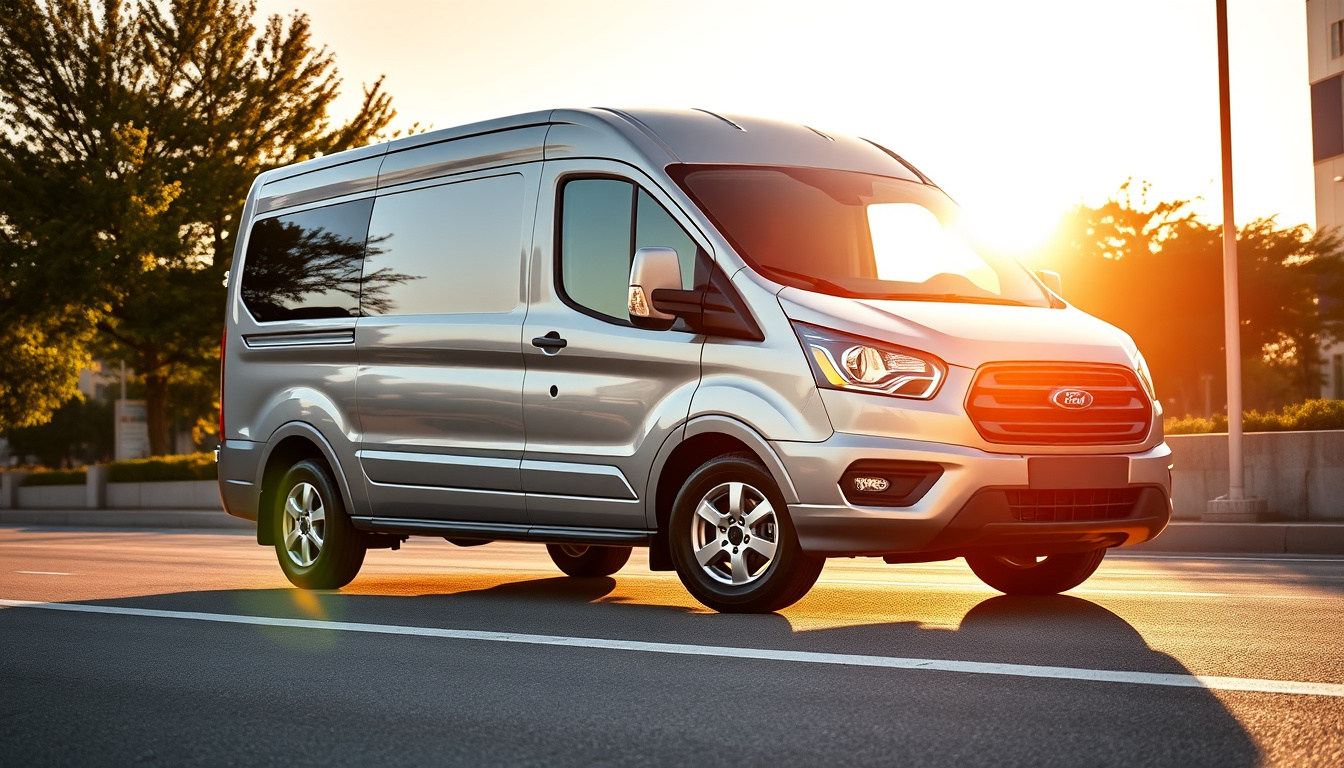
Ford’s best-selling commercial van has received its most comprehensive overhaul in years. The all-new Transit Custom arrives with a choice of electrified powertrains, improved practicality, and a fully redesigned interior aimed at keeping the model at the forefront of the one-tonne segment across the United Kingdom.
Launching with production commencing in the second half of 2023, this latest generation builds on the predecessor’s popularity while introducing capabilities that address growing demand for lower-emission commercial vehicles. Dealership arrivals followed in early 2024, with the range now encompassing diesel, mild hybrid, plug-in hybrid, and fully electric variants.
Understanding the options, specifications, and pricing of this new model matters significantly for businesses and operators evaluating their next commercial vehicle investment. The choices available span a broader technical spectrum than any previous Transit Custom generation.
What is the new Ford Transit Custom?
The new Ford Transit Custom represents the eighth-generation update for one of Britain’s most recognisable commercial vehicles. Positioned as a one-tonne panel van, it maintains the core versatility that contributed to the model becoming Europe’s best-selling van while introducing new powertrain options designed to reduce running costs and environmental impact.
Built on a shared platform developed in partnership with Volkswagen, the new model shares foundations with the latest Transporter while retaining distinct Ford identity through its design, technology, and dealer network support.
The Transit Custom name carries substantial weight in the UK commercial vehicle sector. Its predecessor consistently topped monthly registration charts, and Ford has designed this new model to defend that position against increasingly competitive alternatives from manufacturers investing heavily in electric van offerings.
The model also serves as the basis for the new Ford Tourneo Custom passenger version, effectively creating a two-vehicle family sharing core architecture and mechanical components while serving distinctly different market requirements.
Overview at a glance
The following key insights distinguish the new model from competitors and previous generations:
- First Transit Custom with factory-fitted plug-in hybrid and full electric options alongside conventional engines
- Available with Pro-Power Onboard system providing up to 2.3 kW of exportable electricity for tools and equipment
- SYNC 4 infotainment with cloud-based navigation, live traffic updates, and integrated charge point plotting for electric variants
- Improved payload capacity reaching 1,204 kg on targeted configurations
- Towing capability up to 2.3 tonnes across the range
- Loadspace up to 5.8 cubic metres accommodating three Euro pallets or standard 8-foot by 4-foot boards
- No AdBlue requirement on PHEV models, simplifying maintenance for operators unfamiliar with SCR systems
Key specifications snapshot
| Specification | Detail | Source |
|---|---|---|
| Starting Price | £33,350 (net retail, excl. VAT) | Ford UK |
| Payload Max | 1,204 kg | Ford UK |
| Towing Max | 2,300 kg | Ford UK |
| Loadspace | 5.8 cubic metres | Ford UK |
| Fuel Tank (PHEV) | 63 litres | Ford Technical Specs |
| Production Start | H2 2023 | AlphaLease |
| UK Availability | Early 2024 | AlphaLease |
| Platform Partner | Volkswagen | AlphaLease |
What are the key specs and features?
Ford has structured the new Transit Custom around three core priorities: reducing total cost of ownership, improving driver experience, and delivering genuine practical improvements over the outgoing model. Technology features feature prominently in achieving these aims.
Interior and technology
The interior receives a complete redesign centred on a 13-inch touchscreen running Ford’s SYNC 4 system. This architecture supports over-the-air updates, allowing the vehicle to receive new features and improvements without requiring a dealer visit.
Cloud connectivity enables real-time traffic information and automatic rerouting when delays occur. For electric and PHEV models, the system integrates charge point location and availability data, helping operators plan routes around charging requirements more effectively.
The navigation system actively plots optimal routes based on remaining battery charge or fuel level, incorporating predicted energy consumption based on terrain, load, and traffic conditions. Charge point information includes real-time availability where supported.
Pro-Power Onboard
A notable addition to the PHEV and electric models is the Pro-Power Onboard system. This feature provides up to 2.3 kW of exportable electrical power through sockets located within the load area, enabling operators to run power tools, lighting, and equipment without needing a separate generator.
The system draws from the vehicle’s high-voltage battery, meaning equipment can operate silently during urban deliveries or while loading at night-time locations where noise restrictions apply. For tradespeople and service businesses, this capability can significantly reduce the need for additional equipment investments.
Loadspace and dimensions
The load compartment offers 5.8 cubic metres of volume in standard L2H1 configuration, accommodating three Euro pallets or boards up to 8 feet by 4 feet without modification. Ford achieved this through revised interior packaging and repositioning of mechanical components.
The maximum payload reaches 1,204 kg on targeted configurations, representing a meaningful increase over some predecessor models. Towing capacity extends to 2.3 tonnes, providing additional flexibility for operators who need to move trailers or equipment.
Actual payload capacity varies significantly based on chosen specification, wheelbase, roof height, and installed options. Operators should consult the specific vehicle’s gross vehicle weight rating when calculating load allowances.
What engine options are available?
The new Transit Custom introduces Ford’s most diverse engine lineup for this model line, encompassing conventional diesel, mild hybrid diesel, plug-in hybrid petrol, and fully electric powertrains. Each option targets different operational requirements and usage patterns.
Plug-in hybrid (PHEV)
The PHEV variant pairs a 2.5-litre petrol engine with an electric motor, producing a combined output of approximately 233 PS. The 11.8 kWh NMC lithium-ion battery comprising 96 cells provides electric-only range reaching 33-35 miles under WLTP testing, with targeted figures suggesting 23-35 miles depending on conditions and load.
Combined fuel consumption reaches 176.6 mpg on the WLTP weighted cycle, with CO2 emissions of 33-50 g/km for mainland Britain. When operating in petrol-only mode, the vehicle achieves approximately 39.8 mpg, providing extended range capability beyond the battery capacity.
| PHEV Efficiency Metric | Value | Testing Standard |
|---|---|---|
| Electric Range | 33-35 miles | WLTP combined |
| Combined Fuel Economy | 176.6 mpg (1.4-2.9 l/100km) | WLTP weighted |
| CO2 Emissions | 33-50 g/km | WLTP |
| Petrol-Only Economy | 39.8 mpg | Calculated |
Charging the PHEV at up to 125 kW DC enables a 10-80% replenishment in approximately 3.9 hours, though home and depot charging via 3.6 kW AC provides a slower but more accessible charging solution for overnight connection. Ford specifies a 63-litre fuel tank capacity, eliminating the need for AdBlue fluid and associated refilling maintenance.
Published range figures represent WLTP test cycle results. Real-world electric-only range varies considerably based on ambient temperature, load weight, driving style, and terrain. Operators should plan charging accordingly rather than relying on optimistic estimates.
Diesel variants (EcoBlue)
The 2.0-litre EcoBlue diesel engine continues in the new model range, offered in four power outputs: 110 PS, 136 PS, 150 PS, and 170 PS. Torque figures span 310-390 Nm depending on specification, providing flexibility for different loading requirements and operational profiles.
Fuel consumption ranges from 6.8 to 11.1 litres per 100 km across the diesel lineup under WLTP testing, with corresponding CO2 emissions between 178-291 g/km. The 55-litre fuel tank provides extended range for long-distance operators. Mild hybrid variants incorporating 48V technology offer improved efficiency during stop-start urban operation.
All-electric (E-Transit Custom)
The fully electric E-Transit Custom represents Ford’s zero-emission offering in this segment. Power outputs of 100 kW, 160 kW, and 210 kW serve different operational requirements, with maximum torque of 415 Nm available across the range.
The 276-cell NCM lithium-ion battery provides up to 337 km (approximately 209 miles) of range under WLTP testing, supporting urban delivery operations and last-mile logistics applications where air quality regulations increasingly influence vehicle selection.
DC charging at up to 125 kW enables rapid replenishment during route interruptions, while AC charging provides flexibility for depot-based overnight connection. The electric powertrain shares the Pro-Power Onboard capability with the PHEV, enabling external equipment power supply without a combustion engine running.
When is the release date and what is the price?
Production of the new Ford Transit Custom commenced in the second half of 2023 at Ford’s European manufacturing facilities. The company prioritised supply to key markets including the United Kingdom, with models becoming available to order from late 2023 through official dealer networks.
Dealership availability expanded through early 2024, with Ford emphasising the PHEV and E-Transit Custom variants as newly launched options within the broader range. Customers seeking specific configurations should contact their nearest dealer regarding current availability timelines.
Price positioning
The recommended retail price for base specifications begins at £33,350 excluding VAT for commercial vehicle variants. This figure represents the net retail cost and serves as an entry point to the range rather than a comprehensive specification.
Specific pricing for PHEV and electric variants remains subject to individual configuration and dealer quotation. The available order system as of 2024 enables customers to specify their requirements and receive detailed pricing reflecting chosen options, wheels, interior specifications, and additional equipment.
Vehicle pricing excludes VAT where applicable. Commercial vehicle purchasers typically account for VAT recovery differently than private buyers. Finance options, lease arrangements, and government incentives may affect effective ownership costs beyond the published retail figure.
For businesses exploring acquisition, consulting the UK government guidance on commercial vehicle taxation provides relevant information on applicable benefits-in-kind calculations and tax considerations for company vehicles. For businesses exploring acquisition, consulting the UK government guidance on commercial vehicle taxation provides relevant information on applicable benefits-in-kind calculations and tax considerations for company vehicles, and you can find a Volkswagen Tayron recenze here. Volkswagen Tayron recenze
Model timeline milestones
- 2012 — Original Transit Custom launched, establishing the current one-tonne segment benchmark
- 2023 (H2) — Production of new generation begins at European facilities
- Late 2023 — Order books open for UK customers through Ford dealer network
- Early 2024 — Dealership arrivals and customer deliveries commence
- 2024 onwards — Full model range including PHEV and electric variants becoming widely available
The new model represents the most significant refresh since the original launch, with Ford investing substantially in electrified powertrains to address both regulatory requirements and genuine market demand for lower-emission commercial vehicles.
How does it compare to the previous model?
The transition from the previous generation to the new model involves substantial changes beyond superficial styling adjustments. Ford has fundamentally reconsidered the Transit Custom’s architecture to accommodate new powertrain options while maintaining and improving practical capabilities.
PHEV evolution
The plug-in hybrid variant demonstrates the most dramatic technical advancement. Ford replaced the previous 1.0-litre three-cylinder petrol engine with a 2.5-litre four-cylinder unit, providing substantially greater power reserve for combined operation. The battery capacity increased from the predecessor’s smaller specification to the current 11.8 kWh, extending electric-only range by approximately 4.5 miles to reach the 35-mile figure.
These changes affect not just performance but the practical utility of the hybrid system. A larger battery and more capable engine mean the vehicle can sustain electric operation more readily under partial load conditions, improving real-world fuel economy for operators who charge regularly.
Capability improvements
| Aspect | Previous Generation | New Generation |
|---|---|---|
| PHEV Battery | Smaller capacity | 11.8 kWh (96 cells) |
| PHEV Engine | 1.0 litre petrol | 2.5 litre petrol |
| Electric Options | Not available | Up to 209 miles range |
| Mild Hybrid | Not available | 48V diesel available |
| Max Payload | 1,100+ kg | 1,204 kg |
| Towing | Up to 2.0 tonnes | Up to 2.3 tonnes |
| Fast Charging | Not available | 125 kW DC on electric |
Despite extensive technical changes, Ford has maintained the core load-carrying dimensions and usability features that operators depend on. Those familiar with the previous generation will find the new model recognisable in terms of loading and operational characteristics.
Technological advancement
The introduction of SYNC 4 represents a generational leap in connectivity compared to previous-generation infotainment. Over-the-air update capability means the vehicle can receive feature improvements and bug fixes without requiring physical dealer visits, addressing a common criticism of older vehicle electronics.
Pro-Power Onboard similarly addresses real operational needs that the previous generation could not satisfy. Tradespeople and service operators previously required separate generators or battery packs for equipment power; the new system integrates this capability into the vehicle’s standard specification on relevant variants.
What does the Tourneo Custom relationship mean?
Ford’s decision to develop the Transit Custom alongside a passenger-focused Tourneo variant reflects broader industry practice of shared platforms reducing development costs while enabling distinct product positioning.
The Ford Tourneo Custom shares the new model’s platform, powertrains, and core architecture, including the PHEV and full-electric options. However, interior appointments, seating configurations, and feature emphasis differ substantially, with the Tourneo optimised for passenger transport rather than cargo carrying.
For fleet operators managing both cargo and passenger transport requirements, the relationship between these models offers potential efficiency in maintenance, driver familiarity, and parts sourcing. Dealership networks support both variants through common service capabilities.
More information on the Tourneo Custom is available from Ford’s commercial vehicle information through official Ford channels and dealer networks.
What sources and official information support these details?
Information presented in this article draws from several distinct source categories, each providing different perspectives on the new Transit Custom.
The all-new Ford Transit Custom represents our commitment to providing commercial vehicle operators with genuine choice across powertrains while maintaining the practical capabilities they depend on daily.
— Ford of Britain commercial vehicle communications
Official Ford sources including the UK website, product specification documents, and dealer communications provide the primary factual foundation for specifications, pricing, and availability timelines. These sources offer the most authoritative interpretation of vehicle capabilities.
Independent sources including automotive publications and commercial vehicle lease specialists provide additional context on real-world operation and comparison with alternatives. These secondary sources supplement official information with practical perspectives from operators and industry observers.
Technical specification documents published by Ford’s media resources provide detailed engineering data, though these documents are typically produced at specific points during launch cycles and may not reflect subsequent specification adjustments. Interested parties should verify current specifications with their chosen dealer.
Industry data from organisations monitoring commercial vehicle registrations provides context for the model’s market position, with the SMMT vehicle data resources offering publicly accessible registration statistics.
What should buyers consider next?
Prospective buyers evaluating the new Transit Custom should approach the decision based on their specific operational requirements rather than specifications alone. The diversity of available powertrains means the optimal choice varies considerably depending on usage patterns, infrastructure availability, and duty cycles.
Operators whose daily routes predominantly involve short urban journeys with return-to-base charging infrastructure may find the fully electric E-Transit Custom provides the lowest total cost of ownership despite higher acquisition prices. Those requiring extended range capability without charging infrastructure reliance may find the PHEV or diesel variants more appropriate.
Test drives through Ford’s dealer network enable operators to experience the vehicle’s characteristics directly, including the SYNC 4 interface and Pro-Power Onboard functionality where available. Dealers can also provide detailed pricing for specific configurations and discuss finance or lease arrangements.
For drivers and operators, understanding how new regulations affect commercial vehicle use matters increasingly. Recent changes affecting UK drivers are discussed in our analysis of DVLA rule updates for those managing vehicle compliance requirements.
The commercial vehicle market continues evolving rapidly as manufacturers respond to emissions regulations and operator demand for sustainable transport solutions. Ford’s investment in the Transit Custom range, spanning conventional and electrified options, positions the model to serve diverse requirements across the UK commercial vehicle sector.
Frequently asked questions
Where can I buy or test drive the new Ford Transit Custom?
The new Ford Transit Custom is available through Ford’s UK dealer network. Contact your nearest dealer to arrange a test drive and discuss specific configuration requirements. Ford’s official website provides dealer locator functionality and enables online reservation enquiries for new vehicles.
What is the warranty coverage for the new model?
Ford provides standard commercial vehicle warranty terms for the Transit Custom range. Specific coverage details, including duration and mileage limits, should be confirmed with your chosen dealer as warranty terms can vary by specification and may be influenced by regional arrangements.
How does the PHEV perform in cold weather conditions?
Battery performance in cold weather conditions affects the electric-only range of PHEV variants. Actual range in winter conditions may fall below WLTP figures due to temperature effects on battery chemistry and increased cabin heating demand. Planning for reduced electric range during cold months helps ensure adequate total mobility.
Can the electric variant be charged from standard home outlets?
The E-Transit Custom supports charging from standard domestic electricity supplies through appropriate charging cables. Home charging provides a convenient overnight replenishment solution but involves longer charging times than dedicated high-power charging equipment. Depot installation of appropriate charging infrastructure can optimise home charging efficiency.
What payloads apply to specific configurations?
Payload capacity varies significantly based on chosen wheelbase, roof height, powertrain, and installed equipment. Maximum figures of 1,204 kg apply to targeted configurations. Always verify specific vehicle weight ratings against intended loading requirements rather than relying on maximum figures alone.
Does Ford offer any business fleet incentives for this model?
Ford maintains various fleet and business programmes that may include preferential pricing, dedicated support, or finance arrangements. Inquiring through dealer fleet teams or Ford’s business sales channels provides access to available programmes tailored to commercial operators.
What maintenance intervals apply to the new Transit Custom?
Maintenance schedules vary by powertrain variant, with electric models typically requiring less frequent servicing than diesel equivalents. Your dealer can provide specific maintenance schedules for your chosen configuration. Ford’s connected vehicle services may provide maintenance reminders based on actual usage conditions.

Oliver Arthur Morgan Harrison is a staff writer for StoryShift.uk, covering UK news, culture, politics and technology. He works under Editor-in-Chief Maarika Tamm and UK Managing Editor Oliver Grant, following the newsroom standards for sourcing, verification and fact-checking set out in our editorial policies.