George Washington served as the first president of the United States, a role that defined the office for generations to follow. Born on February 22, 1732, in Westmoreland County, Virginia, he rose from a modest colonial upbringing to become the commander in chief of the Continental Army during the American Revolution and a pivotal figure at the Constitutional Convention. His leadership and decisions shaped the fledgling nation, and his legacy remains deeply embedded in American identity.
Washington spent much of his early life in Virginia, working on the family plantation and later making Mount Vernon his permanent home. He died there on December 14, 1799, having set critical precedents for the presidency and the republic itself. His life story is one of ambition, duty, and complex contradictions, particularly regarding the institution of slavery.
George Washington Biography: First President of the United States
Key Insights
- Washington voluntarily stepped down after two terms, setting a key precedent for peaceful transfer of power.
- He owned enslaved people throughout his life but expressed conflicted views on slavery in his will.
- His height of approximately 6 feet 2 inches was notable for the era and contributed to his commanding presence.
- Washington had no formal higher education but was highly self-taught and literate.
- He presided over the Constitutional Convention in 1787, helping to frame the U.S. Constitution.
- His leadership during the Revolutionary War was crucial to the American victory.
Snapshot Facts
| Attribute | Details |
|---|---|
| Full Name | George Washington |
| Born | February 22, 1732 (Old Style: February 11, 1731) |
| Died | December 14, 1799 |
| Height | Approximately 6 ft 2 in (188 cm) |
| Spouse | Martha Dandridge Custis |
| Education | Tutored at home, no college |
| Presidency | April 30, 1789 – March 4, 1797 |
| Key Battles | Siege of Boston, Battle of Trenton, Yorktown |
| Estate | Mount Vernon, Virginia |
George Washington’s Personal Life: Wife and Slavery
Martha Washington
Washington married Martha Dandridge Custis, a wealthy widow, in 1758 or 1759 (sources vary on the exact date). They had no children together, but he helped raise her children from her previous marriage. Martha is often described as the nation’s first first lady, though the title was not used during her lifetime.
Washington and Slavery
Throughout his adult life, Washington owned enslaved people. He inherited enslaved individuals at Mount Vernon, and their numbers grew over time. According to Britannica, he disapproved of slavery in principle, yet his public actions largely supported the institution. The National Park Service notes that he became a slave owner after his father died and that he and Martha raised her children together. Washington’s will freed the enslaved people he owned, but only after his wife’s death.
Washington’s views on slavery remain a subject of debate among historians. While he privately expressed unease and ultimately freed his slaves in his will, he did not advocate for abolition during his presidency and owned enslaved people for most of his life.
George Washington’s Education and Physical Attributes
Education
Washington’s early education was limited compared to that of his older half-brothers. He studied reading, writing, basic legal forms, geometry, and trigonometry, largely to prepare for a career as a surveyor. He did not attend college. Multiple sources describe him as largely self-educated through reading and practical experience.
His experience as a teenage surveyor gave him early knowledge of mathematics and land valuation, skills that later proved valuable in military mapping and land management.
Height
Washington’s height is often quoted as 6 feet 2 inches (188 cm), which would have made him unusually tall for the 18th century. However, contemporary accounts vary, and the exact figure is not definitively recorded in the available sources. The commonly cited measurement contributes to the image of Washington as a commanding figure.
Washington’s height, combined with his posture and demeanor, helped create a commanding presence that impressed contemporaries. His stature is often noted as part of his leadership aura.
Visiting George Washington’s Mount Vernon
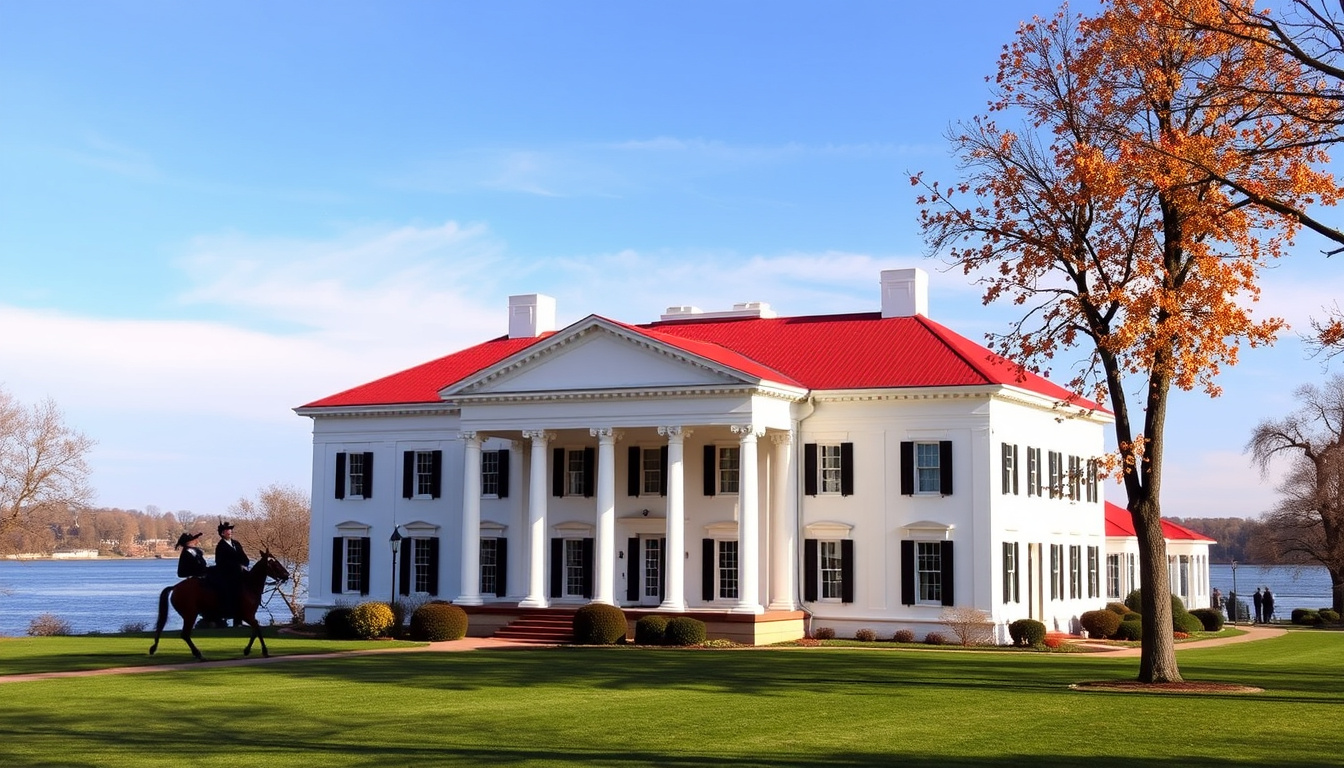
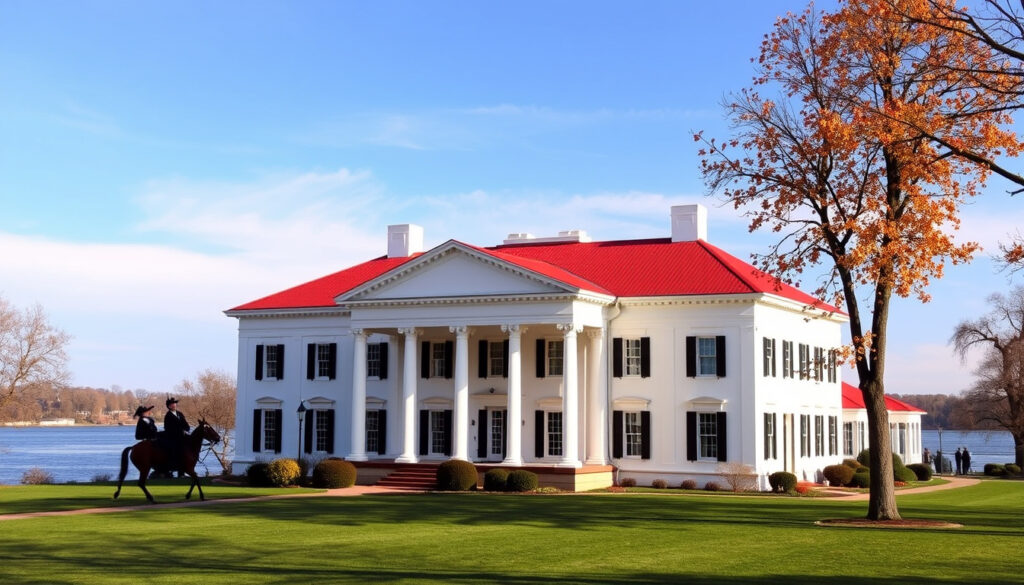
Mount Vernon, located on the banks of the Potomac River in Virginia, was Washington’s home for much of his adult life. He expanded the estate and oversaw its operations as a planter. Today, the property is a historic site operated by the Mount Vernon Ladies’ Association, offering tours, educational programs, and a museum.
Visitors can explore the mansion, slave quarters, gardens, and Washington’s tomb. The estate provides a detailed look at both the public and private life of the first president. Official information is available at the Mount Vernon official site.
Key Events in George Washington’s Life
- 1732: Born in Westmoreland County, Virginia
- 1749: Appointed surveyor of Culpeper County
- 1754: Leads Virginia militia in French and Indian War
- 1775: Appointed Commander-in-Chief of Continental Army
- 1783: Resigns commission after Treaty of Paris
- 1787: Presides over Constitutional Convention
- 1789: Inaugurated as first President
- 1797: Retires to Mount Vernon
- 1799: Dies at Mount Vernon
What Is Certain and What Remains Uncertain About Washington?
| Established Information | Information That Remains Unclear |
|---|---|
| Washington served as the first U.S. president; born 1732; died 1799. | Exact height: often quoted as 6’2″ but contemporary accounts vary. |
| He owned enslaved people throughout his life. | His private beliefs on slavery remain debated; public actions mostly supported the institution. |
| He had no formal college education but was well-read. | Some details of his youth, including the cherry tree story, are apocryphal. |
| He led the Continental Army to victory in the American Revolution. | Certain aspects of his military strategy and personal relationships are subject to ongoing research. |
George Washington’s Role in American History
Washington’s leadership during the Revolutionary War was crucial to the American victory. His ability to hold the Continental Army together through harsh winters and defeats earned him lasting respect. After the war, he presided over the Constitutional Convention, lending his prestige to the creation of a new federal government. For a perspective on another pivotal American figure, see the Robert Kennedy – Complete Guide to RFK Sr. and RFK Jr..
As president, Washington set many norms that continue today: the cabinet system, delivering a State of the Union address, and the two-term limit (later codified in the 22nd Amendment). His decision to step down after two terms was a powerful example of republican governance.
His stance on slavery remains a complex part of his legacy. He freed his enslaved workers only upon his wife’s death, and he did not publicly challenge the institution during his presidency. Yet his symbolic importance as the “Father of His Country” endures.
Quotes and Sources on George Washington’s Legacy
“First in war, first in peace, first in the hearts of his countrymen.”
— Henry Lee’s eulogy
“I cannot tell a lie, I did it with my little hatchet.”
— Parson Weems’ biography (apocryphal)
“To be prepared for war is one of the most effectual means of preserving peace.”
— George Washington, First Annual Address
For further reading, consult the Wikipedia article on George Washington and the Britannica biography. The Miller Center offers a concise life summary, and the White House Historical Association provides additional context.
Summary: The Enduring Impact of George Washington
George Washington’s life and leadership established the foundation for the American presidency and the nation’s democratic traditions. From his military command during the Revolution to his role in framing the Constitution and his voluntary retirement, Washington set precedents that shaped the office and the country. His complex relationship with slavery remains a subject of historical inquiry, but his place as a central figure in American history is secure. For readers interested in other influential American figures, see the Robert Kennedy – Complete Guide to RFK Sr. and RFK Jr..
Frequently Asked Questions About George Washington
Did George Washington have children?
Washington had no biological children. He helped raise Martha’s children from a previous marriage.
Why is George Washington considered a Founding Father?
He led the Continental Army, presided over the Constitutional Convention, and set many precedents as first president.
What is George Washington’s connection to the cherry tree story?
The story is a myth popularized by biographer Parson Weems, not a historical fact.
How tall was George Washington?
His height is often cited as 6 feet 2 inches (188 cm), but contemporary accounts vary and the exact figure is not certain.
Where did George Washington live?
He lived at Mount Vernon, his estate in Virginia, for much of his adult life. He died there in 1799.
What was Washington’s education?
He was tutored at home and studied subjects like geometry and trigonometry for surveying. He did not attend college.
When did George Washington become president?
He was inaugurated as the first president on April 30, 1789, and served until March 4, 1797.
Did George Washington own slaves?
Yes, he owned enslaved people throughout most of his life. He freed them in his will upon his wife’s death.
What is Mount Vernon?
Mount Vernon was Washington’s plantation home. It is now a historic site open to the public.
What was Washington’s role in the American Revolution?
He served as commander in chief of the Continental Army, leading the colonies to victory over Britain.
For a biographical perspective on another major historical figure, read Victor Hugo – Biography, Famous Works, and Lasting Impact.

Oliver Arthur Morgan Harrison is a staff writer for StoryShift.uk, covering UK news, culture, politics and technology. He works under Editor-in-Chief Maarika Tamm and UK Managing Editor Oliver Grant, following the newsroom standards for sourcing, verification and fact-checking set out in our editorial policies.