Victor Hugo was a titan of 19th-century literature, a man whose words shaped French culture and whose political activism made him a symbol of resistance. Born in 1802 in Besançon, he rose to become the leading figure of the Romantic movement, crafting epic novels, searing poetry, and influential plays. His life was one of dramatic contrasts: he was both a celebrated member of the Académie Française and a political exile, a human-rights advocate who spent nearly two decades living outside his homeland.
Hugo’s legacy rests on two monumental novels: The Hunchback of Notre-Dame (1831) and Les Misérables (1862). These works, along with his vast body of poetry and drama, have been translated into dozens of languages and adapted into countless films, stage musicals, and operas. More than a writer, he was a public intellectual who used his pen to argue for social justice, the abolition of the death penalty, and the preservation of historic architecture.
When he died in Paris on May 22, 1885, his funeral drew an estimated two million mourners. He was laid to rest in the Panthéon, a final honor reserved for France’s greatest figures. His influence, however, extends far beyond a single nation, making him a truly global literary icon.
Who Was Victor Hugo? A Biography of the French Romantic Genius
Victor Hugo at a Glance
- Full Name: Victor-Marie Hugo
- Born: 26 February 1802, Besançon, France
- Died: 22 May 1885, Paris, France
- Famous For: Les Misérables, The Hunchback of Notre-Dame
- Movement: French Romanticism
- Occupation: Poet, novelist, dramatist, politician, artist
Key Insights About Victor Hugo
- He was the leading figure of French Romanticism, blending epic storytelling with political activism.
- His novels Les Misérables and The Hunchback of Notre-Dame are among the most adapted works in literary history.
- Hugo’s 19-year exile from France, from 1851 to 1870, was a defining period that shaped his most famous works.
- Beyond writing, he was a talented visual artist who created an estimated thousands of drawings and watercolors.
- His quotes on love, justice, and humanity remain some of the most widely cited in modern culture.
Key Facts About Victor Hugo
| Fact | Details |
|---|---|
| Full Name | Victor-Marie Hugo |
| Birth Date | 26 February 1802 |
| Birthplace | Besançon, France |
| Death Date | 22 May 1885 |
| Deathplace | Paris, France |
| Major Genres | Poetry, drama, novels |
| Académie Française | Elected in 1841 |
| Exile Period | 1851–1870 (opposition to Napoleon III) |
| Key Novels | Les Misérables (1862), The Hunchback of Notre-Dame (1831) |
| Literary Movement | French Romanticism |
| Political Role | Politician and advocate for social justice and reform |
| Funeral Attendance | Over 2 million people |
What Books Did Victor Hugo Write? His Most Famous Works
Victor Hugo was a prolific writer whose career spanned poetry, drama, and the novel. He published dozens of volumes across his lifetime, establishing himself as the dominant literary voice of his generation. His best-known works, however, are the two novels that define his global reputation.
Les Misérables (1862)
Described by Britannica as the story of the convict Jean Valjean, Les Misérables is an epic narrative of redemption, justice, and the struggle against poverty. It was an instant international success upon its publication in 1862. The novel’s themes remain powerfully relevant, and it has been adapted into a globally successful musical and numerous films.
The Hunchback of Notre-Dame (1831)
Also known as Notre-Dame de Paris, this novel is an evocation of medieval life centered on the Cathedral of Notre-Dame. According to Penguin Random House, it helped establish Hugo’s global reputation. The book’s vivid depiction of Quasimodo and Esmeralda captured the public imagination and spurred interest in the preservation of Gothic architecture.
Major Plays and Poetry
Hugo was at the forefront of Romantic drama, especially through works like Cromwell (1827) and Hernani (1830), which broke with classical conventions. His other notable plays include Ruy Blas, Marion de Lorme, and The King Amuses Himself. His poetry collections are equally vital: Les Châtiments, Les Contemplations, Les Feuilles d’automne, Les Rayons et les ombres, Les Voix intérieures, Les Orientales, and La Légende des siècles. These works established him as a master of multiple literary forms.
Hugo’s works have inspired an extraordinary range of adaptations. The opera Rigoletto by Verdi is based on his play Le roi s’amuse, while the musicals Les Misérables and Notre-Dame de Paris have reached audiences worldwide. These adaptations have kept his stories alive for new generations.
What Are the Most Famous Victor Hugo Quotes?
Victor Hugo’s words carry a weight that has transcended their original contexts. Many of his quotations have become part of the global lexicon, frequently cited for their wisdom on love, justice, and human resilience. The following are among his most attributed lines, drawn largely from his novels and attributed writings.
- “Even the darkest night will end and the sun will rise.” — Les Misérables
- “To love another person is to see the face of God.” — Les Misérables
- “He who opens a school door, closes a prison.” — Attributed to Hugo
- “Music expresses that which cannot be put into words and that which cannot remain silent.” — Attributed to Hugo
These quotes are widely available on platforms like Goodreads, though it is worth noting that some attributions, especially those without a direct novel source, should be treated with a degree of caution as they may be paraphrased or adapted over time.
How Did Victor Hugo Influence Literature and Culture?
Hugo’s influence extends far beyond the page. He was not merely a writer but a committed intellectual who used his platform to shape public discourse. His works directly responded to the social and political upheavals of 19th-century France, and they continue to resonate in modern debates about justice, inequality, and human rights.
Political Impact and Exile
Hugo’s political career was as dramatic as his fiction. He was initially a royalist but later became a fierce republican. His opposition to Louis-Napoléon Bonaparte (later Napoleon III) forced him into exile in 1851. According to Biography.com, he lived in Brussels and on the Channel Islands (Jersey and Guernsey) during this period. His exile produced some of his most radical political writing, including the poetry collection Les Châtiments, which satirized Napoleon III.
Cultural Legacy and Architecture
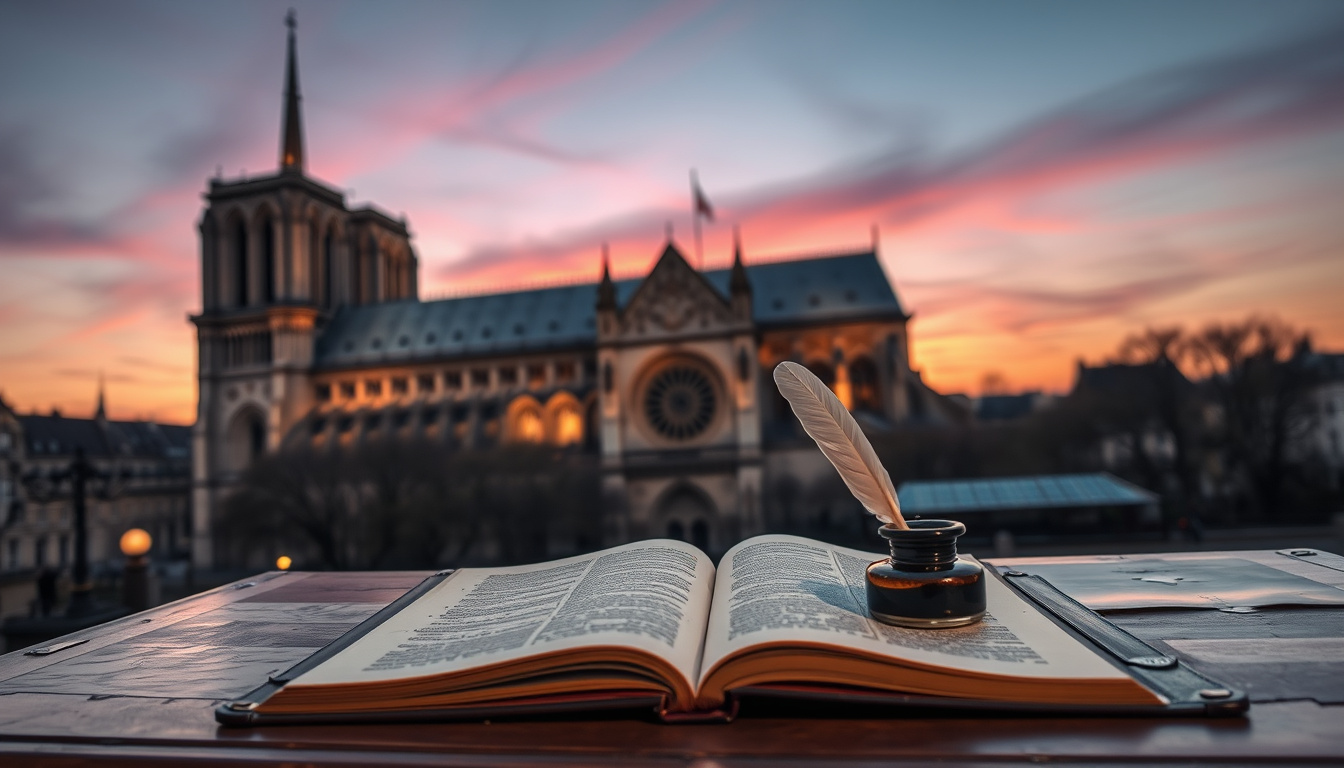
Hugo’s passion for the Notre-Dame Cathedral influenced its preservation. Through the immense popularity of The Hunchback of Notre-Dame, he helped spark a movement to restore the medieval building. This legacy is documented by Google Arts & Culture, which notes his role as a monument preservation advocate.
Film, Stage, and Opera Adaptations
Hugo’s stories have been adapted into countless movies. Notable film versions of Les Misérables include the 2012 musical starring Hugh Jackman, while The Hunchback of Notre-Dame has seen numerous cinematic and animated treatments. The opera Rigoletto, based on his play, remains a staple of the operatic repertoire, as documented by Wikipedia.
While Hugo’s influence is vast, it is important to distinguish his literary and political legacy from other unrelated figures who share his name. His impact on literature, architecture, and social justice is well-documented, but he is not associated with Brazilian jiu-jitsu (BJJ), the fashion designer Halston, or the Victor Hugo deli.
Who or What Is Referenced by ‘Victor Hugo’ in Other Contexts?
A search for “Victor Hugo” can sometimes return results that refer to individuals or businesses entirely unrelated to the French author. This is a common source of confusion that warrants clarification.
Victor Hugo and Halston: The name “Halston” is associated with the American fashion designer Roy Halston Frowick. There is no known relationship between Victor Hugo and Halston. The connection appears only in search queries, not in any biographical record.
Victor Hugo in BJJ: “Victor Hugo BJJ” refers to a Brazilian Jiu-Jitsu athlete and competitor. This is a different person entirely, sharing only the name. The author Victor Hugo died in 1885, long before the modern sport of BJJ was widely practiced.
Victor Hugo Deli: Some local businesses, particularly delis, may use the name “Victor Hugo” for branding purposes. These are commercial entities with no connection to the writer’s life or legacy.
Timeline of Victor Hugo’s Life
- : Born in Besançon, France.
- : Publishes first poetry collection Odes et Poésies Diverses.
- : Publishes The Hunchback of Notre-Dame.
- : Elected to the Académie Française.
- : Exiled after opposing Napoleon III’s coup.
- : Publishes Les Misérables.
- : Returns to France after exile.
- : Dies in Paris; lies in state under the Arc de Triomphe before being buried in the Panthéon.
What We Know vs. What Is Misunderstood
| Established Information | Information That Remains Unclear or Misunderstood |
|---|---|
| Victor Hugo was born in 1802 and died in 1885. | Victor Hugo is not related to the fashion label Halston (Roy Halston Frowick). |
| He wrote Les Misérables and The Hunchback of Notre-Dame. | “Victor Hugo BJJ” refers to a Brazilian Jiu-Jitsu athlete, not the author. |
| He was exiled for 19 years for his political views. | “Victor Hugo deli” is a separate business, not associated with the writer. |
| He is considered the central figure of French Romanticism. | The exact number of drawings Hugo created is unknown but estimated at over 4,000. |
The Background and Meaning of Hugo’s Work
Victor Hugo’s works cannot be fully understood without considering the turbulent era in which he lived. His novels were direct responses to the social crises of his time. Les Misérables is a powerful critique of poverty and injustice, reflecting Hugo’s own humanitarian beliefs. He saw literature as a tool for social change, and his political exile only deepened his commitment to these ideals. His architectural passion for Notre-Dame Cathedral also influenced its eventual preservation, demonstrating how his artistic vision had tangible effects on France’s cultural heritage.
Sources and Quotes on Victor Hugo
“Even the darkest night will end and the sun will rise.”
— Les Misérables
“To love another person is to see the face of God.”
— Les Misérables
“He who opens a school door, closes a prison.”
— Attributed to Hugo
A Concluding Look at Victor Hugo’s Legacy
Victor Hugo remains one of the most enduring figures in world literature. His ability to blend epic storytelling with political passion created works that have inspired readers for over a century. Whether through the pages of Les Misérables, the haunting tale of The Hunchback of Notre-Dame, or his powerful poetry, his voice continues to speak to questions of justice, love, and human resilience. For readers interested in the craft of writing and adaptation, the works of Lemony Snicket – Complete Guide to Books and Adaptations and the career of Amber Gill – From Love Island Winner to Bestselling Author offer fascinating parallels in how stories evolve across media.
Frequently Asked Questions About Victor Hugo
How many languages were Victor Hugo’s works translated into?
Hugo’s works have been translated into over 60 languages.
Did Victor Hugo win any literary awards?
He was elected to the Académie Française, considered the highest honor in French letters.
Was Victor Hugo also a painter?
Yes, he created over 4,000 drawings and watercolors.
What is the Victor Hugo opera about?
Several operas are based on his works, most notably Verdi’s Rigoletto (based on Le roi s’amuse).
Who is Victor Hugo in BJJ?
Victor Hugo is a Brazilian Jiu-Jitsu practitioner and competitor, unrelated to the author.

Oliver Arthur Morgan Harrison is a staff writer for StoryShift.uk, covering UK news, culture, politics and technology. He works under Editor-in-Chief Maarika Tamm and UK Managing Editor Oliver Grant, following the newsroom standards for sourcing, verification and fact-checking set out in our editorial policies.