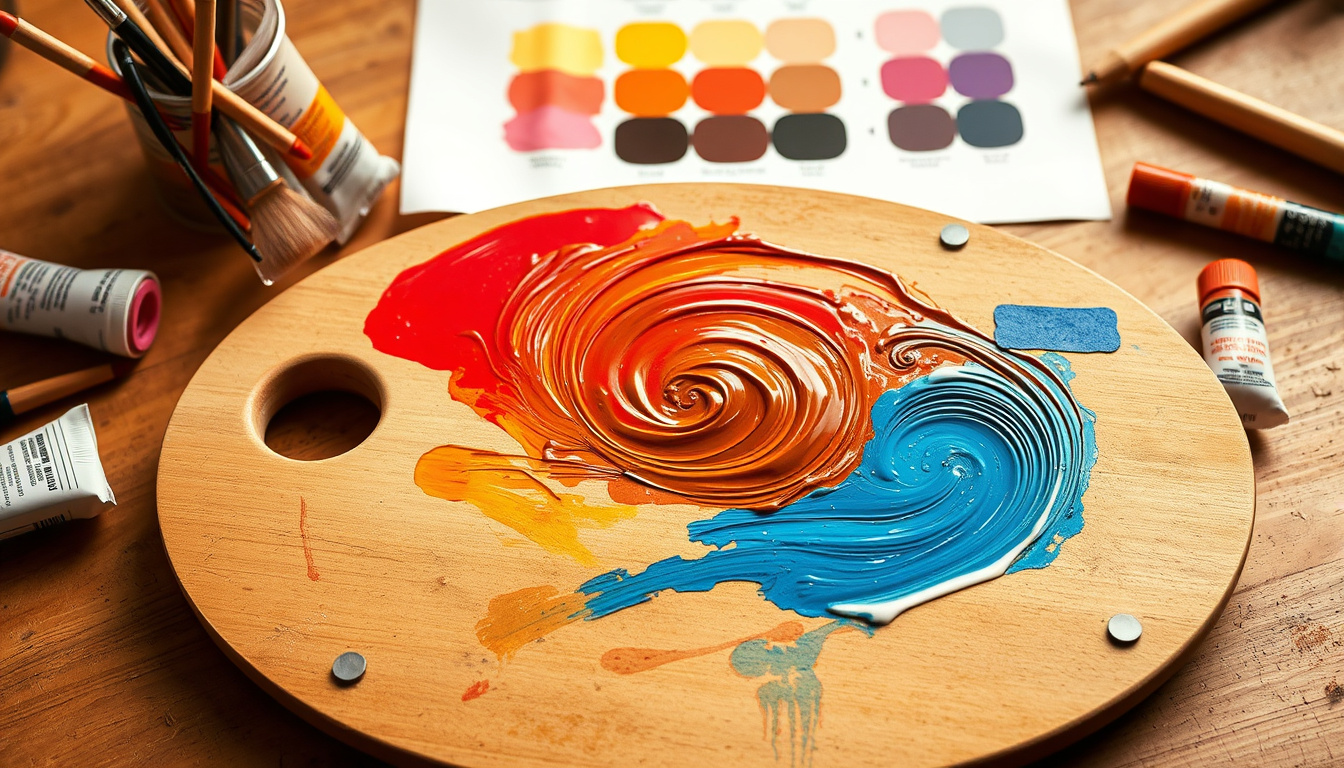
Brown ranks among the most versatile colors in any artist’s or crafter’s palette. It serves as the backbone for portrait skin tones, landscape shadows, and countless everyday applications. Understanding how to make brown opens doors to greater control over your work and reduces dependence on pre-mixed tubes. Multiple approaches exist, each producing slightly different results depending on the pigments involved.
The science behind brown creation lies in color theory principles developed over centuries. Whether mixing paint, combining dyes, or blending digital colors, the underlying mechanics remain consistent. This guide covers practical methods for creating brown from various starting points, with specific ratios and techniques backed by established art education sources.
How to Make Brown Paint from Primary Colors
The most fundamental method for creating brown involves mixing the three primary colors in roughly equal proportions. Red, yellow, and blue combine to produce a neutral brown that serves as an excellent base for further refinement. This approach works across most painting mediums, including acrylics, oils, and watercolors.
Red + Yellow + Blue
Red + Black
Orange + Blue
Purple + Yellow Alternative
- Equal parts red, yellow, and blue produce neutral brown as a starting point
- Pigment purity affects results—student-grade paints may yield less vibrant results than professional pigments
- Warmer browns result from increasing yellow or red proportions in the mix
- Cooler browns require additional blue to neutralize warmer tones
- The three-primary method creates brown through complementary color neutralization
- Subtle adjustments in ratio allow infinite brown variations from the same base
- Adding white progressively lightens while maintaining brown character
| Method | Colors | Result |
|---|---|---|
| Primaries | Red + Yellow + Blue | Neutral brown |
| Orange Base | Orange + Blue | Dark brown |
| Red Base | Red + Black | Deep brown |
Adjusting Brown Shades
Once you have established a base brown, refining the tone requires understanding warm and cool color relationships. Adding more yellow shifts the mixture toward golden browns, while additional red produces reddish-brown or russet tones. Incorporating blue cools the brown, creating grayish-brown hues suitable for shadows or stormy skies.
Lightening brown involves introducing white paint gradually until reaching the desired tone. This technique proves particularly useful for painting highlights on wooden surfaces or creating pale skin tones. The addition of white also improves opacity and coverage on your painting surface.
Certain pigments behave differently when mixed. Ultramarine blue tends toward purple, while cerulean blue remains cooler. Similarly, cadmium red differs from alizarin crimson in warmth. Testing small amounts before committing to large mixes helps predict outcomes accurately.
How to Make Brown from Orange
Orange and blue produce brown through a two-step process that offers excellent control over the final shade. First, mix red and yellow to create orange, then introduce blue to neutralize the brightness. This method proves particularly effective because the color wheel positions orange and blue as nearly opposite, creating natural darkening through complementary interaction.
The proportion of blue added determines how dark the resulting brown becomes. A small amount of blue relative to orange produces a warm, reddish brown. Increasing blue shifts the result toward cooler, darker browns approaching chocolate tones.
How to Make Brown from Red
Red alone cannot create brown, but combining red with black or blue produces deep brown shades efficiently. Red plus black creates a rich, warm brown suitable for wooden furniture tones or autumn foliage. Red plus blue yields a cooler brown with purple undertones, useful for shadows or subdued earth tones.
This two-color approach simplifies the mixing process and reduces the number of tubes needed in your palette. It works particularly well when working with limited supplies or when rapid color blocking is required before detailed mixing.
How to Make Dark Brown Colour by Mixing Two Colours
Creating dark brown from two colors relies on starting with a warm base and neutralizing it with a cool complement. Orange paired with its complementary color, blue, creates immediate darkening. Red combined with a touch of green-tinted black also produces deep brown rapidly.
For a standard dark brown using the orange-blue method, begin with approximately three parts orange to one part blue. Adjust upward for more blue to reach chocolate brown, or downward for lighter browns with retained warmth.
How to Make Brown Without Yellow
Situations occasionally arise where yellow paint is unavailable or contraindicated in a project. Brown can still be achieved through alternative color combinations that achieve similar visual results through different color interactions.
The most straightforward alternative involves pairing purple with a warm undertone. Purple already contains red and blue, so introducing additional red creates brown through the remaining primary pair. Darkening with black further refines the shade toward specific brown targets.
How to Make Brown from Black
Black serves as an effective brown creator when combined with warm base colors. Red and black together produce deep brown immediately—this combination mimics the natural appearance of rich soil or dark chocolate. Adding small amounts of other warm colors adjusts the undertone toward more specific brown variations.
Working with black requires caution, as it can quickly overwhelm other colors if added in excess. Beginning with small quantities and building gradually prevents accidentally creating gray or nearly black mixtures. Stirring thoroughly ensures even distribution of the black pigment throughout the base color.
Not all black paints mix equally well. Some contain blue undertones that affect the final brown differently than pure black pigments. Testing your specific black paint with warm bases helps establish predictable ratios for your materials.
How to Make Brown Hair
Hair coloration presents unique challenges compared to paint mixing, as the underlying chemistry differs substantially from pigment combination. Brown hair dye typically combines warm and cool base tones to achieve natural-looking results that complement various skin undertones.
Commercial hair dyes achieve brown through pre-formulated combinations of multiple pigment types. At home, combining existing hair dye shades can produce custom browns—for instance, mixing equal parts black and auburn creates rich dark brown. The underlying hair color also influences final results, as underlying pigments interact with added dyes.
Professional colorists often create brown by depositing warm red-orange tones followed by cool ash-brown to neutralize and balance the result. This layered approach mirrors the paint mixing philosophy of building toward brown through complementary color interactions.
Understanding Brown Mixing Principles
Brown emerges when complementary color pairs neutralize each other. On the color wheel, colors positioned opposite one another—red and green, blue and orange, yellow and purple—create neutral tones when combined. Brown specifically results from balanced combinations where neither complementary dominates.
The concept of brown as a darkened, neutralized orange explains why orange plus blue produces brown effectively. Blue, being orange’s complement, reduces the brightness while allowing warmth to remain. Similarly, red plus green creates brown because green—composed of yellow and blue—introduces cooling properties that balance red’s warmth.
Different color models approach brown creation distinctly. The RGB model used in digital applications produces brown through specific hexadecimal values rather than pigment mixing. The RYB model more closely mirrors paint mixing, where physical pigments combine according to subtractive color principles. Understanding which model applies helps diagnose unexpected results when working across different media.
What Science Tells Us About Brown
Color scientists categorize brown as a dark, neutralized version of orange rather than a distinct spectral color. Brown does not appear in the visible light spectrum in isolation—it always results from combinations that our visual system interprets as brown. This explains why brown feels warm and grounded compared to more saturated hues.
Research from color theory sources confirms that brown always involves red and yellow contributions balanced by blue or black reduction. The specific ratios depend on the target brown shade and the medium involved. No single formula produces universally perfect brown because each pigment brand and application method introduces slight variations.
Brown can reliably be created from primaries, orange-blue combinations, and red-black mixes. The three-primary method always produces brown because equal parts red, yellow, and blue balance completely. Pigment quality affects saturation but not the fundamental ability to create brown.
Precise ratios that work universally remain elusive due to variations in pigment purity, medium properties, and individual color perception. Each artist must develop personal familiarity with their specific materials to achieve consistent results.
Color Theory in Practice
Artists have relied on brown as a foundational earth tone throughout art history. Traditional earth pigments like raw umber, burnt sienna, and raw sienna provided early painters with ready-made browns derived from natural mineral sources. Modern synthetic pigments expanded the palette while color mixing theory gave artists tools to create custom browns from primaries.
The principle that all three primaries make brown connects to broader color theory where complete neutralization produces gray. When the three primaries balance exactly, gray results. Brown appears when the combination skews warm—meaning slightly more red or yellow than blue—or when using methods that inherently preserve warmth during neutralization.
“The three primary colors (red, yellow, blue), when mixed, make brown.”
“Mix an orange then bring it down with blue.”
— Community color mixing discussions
Summary
Creating brown requires understanding that multiple valid approaches exist, each suited to different situations and available materials. The primary color method provides the most reliable general-purpose technique, while two-color methods offer efficiency and control for specific shade targets. No single formula fits all purposes—the artist or crafter must select the approach matching their immediate needs and available resources.
For those working with air fryer jacket potato techniques, similar attention to fundamental principles applies in both cooking and color mixing. Mastery comes through experimentation within established frameworks rather than searching for universal shortcuts. Understanding why certain combinations produce brown allows intelligent adaptation when circumstances require creative adjustments to standard methods.
Frequently Asked Questions
How to make dark brown colour by mixing two colours?
Combine orange with blue, or red with black. Starting from orange provides warmth; adding blue in approximately one-part-to-three orange ratio creates rich dark brown. Red and black immediately produce deep brown without additional steps.
How to make brown from black?
Mix black with red for warm brown, or with orange for more neutral brown. Black dominates quickly, so begin with minimal amounts—roughly ten percent black relative to your warm base—and build gradually until achieving the desired depth.
What two colours make brown?
Orange and blue create brown through complementary neutralization. Red and black also produce immediate brown. Purple and yellow, or red and green, work as additional two-color brown combinations depending on the specific pigments involved.
Can you make brown with just two colors?
Yes. Orange plus blue, red plus black, and purple plus orange-tinted yellow each produce brown. The two-color approach simplifies mixing while providing good shade control for most practical applications.
Why does mixing colors make brown?
Brown results from complementary color pairs neutralizing each other. When warm and cool colors combine in balanced proportions, the saturation reduces and warmth persists, producing our perception of brown. The specific warm-cool combination determines the brown’s undertone.
How do you make light brown?
Start with standard brown from primaries or alternative methods, then gradually add white or a pale yellow. Small additions preserve brown character while lifting the value. Testing incrementally prevents accidentally creating pale tan or beige.
Does red and green make brown?
Yes, though the result depends on the specific green and red pigments used. Green contains blue, while red provides warmth. A balanced combination produces brown, though the specific shade varies considerably based on the individual pigments’ warmth and saturation.
How do you make brown without red?
Blue combined with orange or yellow-orange creates brown because the mix still achieves balanced complementary neutralization. This approach works but requires careful ratio management to avoid accidentally creating greenish or bluish results instead of brown.

Oliver Arthur Morgan Harrison is a staff writer for StoryShift.uk, covering UK news, culture, politics and technology. He works under Editor-in-Chief Maarika Tamm and UK Managing Editor Oliver Grant, following the newsroom standards for sourcing, verification and fact-checking set out in our editorial policies.