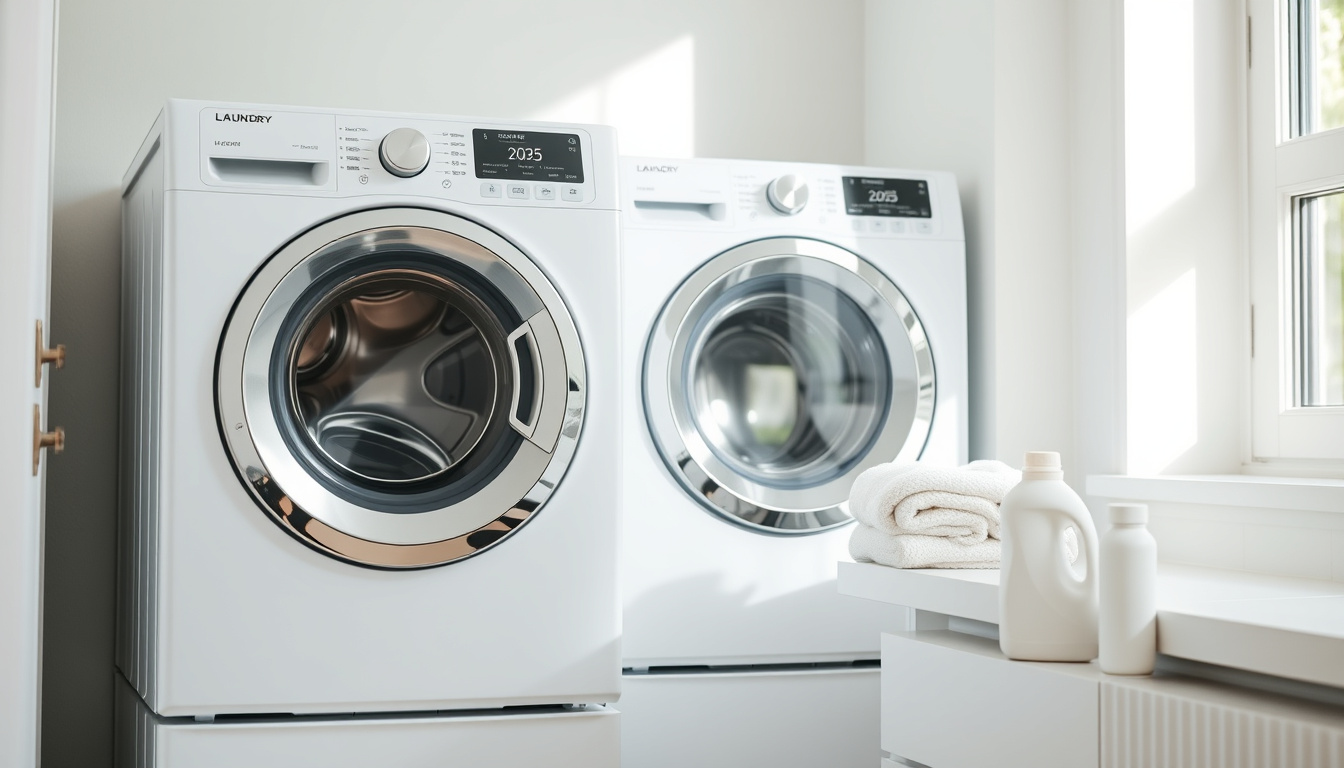
Choosing a new washing machine in 2025 means balancing capacity, spin speed, energy rating, and budget. With new energy labels, a wider range of sizes, and the ongoing choice between freestanding and integrated models, the market offers more options than ever. This guide breaks down the key decisions, highlights the best models under £500, and explains what to expect from major UK retailers.
Whether you need a compact 8kg machine for a couple or a 10kg drum for a busy family, the right choice depends on your household size, available space, and how you use your laundry. We have analysed current editorial recommendations, retailer listings, and expert advice to bring you a clear, fact-based overview.
Below, we answer the most common buying questions, compare the top models from Bosch, Samsung, Miele, AEG, and Haier, and explain what the new energy ratings really mean for your electricity bill.
What is the Best Washing Machine to Buy in 2025?
4 Key Factors to Consider Before Buying a Washing Machine
- Capacity (kg): 8kg, 9kg, or 10kg – 8kg for couples, 10kg for large families.
- Spin Speed: 1200–1600 RPM – higher speed means less moisture, faster drying.
- Energy Rating: A to G (new scale) – A-rated models can save up to £50/year vs C-rated.
- Type: Freestanding vs Integrated – freestanding offers flexibility; integrated gives a built-in look.
Key insights for 2025 buyers:
- For most UK households, a 9kg washing machine with a 1400 RPM spin speed offers the best balance of efficiency and performance.
- Miele and Bosch consistently score highest in reliability surveys, with Miele models lasting an average of 20 years.
- Washer-dryers typically dry only half their wash capacity; consider separate units if you dry large loads regularly.
- Integrated washing machines are 15–20% more expensive than comparable freestanding models due to additional door and panel kits.
- Buying a ‘last year’s model’ or from clearance lines can save 30–50% with minimal change in performance.
| Factor | Detail |
|---|---|
| Average Price (Freestanding 8kg) | £300–£600 for mid-range; £600+ for premium (Miele, AEG) |
| Average Lifespan | 11 years standard; up to 20 years for high-end brands |
| Spin Speed Range | 800 RPM (low) to 1600 RPM (high); 1400 RPM is most common |
| Energy Label Update (2021+) | Scales reversed: A is best (very rare); most efficient current models are B or C |
| Delivery & Installation | Currys and John Lewis include free delivery; install/uninstall old machine for small fee |
| Typical Capacity for Families | 8kg for couples, 9kg for families of 3–4, 10kg for larger households |
Should I Buy a Washing Machine with a Built-in Dryer?
Are washer-dryers good or bad?
Washer-dryers save space by combining two appliances in one, which is appealing for small flats or homes without a separate drying area. However, the drying capacity is significantly smaller than the wash capacity. For example, the Samsung WD80TA046BE (available at John Lewis for £419) washes 8kg but dries only 5kg. This means you cannot dry a full wash load in one cycle. According to Mumsnet and The Telegraph, they are best suited for compact homes rather than heavy laundry households.
What is the difference between a washing machine and a washer-dryer?
A standard washing machine only washes and spins. A washer-dryer adds a heating element and condenser to dry clothes inside the same drum. The drying process is usually less efficient than a dedicated tumble dryer, and the machine cannot be used for washing while drying. For households that do several loads per day, separate machines are more practical.
If you wash 8kg but dry only 5kg, you will need to remove half the wet clothes before drying. Two separate machines let you wash and dry simultaneously, cutting total laundry time by up to 50%.
What Size Washing Machine Do I Need? (8kg, 9kg, 10kg)
Washing Machine 10kg vs 8kg vs 9kg: which is right?
Capacity is measured in kilograms of dry laundry. An 8kg machine handles a standard duvet and daily washing for one or two people. A 9kg drum is the most versatile, fitting a king-size duvet comfortably and accommodating a family of three to four. A 10kg machine is ideal for larger households, allowing fewer loads per week and easier washing of bulky items like sleeping bags.
What size washing machine for a family of 4?
Which? UK advises that for a family of four, an 8kg machine will cope with daily washing, but a 9kg offers more flexibility for bulky items like duvets. Most UK retailers, including John Lewis and Currys, list 9kg as the standard family recommendation.
What is a full size washing machine?
A full-size washing machine is typically 60cm wide, 85cm high, and 55–60cm deep. This standard footprint fits most kitchen or utility spaces. Compact models are narrower (45–50cm) and often have smaller capacities (6–7kg).
Measure your cabinet or alcove before buying. Integrated machines require a separate door panel (supplied by your kitchen fitter, not included). A 9kg freestanding machine is the most popular choice for UK homes because it balances footprint and load size.
Freestanding vs Integrated: Which Washing Machine Should I Choose?
What is the difference between freestanding and integrated washing machines?
A freestanding washing machine is a standalone unit that can be placed anywhere with a water supply and drain. It is usually cheaper and easier to install, replace, or move. An integrated (or built-in) machine slides under a kitchen worktop and is hidden behind a cabinet door. It requires a hinge kit and a door panel to match your kitchen units, which adds to the cost. John Lewis notes that integrated models are 15–20% more expensive than equivalent freestanding ones, and repair costs are higher due to the door kit.
Can I replace a freestanding washing machine with an integrated one?
Yes, but you need to ensure the cabinet space matches the machine’s dimensions (typically 60 x 85 x 55cm). You will also need to source a door panel from your kitchen fitter or a joinery supplier. Most integrated machines are designed to fit standard 60cm wide cabinet openings.
Integrated machines are not only more expensive to buy (15–20% premium), but they also cost more to repair because technicians must remove the door panel. If you plan to move home, a freestanding machine is easier to take with you.
Which Retailer Has the Best Washing Machine Deals?
Are Currys or Argos better for washing machines?
Both Currys and Argos offer a wide range of washing machines at competitive prices. Currys frequently runs promotions on major brands like Bosch and Samsung, and includes free delivery on most models. Argos has a strong selection of budget-friendly machines (Beko, Hotpoint) and offers click-and-collect from thousands of locations. Neither retailer currently provides a formal buyer’s guide on their category pages, so you may need to rely on reviews from Which? Washing Machine Buying Guide for independent advice.
Where to buy cheap washing machines?
For the best under-£500 deals, John Lewis and the Energy Saving Trust – Washing Machines Energy Efficiency page highlight models like the Haier i-Pro Series 7 Plus (10kg, £449) and the Hoover H-Wash 500 (10kg, £399). Samsung’s washer-dryer (WD80TA046BE) at £419 is also a strong contender. Check Currys and Argos clearance sections for last-year models, which can save up to 50%.
Does John Lewis offer price match on washing machines?
John Lewis does not offer a formal price-match guarantee on washing machines, but it does include a free 2-year warranty on all appliances, which adds value. Currys and Argos sometimes price-match competitors, but terms vary.
How to Choose a Washing Machine: Key Specs Explained
What is a good spin speed for a washing machine?
A 1400 RPM spin speed is the common sweet spot, balancing drying performance and price. 1600 RPM extracts more water but can cause more creasing and is not always worth the extra cost. Lower speeds (800–1200 RPM) are gentler on delicate fabrics. According to Good Housekeeping and The Independent, 1400 RPM is the standard for most mid-range machines.
What energy rating should my washing machine have?
Since 2021, the energy label uses a simple A–G scale, with A being the best (very rare). Most efficient current models are rated B or C. An A-rated machine can save up to £50 per year compared with a C-rated model. The John Lewis Washing Machine Buying Guide and Bosch Washing Machine Range & Specs both list B and C as the most common ratings for 2025 models.
How much does a good washing machine cost in 2025?
A good mid-range 8kg washing machine (Bosch, Samsung) costs £350–£550. Premium models (Miele, AEG) start around £700 and go up to £1,400 for a washer-dryer. Budget models (Beko, Hotpoint) start at £250.
How long does a washing machine last?
Most washing machines last between 10 and 13 years. Premium brands like Miele can exceed 20 years. Regular maintenance (cleaning the filter, not overloading) can extend lifespan.
How Long Does a Washing Machine Last? A Timeline from Purchase to Replacement
- Year 0 (Purchase): Choose between freestanding/integrated; decide on capacity; check warranty (2–10 years depending on brand).
- Year 1–5 (Warranty Period): Most issues covered; regular cleaning of drawer and filter needed.
- Year 6–10 (Post-Warranty): Common faults: drum bearing noise, pump failures, door seal leaks. Consider cost of repair vs replacement if >50% of new price.
- Year 11+ (Replacement Consideration): Energy efficiency decline; repair costs rise; new models offer better ratings and features.
What Do We Know for Sure About Washing Machines – and What Remains Uncertain?
| Established Information | Information That Remains Unclear |
|---|---|
| A 9kg drum fits a standard duvet but may struggle with king-size for some models. | Reliability data varies by usage pattern; Miele and Bosch lead surveys but individual experience differs. |
| Integrated machines require a separate door panel (supplied by kitchen fitter, not included with machine). | Spin speed effectiveness depends on load composition (mixed fabrics may need lower RPM). |
| Energy labels changed in 2021: an A+++ old label is roughly equivalent to a B or C on the new scale. | Future energy price changes may shift payback periods for buying more efficient models. |
How the Washing Machine Market is Shifting in 2025
Smart features such as app control and automatic dosing are becoming standard in mid-range models. Heat pump technology in washer-dryers is improving drying efficiency but adds to upfront cost. Retailers like Currys and Argos offer price-match guarantees but rarely match John Lewis’s 2-year warranty. Sustainability is also a focus: Bosch offers reconditioned parts programs, and Miele has a 10-year parts promise.
What Do the Experts Say? Key Quotes and Sources
“For a family of four, an 8kg machine will cope with daily washing, but a 9kg offers more flexibility for bulky items like duvets.”
Which? UK (Independent Consumer Guide)
“Integrated washing machines are 15–20% more expensive than freestanding models, and repair costs are higher due to the door kit.”
John Lewis Washing Machine Buying Guide
“Energy ratings have tightened: a new ‘B’ rated machine in 2025 is highly efficient and will save you money over its lifetime.”
Energy Saving Trust (UK)
What Should You Do Next?
Check back for updated prices and deals from Currys, Argos, and John Lewis. We monitor stock and price changes weekly. If you are comparing specific models, use the comments section to ask about a particular machine. For more on clothing care, see our guide on Personalised T-Shirts – Best UK Services for Photos, Names & Bulk Deals and Marks Spencer Jeans – 2025 Fit Guide, Stretch Tech and Sale Tips.
Frequently Asked Questions
How long does a washing machine last on average?
Most washing machines last between 10 and 13 years. Premium brands like Miele can exceed 20 years. Regular maintenance (cleaning the filter, not overloading) can extend lifespan.
Can I replace a freestanding washing machine with an integrated one?
Yes, but you will need a kitchen cabinet door panel (usually supplied by your kitchen fitter, not included with the machine). You also need measuring tape to ensure the dimensions match your cabinet space.
How much does a good washing machine cost in 2025?
A good mid-range 8kg washing machine (e.g., Bosch, Samsung) costs £350–£550. Premium models (Miele, AEG) start around £700 and go up to £1,400 for a washer-dryer. Budget models (Beko, Hotpoint) start at £250.
What is a 1400 spin washing machine?
A 1400 RPM spin speed is the most common standard for mid-range machines. It extracts enough water to reduce drying time significantly without being too harsh on fabrics. 1600 RPM is available but can cause more creasing.
Which is better, Bosch or Samsung washing machine?
Bosch is generally favoured for reliability, quieter operation, and longer warranties (often 5 years). Samsung offers more smart features, better app integration, and larger drum openings for easier loading.
What is the best washing machine under £500 in 2025?
The Haier i-Pro Series 7 Plus (10kg, £449) and Hoover H-Wash 500 (10kg, £399) are top picks from The Independent. The Samsung WD80TA046BE washer-dryer (£419) is a good space-saving option.
Do I need an A-rated washing machine?
A-rated machines are very rare under the new label. Most efficient models are B or C, which still save money compared to D or lower. Look for B or C to balance cost and efficiency.
Are integrated washing machines more expensive to repair?
Yes, integrated models cost 15–20% more to repair because technicians must remove the door panel. Parts are also more fiddly to access.
What size washing machine is best for a couple?
An 8kg machine is usually sufficient for a couple. It fits a standard duvet and handles daily washing without taking up too much space.
Can I get free delivery on a washing machine?
Currys and John Lewis include free delivery on most models. Argos often charges a small fee for large appliances, but occasionally offers free delivery promotions.

Oliver Arthur Morgan Harrison is a staff writer for StoryShift.uk, covering UK news, culture, politics and technology. He works under Editor-in-Chief Maarika Tamm and UK Managing Editor Oliver Grant, following the newsroom standards for sourcing, verification and fact-checking set out in our editorial policies.