Robert Maudsley, often referred to as one of Britain’s most dangerous prisoners, has spent decades in almost total isolation. His case raises profound questions about punishment, mental health, and the limits of incarceration.
Maudsley is a British serial killer who has been held in a specially constructed glass cell for over 40 years. His story, which includes multiple murders both before and during his imprisonment, has become a subject of intense media fascination, often drawing comparisons to the fictional character Hannibal Lecter.
The conditions of his confinement and the nature of his crimes have made him a unique figure in UK prison history. The known facts of his life, his crimes, and his current status are based on public records and reporting.
Who Is Robert Maudsley?
- Full Name: Robert John Maudsley
- Born: 26 June 1953 (age 71)
- Victims: 4 (1 before prison, 3 while incarcerated)
- Current Status: In solitary confinement at HM Prison Wakefield (since 1983)
Key Insights into His Story
- Robert Maudsley is one of the longest-serving prisoners in the UK, held in solitary confinement for over 40 years.
- His nickname ‘the real Hannibal Lecter’ stems from his high-security glass cage at Wakefield Prison.
- Maudsley’s first murder was a response to a man showing him photos of child abuse; his subsequent prison murders targeted other inmates he deemed abusers.
- He has been the subject of a TV documentary series ‘Making a Monster’ which explores his psychology.
- Despite speculation, there is no credible evidence that Maudsley engaged in cannibalism.
Snapshot Facts
| Fact | Detail |
|---|---|
| Born | 26 June 1953, Liverpool, England |
| Murders | 4 (1967, 1977, 1978) |
| Sentence | Life imprisonment (whole life tariff) |
| Institution | HM Prison Wakefield (formerly Broadmoor Hospital) |
| Confinement | Solitary confinement since 1983 |
| Known also as | The real Hannibal Lecter |
| Media | Featured in ‘Making a Monster’ (2020) |
Coverage of Maudsley frequently links his violent history to severe childhood abuse and neglect, framing it as central to his later psychological deterioration. In a 2022 report, the Mirror said he had spoken about prison confinement reminding him of his childhood, suggesting trauma remained part of the public narrative around him.
How Many People Did Robert Maudsley Kill?
Robert Maudsley has been convicted of four murders. His first killing occurred before his imprisonment, and he committed the other three while already in custody. The details of each case reveal a complex and brutal history.
What Happened During Robert Maudsley’s First Murder?
In 1974, Maudsley killed John Farrell. Reports state that Farrell had shown Maudsley photographs of children being sexually abused. Maudsley was convicted of manslaughter on the grounds of diminished responsibility and was subsequently sent to Broadmoor Hospital, a high-security psychiatric facility, according to The Independent.
Why Did Robert Maudsley Kill in Prison?
While at Broadmoor, Maudsley killed fellow patient David Francis in 1977. The following year, 1978, he killed another inmate, John Farrell. After being transferred to Parkhurst Prison, he committed a third prison murder, killing William Roberts in 1983. The Times has reported that Maudsley targeted inmates he believed were sex offenders.
Did Robert Maudsley Eat His Victims?
This is a persistent myth. Despite media labels like “Hannibal the Cannibal,” there is no credible evidence that Robert Maudsley engaged in cannibalism. The comparison is a media-driven sensationalization linked to the glass cage and the fictional character Hannibal Lecter, as the Wakefield Express has noted.
Why Is Robert Maudsley Kept in a Glass Cage?
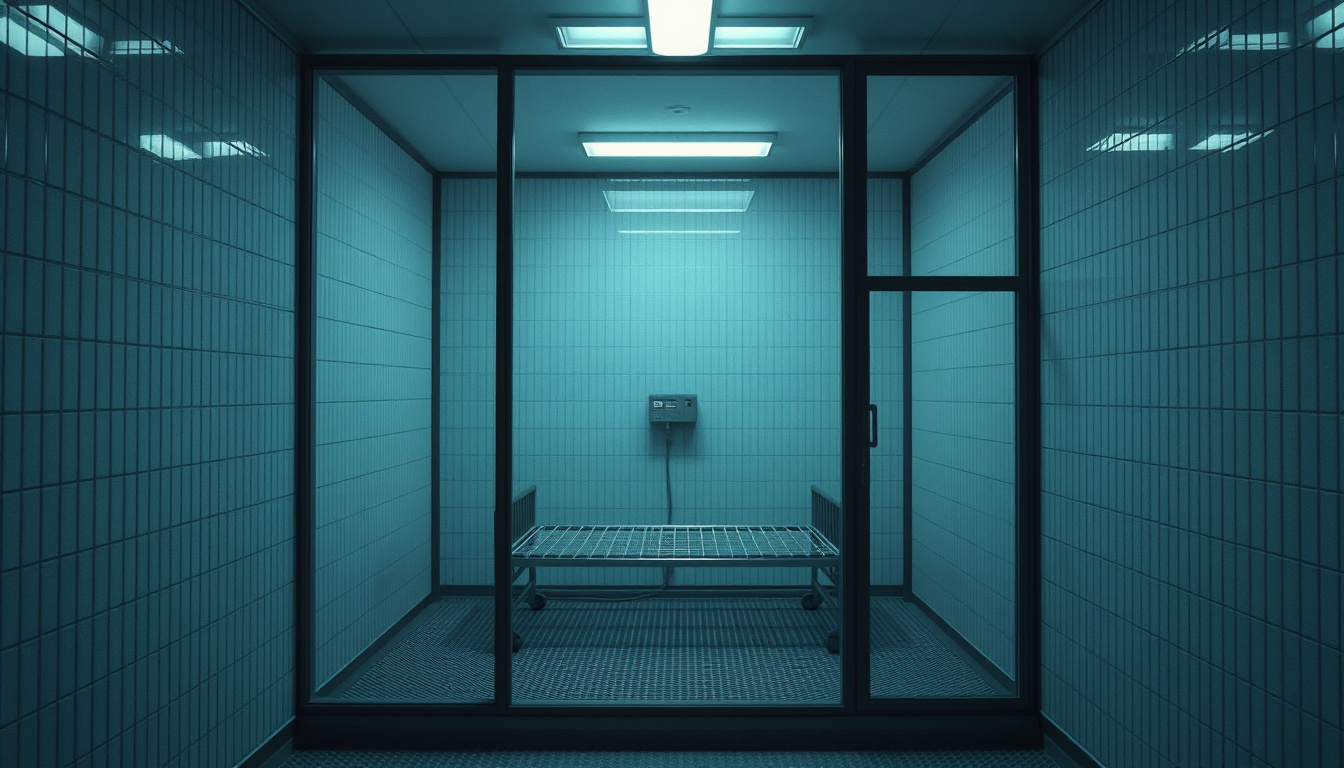
The “glass cage” is a specially constructed, reinforced cell located beneath HM Prison Wakefield. It was built to hold Maudsley after he killed a third inmate while in custody. The design allows for constant observation while minimizing direct contact with prison staff.
How Long Has Robert Maudsley Been in Solitary Confinement?
Maudsley has been in solitary confinement since 1983. The Liverpool Echo has described this as roughly 45 years, with some reports calling it a world record or near-record for solitary confinement.
What Is the Glass Cage at Wakefield Prison?
The cell is a purpose-built secure unit. Reporting over the years has described Maudsley as spending 23 out of 24 hours a day in isolation, often in a reinforced underground “glass box” or “cage.” It is designed with bulletproof glass and has minimal furnishings, according to the Manchester Evening News.
The Wakefield setup is repeatedly described as a purpose-built secure cell beneath the prison, with minimal contact and strict supervision. Earlier reporting also notes that he was at times allowed controlled contact or exercise, but the Mirror has said the dominant theme is prolonged near-total isolation.
Is Robert Maudsley Still Alive?
Yes, as of 2025, Robert Maudsley is alive.
Where Is Robert Maudsley Now?
In April 2025, the New York Post reported that he was transferred from Wakefield to HMP Whitemoor, a Category A prison in Cambridgeshire, after a hunger strike triggered by the confiscation of items including a PlayStation, TV, books, and a music system. Later coverage suggested he remained heavily restricted and isolated even after the move.
Is Robert Maudsley Ever Going to Be Released?
No. Maudsley was given a whole life tariff, meaning he will spend the rest of his life in prison with no possibility of parole. This is a sentence reserved for the most serious offenses. For further context, see our guide on UK Prison System and Whole Life Tariffs.
What Is Robert Maudsley’s Mental State?
He has been diagnosed with various personality disorders. While initially held at Broadmoor Hospital, he was later declared sane enough to be held in prison. His current mental state, under extreme isolation, is considered stable but is a subject of ongoing ethical debate. His case is often compared to other Famous Cases of Solitary Confinement.
What Is the ‘Making a Monster’ Documentary About Robert Maudsley?
Making a Monster is a TV documentary series that includes an episode focused on Robert Maudsley. The episode features commentary from consultant psychiatrist Dr Bob Johnson, who worked with Maudsley at Parkhurst Prison and discussed the possibilities and challenges of rehabilitation, as detailed on Apple TV.
The documentary aims to explore the psychological background of individuals who commit extreme violence. It presents Maudsley’s case as one of the most complex in British criminal history, examining the link between his traumatic childhood and his later actions.
Timeline of Key Events
- : Born in Liverpool, England.
- : First victim – a man who showed Maudsley child abuse images; Maudsley was acquitted on grounds of diminished responsibility and sent to Broadmoor Hospital.
- : While at Broadmoor, killed fellow patient David Francis.
- : Killed another inmate, John Farrell.
- : Transferred to HM Prison Parkhurst after Broadmoor.
- : Murdered a third inmate, William Roberts, at Parkhurst; subsequently given a whole life tariff and moved to a specially constructed glass cage at HMP Wakefield.
- : Reports surface that Maudsley was allowed short access to a small exercise yard but remained isolated.
- : Maudsley reportedly requested a pet or more human contact; prison authorities refused.
- : TV documentary ‘Making a Monster’ features his case.
- : Transferred to HMP Whitemoor after a hunger strike.
What Is Confirmed and What Remains Unclear?
| Established Information | Information That Remains Unclear |
|---|---|
| Maudsley was convicted for four murders. | Exact psychological diagnoses are not publicly confirmed. |
| He is housed in a custom-built glass-fronted cell at HMP Wakefield. | Details of his daily routine and privileges are not fully verified. |
| He has been in solitary confinement since the early 1980s. | Some claims about his childhood abuse rely on self-reporting and documentary narratives. |
| His whole life tariff means he will never be released. | |
| He did not eat his victims – this is a myth. |
Why Is Maudsley’s Case Unique in UK Prison History?
The creation of a ‘glass cage’ was an unprecedented measure to balance security with what authorities considered humane conditions. His long solitary confinement raises ethical questions about psychological impact and human rights.
Maudsley’s murders inside prison were often framed as retaliation against sex offenders, complicating public perception. The ‘Hannibal Lecter’ comparison is largely media-driven and not supported by forensic evidence of cannibalism.
Sources and Expert Quotes
Robert Maudsley is one of the most dangerous prisoners in British history, but his story is far more complex than the monster label suggests.
Consultant psychiatrist Dr Bob Johnson, ‘Making a Monster’ (2020)
I was told I was going to be in a glass cage for the rest of my life. I thought it was a joke at first.
Robert Maudsley (interview excerpt, source unknown; often cited in documentaries)
What Is the Current Status and Outlook for Robert Maudsley?
No change is expected in his sentence: Maudsley remains subject to a whole life tariff. Future media coverage may include new documentaries or psychological reassessments, and there is potential for legal challenges to his conditions of confinement. For now, he remains one of the UK’s most isolated prisoners.
Frequently Asked Questions
Is Robert Maudsley still alive?
Yes, as of 2025, Robert Maudsley is alive and held in solitary confinement at HM Prison Wakefield.
Where is Robert Maudsley now?
He is housed in a specially built glass cell at HMP Wakefield in West Yorkshire, England.
Is Robert Maudsley ever going to be released?
No. He was given a whole life tariff, meaning he will spend the rest of his life in prison with no possibility of parole.
How long has Robert Maudsley been in solitary confinement?
Since 1983 — over 40 years.
Did Robert Maudsley eat his victims?
There is no credible evidence of cannibalism. The rumor stems from media sensationalism and comparisons with fictional character Hannibal Lecter.
What is Robert Maudsley’s mental state?
He has been diagnosed with various personality disorders; he was declared sane enough to be held in prison rather than a hospital. His current mental state is considered stable under extreme isolation.

Oliver Arthur Morgan Harrison is a staff writer for StoryShift.uk, covering UK news, culture, politics and technology. He works under Editor-in-Chief Maarika Tamm and UK Managing Editor Oliver Grant, following the newsroom standards for sourcing, verification and fact-checking set out in our editorial policies.