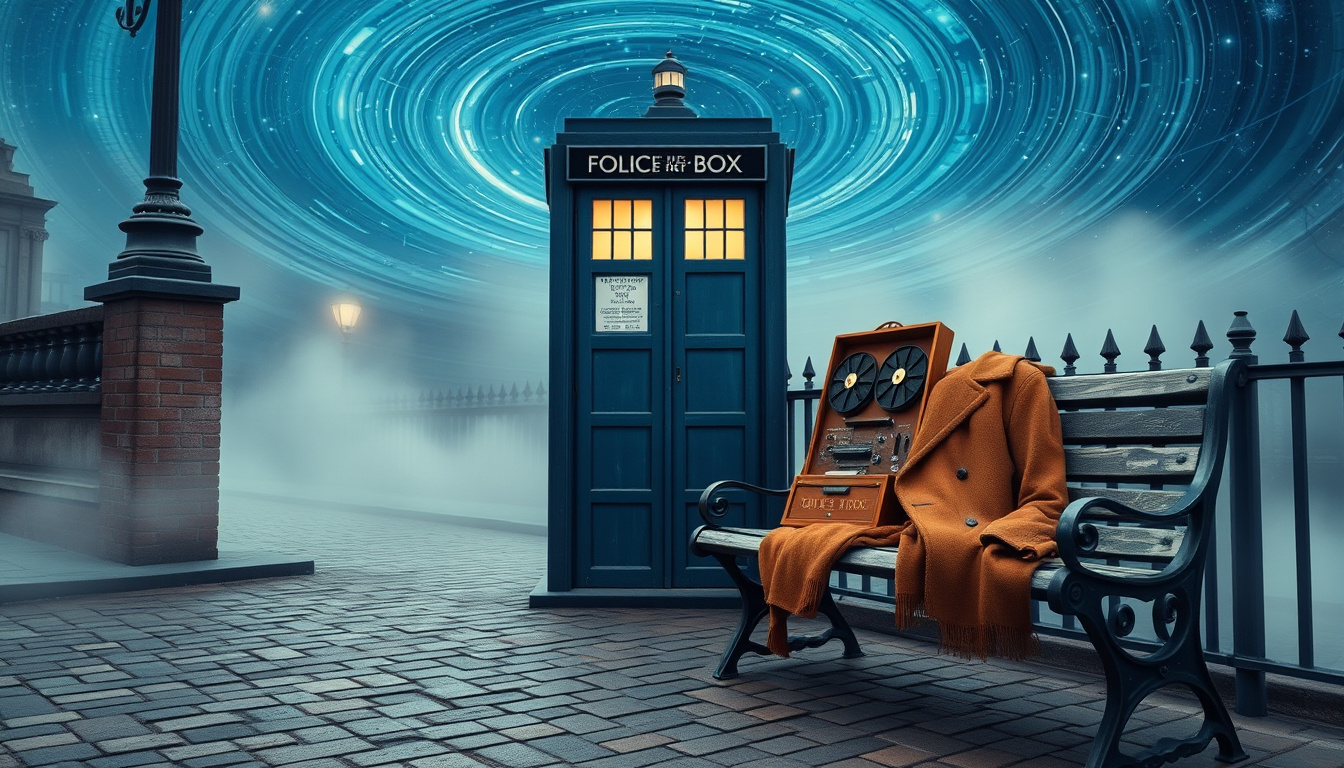
Patrick George Troughton (25 March 1920 – 28 March 1987) was an English character actor best known as the Second Doctor in Doctor Who, a role he played from 1966 to 1969. He also built a substantial career in Shakespeare, television, radio and film, often portraying eccentric, sinister or authoritative figures.
Before the Doctor, Troughton had already made his name on stage and screen: a film debut in Laurence Olivier’s Hamlet (1948), an early television turn as Robin Hood, and years of Shakespearean work with the Old Vic. After leaving Doctor Who, he kept working steadily, appearing in films such as The Omen (1976) and later BBC productions such as The Box of Delights (1984).
He died suddenly of a heart attack in 1987 while attending a science-fiction convention in Georgia. His sons David and Michael followed him into acting, and his grandson Harry Melling has also worked in Doctor Who audio productions.
Who Was Patrick Troughton? The Man Behind the Second Doctor
A few facts anchor every account of his life.
- Full Name: Patrick George Troughton
- Born/Died: 25 March 1920 – 28 March 1987
- Known For: Second Doctor in Doctor Who (1966–1969)
- Cause of Death: Heart attack (aged 67)
Several details stand out in any summary of his life:
- Troughton was the first actor to take over the lead role in Doctor Who, turning regeneration into a lasting part of the series’ storytelling.
- His Second Doctor combined comic, childlike eccentricity with sudden flashes of authority and courage — a deliberate contrast to William Hartnell’s stern Doctor.
- He played the Doctor in 21 serials between 1966 and 1969, then returned three more times for anniversary productions.
- Before and after Doctor Who, he was a respected classical actor, with Shakespearean credits that included work with the Old Vic.
- His film credits range from Jason and the Argonauts (1963) to The Omen (1976) and Sinbad and the Eye of the Tiger (1977).
- His family continued his acting legacy: sons David and Michael appeared in Doctor Who, and his grandson Harry Melling has worked in Doctor Who audio.
- Much of his Doctor Who work is incomplete — 53 of his 119 episodes are missing from the archives.
The core facts of his life are consistent across biographical sources:
| Detail | Information |
|---|---|
| Born | 25 March 1920, Mill Hill, Middlesex — now part of north London |
| Died | 28 March 1987, Columbus, Georgia, USA |
| Cause of death | Heart attack |
| Occupation | Actor — stage, television, radio and film |
| Best known for | The Second Doctor in Doctor Who (1966–1969) |
| Notable roles | Father Brennan in The Omen; Phineus in Jason and the Argonauts; Shakespearean roles with the Old Vic |
| Spouses | Margaret (Molly) Troughton, married 1945, later divorced; Sheila Troughton, until his death in 1987 |
| Children | Sources differ; some biographies list six, including David, Michael and Joanna |
| Years active | 1947–1987 |
Born in Mill Hill, Middlesex — now part of north London — to solicitor Alec George Troughton and Dorothy Evelyn Offord, he trained at the Embassy School of Acting and won a scholarship connected with theatrical study in the United States.
During the Second World War, Troughton served in the Royal Navy and attained the rank of lieutenant commander. He returned to professional acting after the war, and his early stage work included Shakespearean productions with the Old Vic, helping establish him as a versatile classical actor.
What Was Patrick Troughton’s Role in Doctor Who?
Troughton played the Second Doctor in 21 television serials, from The Power of the Daleks through The War Games (1966–69). The role came to him after William Hartnell left the series.
The BBC did not introduce Troughton simply as “the new Doctor.” To keep the character mysterious, the change was revealed through the Doctor’s first on-screen regeneration in The Tenth Planet, and Troughton’s first full story followed as The Power of the Daleks.
His interpretation differed sharply from Hartnell’s. Where the First Doctor was often stern, irascible and patriarchal, Troughton played the Doctor as a mercurial cosmic wanderer — apparently comic and childlike, but capable of sudden authority and courage. The character frequently concealed his intelligence behind clowning, recorder playing, jokes and feigned confusion.
When Did He Return to the Part?
Troughton later returned as the Second Doctor in The Three Doctors (1972–73), The Five Doctors (1983) and The Two Doctors (1985). Archive footage and recordings were also used in later productions.
How Much of His Doctor Who Work Survives?
A significant portion of his tenure is not fully intact. Of the 119 episodes from his era, 53 are missing; many were wiped from the BBC archives. Animations and fan recordings have helped reconstruct some of them, and the search for surviving material continues.
What Was Patrick Troughton’s Cause of Death?
Troughton suffered major heart attacks in 1978 and 1984, each of which forced him to take time away from work.
He died of a heart attack in Columbus, Georgia, on 28 March 1987, three days after his 67th birthday, while attending a science-fiction convention.
What Happened at the Convention?
Biographical accounts state that he suffered a third heart attack at the convention and died suddenly. He was buried in the United Kingdom.
Heart problems shaped the final decade of Troughton’s life. He survived major heart attacks in 1978 and 1984, each of which meant time away from acting, before his death from another heart attack in 1987.
Did Patrick Troughton Have a Double Life? The Controversy Explained
The phrase “double life” comes up in two very different ways when Troughton’s career is discussed. One refers to a documented on-screen dual role; the other to longstanding rumours about his private life.
A Dual Role on Screen
In The Enemy of the World (1967), Troughton played both the Doctor and the villainous dictator Ramón Salamander. The BBC describes the production as a “dual role,” and it gave him a rare chance to contrast two characters directly.
Life Beyond the Doctor
Troughton deliberately avoided becoming identified solely with the role. After leaving Doctor Who, he continued taking varied film and television parts and was known for maintaining a relatively private personal life.
What About the Affair Rumours?
Some fan discussions have focused on an alleged extra-marital relationship during the Doctor Who years. The exact nature and extent of the relationship remain unclear: accounts are anecdotal, and Troughton’s family guarded his private life. The full picture has never been publicly established.
“Double life” means two different things in Troughton’s story. On screen, it refers to his performance as both the Doctor and Ramón Salamander in The Enemy of the World (1967), a dual role highlighted by the BBC. In fan discussion, it also refers to unverified claims about his private life. The first is documented; the second is not.
Who Are Patrick Troughton’s Children? The Troughton Acting Dynasty
Troughton was married three times. Sources differ in how they count his children because they describe children from different marriages and relationships in different ways.
David Troughton
David Troughton is the most publicly visible of Patrick’s children. He became an actor, appeared in Doctor Who and later portrayed another version of the Doctor in audio productions.
Michael Troughton and the Wider Family
Michael Troughton is an actor, teacher and writer who also appeared in Doctor Who. Troughton had additional children, including Joanna, and some biographies list a total of six children.
His wider family has also been connected with acting. His grandson Harry Melling appeared in a Doctor Who audio production, and both sons followed their father into the franchise, creating a notable Doctor Who family legacy.
What Are the Best Patrick Troughton Movies and TV Shows?
Troughton made his film debut as the Player King in Laurence Olivier’s Hamlet (1948), followed by an appearance in Olivier’s Richard III (1955). His early television work included playing Robin Hood in 1953, a role that made him one of British television’s earliest major adventure heroes.
Early Film and Television Work
Notable pre-Doctor Who work included:
- Chance of a Lifetime (1950)
- The Scarlet Pimpernel (1955)
- The Invisible Man (1958)
- Paul of Tarsus (1960)
- The Old Curiosity Shop (1962), in which he played Quilp
- Jason and the Argonauts (1963), as Phineus
- The Gorgon (1964)
Later Film Roles
After Doctor Who, Troughton continued working steadily for stage and screen. His prominent film roles included:
- Scars of Dracula (1970), as Klove
- The Omen (1976), as Father Brennan
- Sinbad and the Eye of the Tiger (1977), as Melanthius
- A Hitch in Time (1978), his final credited feature film according to one biographical filmography
His later television appearances included:
- The Box of Delights (1984), as Cole Hawlings, the mysterious time-travelling figure in the BBC children’s serial
- The Feathered Serpent
- Treasure Island
- Nanny
- Other guest and character roles across British television
A selected filmography:
| Year | Production | Role |
|---|---|---|
| 1948 | Hamlet | Player King |
| 1950 | Chance of a Lifetime | Kettle |
| 1955 | Richard III | Supporting role |
| 1955 | The Scarlet Pimpernel | Sir Andrew Ffoulkes |
| 1963 | Jason and the Argonauts | Phineus |
| 1964 | The Gorgon | Supporting role |
| 1966–69 | Doctor Who | The Second Doctor |
| 1970 | Scars of Dracula | Klove |
| 1972–73 | Doctor Who: The Three Doctors | The Second Doctor |
| 1976 | The Omen | Father Brennan |
| 1977 | Sinbad and the Eye of the Tiger | Melanthius |
| 1978 | A Hitch in Time | Lead role |
| 1983 | Doctor Who: The Five Doctors | The Second Doctor |
| 1984 | The Box of Delights | Cole Hawlings |
| 1985 | Doctor Who: The Two Doctors | The Second Doctor |
What Were the Key Moments in Patrick Troughton’s Life and Career?
The main events of his life line up as follows:
- 1920 – Born in Mill Hill, Middlesex, now part of north London (Guide to Doctor Who News).
- 1945 – Married Margaret (Molly) Troughton.
- 1947 – Made his stage debut after serving in the Second World War.
- 1948 – Appeared as the Player King in Laurence Olivier’s Hamlet.
- 1953 – Played Robin Hood on television, becoming an early adventure hero for British audiences.
- 1966 – Cast as the Second Doctor in Doctor Who (Wikipedia).
- 1969 – Left the role in The War Games, with the Doctor regenerating.
- 1976 – Played Father Brennan in The Omen.
- 1987 – Died of a heart attack in Columbus, Georgia (BBC Genome).
What Is Known and What Remains Uncertain About Patrick Troughton?
The record is strong on some points and thin on others.
| Established information | Information that remains unclear |
|---|---|
| Troughton was born on 25 March 1920 in Mill Hill and died of a heart attack in Columbus, Georgia, on 28 March 1987. | The exact nature and extent of an alleged extra-marital relationship during the Doctor Who years is not established; accounts are anecdotal, and the family guarded his privacy. |
| He played the Second Doctor from 1966 to 1969 and returned for three anniversary productions. | The precise number of his children is reported differently across sources, which describe children from different marriages and relationships in different ways. |
| His son David Troughton is an actor who appeared in Doctor Who and in Doctor Who audio productions. | The full details of his three marriages, including names and dates, are not consistently documented in public records. |
| He was buried in the United Kingdom. | Personal recollections circulating in fan media have not been independently verified. |
Why Is Patrick Troughton Still Important Today?
Troughton’s most lasting influence is structural. As the first actor to take over the lead role in Doctor Who, he made regeneration part of the series’ mechanics: the First Doctor’s change into the Second established that the character could be recast. The idea remains central to the show decades later.
His career beyond Doctor Who was substantial. Long before the series, he was a respected classical stage actor; after it, he reached a new audience as Father Brennan in The Omen (1976). His range across horror, fantasy, period drama and children’s television made him one of British television’s familiar faces.
Interest in his work also continues through the archives. Fans still search for missing Troughton episodes, many of which were wiped from the BBC archives. The Troughton family remains active in the arts, with David Troughton working in television and theatre and his grandson Harry Melling appearing in Doctor Who audio productions.
Where Can You Find Reliable Information About Patrick Troughton?
The biographical record is spread across several types of sources. Wikipedia’s entry provides a broad overview; IMDb documents his professional credits; the BBC Genome project holds original programme listings and notes; and specialist Doctor Who databases, including the Guide to Doctor Who News and Shannon Sullivan’s biography, offer career detail.
These sources agree on the central facts: his birth and death dates, his role in Doctor Who, his major film and television credits, and the heart attack that killed him. They diverge mainly over personal matters — the number of children and the details of his marriages — where different biographies describe different family arrangements.
Quotes attributed to Troughton and his relatives circulate in fan media and are difficult to verify. The family guarded his private life, and much of what is said about it remains anecdotal.
What Is Patrick Troughton’s Lasting Legacy?
Patrick Troughton’s legacy rests on more than the Second Doctor. He showed that the Doctor could change, and in doing so helped Doctor Who outlast any single actor. His work beyond the series — from Shakespeare to The Omen to The Box of Delights — proved that he was not typecast by his most famous role. His sons carried the acting tradition forward, and the hunt for his missing episodes keeps his performances in public conversation. The private controversies that still circulate among fans have never overshadowed the documented facts of a long, varied and influential career.
Frequently Asked Questions About Patrick Troughton
How old was Patrick Troughton when he died?
He was 67. Born on 25 March 1920, he died on 28 March 1987 — three days after his birthday.
Did Patrick Troughton serve in World War II?
Yes. He served in the Royal Navy during the Second World War, worked as a radar operator and reached the rank of lieutenant commander.
What was Patrick Troughton’s first acting role?
He made his stage debut in 1947, after the war. His film debut followed in 1948, as the Player King in Laurence Olivier’s Hamlet.
Was Patrick Troughton in The Omen?
Yes. He played Father Brennan in The Omen (1976), one of his best-known roles outside Doctor Who.
Who is David Troughton?
David Troughton is Patrick’s son, an actor who appeared in Doctor Who and later portrayed another version of the Doctor in audio productions.
How many children did Patrick Troughton have?
Sources differ. Some biographies list six children, including David, Michael and Joanna; the count depends on how children from different marriages and relationships are described.
Was Patrick Troughton in any other sci-fi shows besides Doctor Who?
Yes. His later television credits include episodes of The Avengers, The Prisoner and Space: 1999.
How many episodes of Doctor Who with Patrick Troughton are missing?
Of the 119 episodes from his time as the Second Doctor, 53 are missing. Animations and fan recordings have helped reconstruct many of them.
Where was Patrick Troughton buried?
He was buried in the United Kingdom.

Oliver Arthur Morgan Harrison is a staff writer for StoryShift.uk, covering UK news, culture, politics and technology. He works under Editor-in-Chief Maarika Tamm and UK Managing Editor Oliver Grant, following the newsroom standards for sourcing, verification and fact-checking set out in our editorial policies.