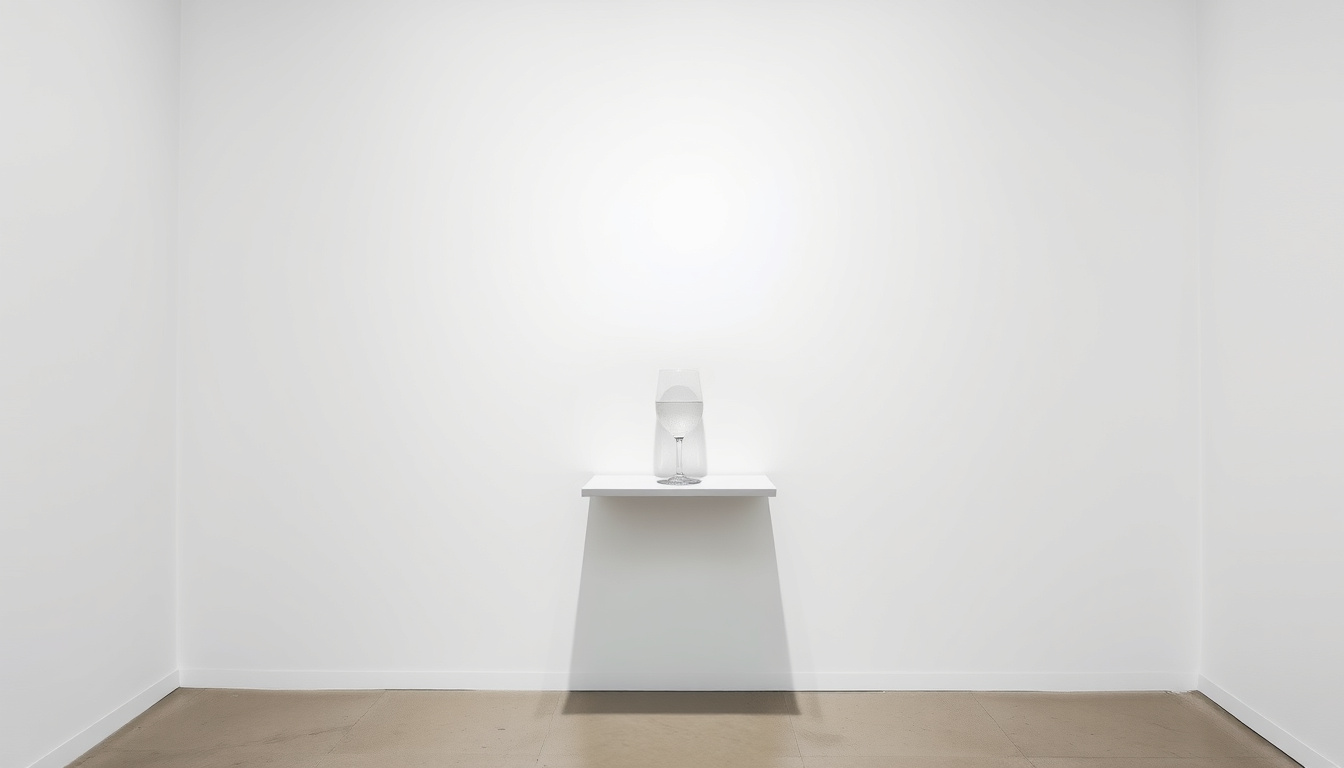

Michael Craig-Martin is an Irish-born conceptual artist and painter best known for An Oak Tree (1973), his brightly coloured paintings of everyday objects, and his major influence as a Goldsmiths teacher on the Young British Artists (YBAs).
His career spans early conceptual art in the late 1960s and 1970s, a later move into vivid object-based painting, and decades of teaching and institutional influence. Tate describes him as emeritus Professor of Fine Art at Goldsmiths, and his work continues to be shown internationally.
Is Michael Craig-Martin Still Alive? Biography and Vital Facts
Yes, Michael Craig-Martin is alive as of 2025. Born in Dublin on 28 August 1941, he is in his early eighties. Wikipedia and official records give 28 August 1941 as the accepted date of birth, though some secondary sources list 1942.
Craig-Martin grew up in the United States and studied Fine Art at the Yale School of Art and Architecture, where he worked under Josef Albers and Alex Katz. After graduating, he moved to London in 1966, becoming a leading figure in British conceptual art.
Key Facts at a Glance
Key Insights
- Michael Craig-Martin is alive as of 2025, aged 83–84.
- He trained at Yale before relocating to London in 1966.
- An Oak Tree (1973) remains a landmark in conceptual art.
- At Goldsmiths College, he mentored Damien Hirst, Sarah Lucas, Gary Hume, and others.
- His paintings use flat, bright colours, bold black outlines, and precise renderings of everyday objects.
- He served as a Tate Trustee from 1989 to 1999 and received a CBE in 2000.
Snapshot: Michael Craig-Martin
| Attribute | Detail |
|---|---|
| Full Name | Michael Craig-Martin CBE RA |
| Born | 28 August 1941 (some sources state 1942), Dublin, Ireland |
| Died | Still living (as of 2025) |
| Nationality | Irish; lives and works in the UK since 1966 |
| Education | Yale School of Art and Architecture (BFA, MFA) |
| Occupation | Conceptual Artist, Painter, Emeritus Professor |
| Known For | An Oak Tree, bold painted panels, mentorship of YBAs |
| Style | Minimalist, Conceptual, Pop-Art-influenced line drawings |
What Is Michael Craig-Martin’s Art Style?
Craig-Martin is identified primarily as a conceptual artist, especially in his early and best-known work. His art is concerned with the meaning of objects and images, often using ordinary, everyday things as subject matter.
Early work emphasised minimal means, paradox, and spectator participation rather than traditional pictorial narration. This placed him within the broader conceptual turn of the late 1960s, while also anticipating the object-focused concerns that would define his later painting.
What Is Michael Craig-Martin’s Artistic Approach?
His practice centres on the visual and symbolic power of everyday items. From the 1980s onward, he developed a highly recognisable style of flat, vivid, often candy-coloured outlines of commonplace objects, frequently at monumental scale. Tate and Christie’s both trace this shift in their artist profiles.
From the 1980s onward, Craig-Martin’s work became defined by flat, vivid, often candy-coloured outlines of commonplace objects, frequently scaled up to monumental proportions.
How Did His Style Develop Over Time?
His career began within conceptual art, using minimal means and inviting spectator participation. Later, he moved towards bold, graphic representations of everyday objects such as shoes, scissors, and glasses. Artnet describes the resulting paintings as playful and precise.
The relationship between language, naming, and meaning runs through much of his output. A consistent thread is the tension between what an object is and what an artist says it is.
What Is Michael Craig-Martin Famous For? Sculptures and Key Works
Michael Craig-Martin is best known for An Oak Tree (1973), his most famous conceptual work. The piece consists of a glass of water presented on a shelf, accompanied by a text in which Craig-Martin states that he has transformed it into an oak tree. Tate’s collection entry documents the work and its enduring significance.
What Is An Oak Tree?
The work is widely regarded as a turning point in conceptual art and a major statement about the primacy of artist intention over physical appearance. It remains central to discussions of how conceptual art challenges traditional ideas of representation and material transformation.
No visible change occurs in An Oak Tree. The glass of water stays a glass of water; the transformation is asserted through text. That reliance on artist intention makes the work a canonical example of conceptual art.
What Other Works Define His Career?
Beyond An Oak Tree, Craig-Martin has produced major paintings, wall drawings, installations, and commissions shown and collected internationally. His later works transform everyday objects into bold, large-scale compositions that have appeared in prominent public and museum contexts.
His paintings are often described as playful and precise, anchored in the visual power of ordinary items rendered with a graphic clarity that makes them instantly recognisable.
How Did Michael Craig-Martin Influence the Young British Artists (YBAs)?
Craig-Martin taught at Goldsmiths College, University of London, beginning in the early 1970s. He is repeatedly credited with shaping the development of the Young British Artists. Goldsmiths, University of London recognises him among its distinguished honorary graduates.
His students and mentees included Damien Hirst, Gary Hume, Sarah Lucas, Julian Opie, Liam Gillick, Fiona Rae, Tracey Emin, and Richard Patterson.
Who Did Michael Craig-Martin Teach?
His teaching is described as giving students freedom for their own development, rather than enforcing a single style. That approach encouraged students to conceive of themselves as artists first and makers second, a philosophy that became foundational to the YBA generation.
What Is His Legacy in British Art?
His role as mentor helped make him one of the key intellectual figures behind the rise of the YBA generation in the 1980s and 1990s. His Goldsmiths teaching helped define the environment in which the YBAs emerged, making him a central behind-the-scenes figure in late 20th-century British art.
Craig-Martin is often described as the teacher of the YBAs, but his own practice as a conceptual artist and painter stands independently. He is recognised both as an innovator in his own right and as a mentor to others.
What Is the Timeline of Michael Craig-Martin’s Life and Career?
Craig-Martin’s biography is documented by the National Galleries of Scotland, while the Royal Academy of Arts has presented major exhibitions of his work.
- 1941 (or 1942): Born in Dublin, Ireland.
- 1966: Moved to Britain after studying at the Yale School of Art and Architecture.
- 1973: Created An Oak Tree.
- 1973–1988: Taught at Goldsmiths College, University of London.
- 1989–1999: Served as a Tate Trustee.
- 2000: Appointed Commander of the Order of the British Empire (CBE).
- 2006: Elected Royal Academician (RA).
- 2020s: Continues to exhibit internationally, with major presentations at institutions including the Royal Academy.
What Is Certain and What Remains Unclear About Michael Craig-Martin?
The broad outline of Michael Craig-Martin’s life and career is well established. A small number of details, however, are referenced inconsistently across different records.
Established Information
- He is a conceptual artist and painter born in Dublin.
- He studied at the Yale School of Art and Architecture.
- He taught at Goldsmiths College and influenced the Young British Artists.
- He created An Oak Tree.
- He is alive as of 2025.
Information That Remains Unclear
- The exact birth year: most records say 28 August 1941, while some secondary sources state 1942.
- Specific details of his personal life beyond professional milestones are not widely published.
Why Does Michael Craig-Martin Matter in Contemporary Art?
Michael Craig-Martin occupies a unique position as both a practitioner and an educator who shaped the trajectory of British contemporary art. His conceptual work from the 1970s, particularly An Oak Tree, questioned the materiality and definition of art, aligning him with American conceptualists like Joseph Kosuth.
His later shift towards bright, graphic paintings of everyday objects placed him within a pop-minimalist continuum that became highly influential on the visual language of the YBAs. His teaching philosophy at Goldsmiths, which encouraged students to think of themselves as artists first and makers second, is often cited as the foundational pedagogy behind the 1990s British art boom.
In 2025, he remains a celebrated elder statesman of British art, with his work continuing to be shown globally. For another artist biography that examines the relationship between personal history and lasting creative influence, see Frida Kahlo – Biography, Famous Paintings, and Legacy.
What Are the Key Sources on Michael Craig-Martin?
Information about Michael Craig-Martin can be found across several authoritative sources, from the artist’s own website to museum and university records.
An Oak Tree is widely regarded as a turning point in conceptual art and a major statement about the primacy of artist intention over physical appearance.
Artnet artist profile
His role as mentor helped make him one of the key intellectual figures behind the rise of the YBA generation in the 1980s and 1990s.
National Galleries of Scotland
- Michael Craig-Martin Official Website – Primary source with biography, artwork archive, and video interviews.
- Wikipedia – Encyclopedic reference covering biography, career, and legacy.
- Royal Academy of Arts – Institutional exhibition page and artist recognition.
- Tate – Artist profile and collection entry for An Oak Tree.
- Goldsmiths, University of London – Educational institution and emeritus faculty recognition.
What Is Michael Craig-Martin’s Lasting Legacy?
Michael Craig-Martin is important both as a conceptual innovator and as a teacher who helped shape contemporary British art. An Oak Tree remains one of the best-known conceptual artworks of the 1970s, and his Goldsmiths teaching helped define the environment in which the Young British Artists emerged. His influence spans art, education, and institutional leadership, making him a defining figure in late 20th-century British culture. Across the wider British creative landscape, similarly enduring careers can be traced in fashion and design, as seen in the story of Stella McCartney – Biography, Net Worth, Husband & Vegan Brand.
Frequently Asked Questions About Michael Craig-Martin
What does CBE RA stand for after Michael Craig-Martin’s name?
CBE stands for Commander of the Order of the British Empire. RA stands for Royal Academician, meaning he is a member of the Royal Academy of Arts.
Is Michael Craig-Martin related to Steve Martin?
No, there is no known relation. Michael Craig-Martin is an Irish artist; Steve Martin is an American actor and comedian.
Where can I buy Michael Craig-Martin prints?
Official prints are typically available through major art print publishers like King & McGaw (often linked via the Royal Academy) or directly through his gallery representatives.
Where was Michael Craig-Martin born?
He was born in Dublin, Ireland, on 28 August 1941. Some secondary sources list 1942, but 1941 is the widely accepted date.
What is Michael Craig-Martin’s nationality?
He is Irish. He has lived and worked in the United Kingdom since 1966.
What materials does Michael Craig-Martin use?
His practice includes painting, wall drawing, and installation. His mature paintings are executed in flat, vivid colours with bold black outlines, often on a monumental scale.

Oliver Arthur Morgan Harrison is a staff writer for StoryShift.uk, covering UK news, culture, politics and technology. He works under Editor-in-Chief Maarika Tamm and UK Managing Editor Oliver Grant, following the newsroom standards for sourcing, verification and fact-checking set out in our editorial policies.