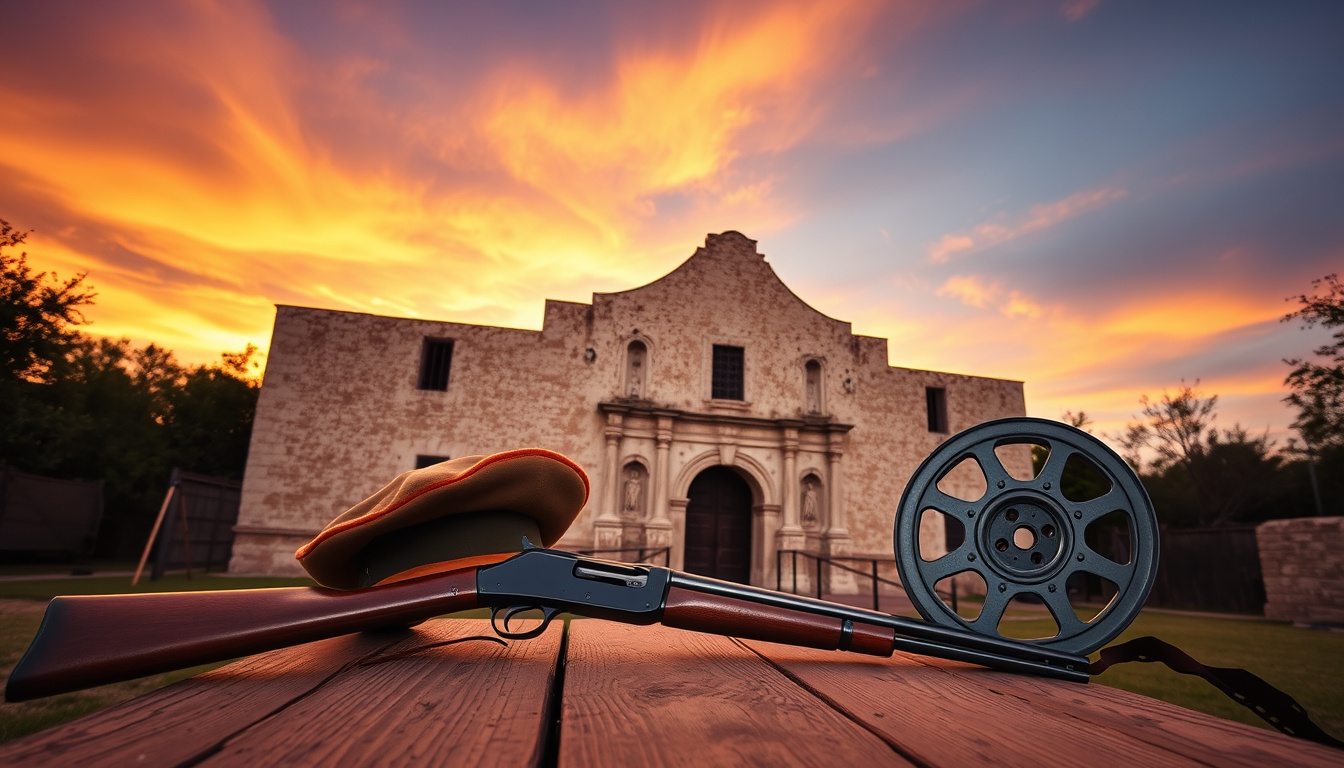
Davy Crockett died on March 6, 1836, at the Battle of the Alamo in San Antonio, Texas, yet historians continue to debate whether he fell while fighting or was executed after surrendering. A frontiersman, bear hunter, Tennessee politician, and later a folk hero, Crockett’s life and death have been shaped as much by fact as by legend.
Born near Limestone, Tennessee, on August 17, 1786, Crockett rose from humble beginnings to serve in the Tennessee militia, the U.S. House of Representatives, and finally as a defender of the Alamo Mission. His opposition to President Andrew Jackson’s Indian removal policy cost him his political career and pushed him toward Texas.
Today, Crockett is remembered not only for his role in the Texas Revolution but also for the coonskin cap, the Disney television series, and even a Cold War nuclear weapon that bears his name. Separating the man from the myth requires a careful look at the historical record.
Who Was Davy Crockett?
August 17, 1786, Tennessee
March 6, 1836, Alamo, Texas
Frontiersman, Congressman, Alamo defender, folk hero
Disney movie, coonskin cap, theme song, nuclear weapon namesake
Key Insights About Davy Crockett
- Crockett’s death at the Alamo remains debated; popular history says he fought to the end, but some accounts suggest he was captured and executed.
- The “Davy Crockett” nuclear weapon (M-29) was a Cold War recoilless rifle designed to fire a small nuclear warhead—never used in combat.
- The coonskin cap became a national fad after the 1955 Disney TV series, with children mimicking Crockett’s frontier style.
- Crockett served two terms in the U.S. House of Representatives and was a staunch opponent of the Indian Removal Act.
- He fought in the Tennessee militia against the Creek Nation and during the War of 1812.
- Crockett arrived in San Antonio de Béxar in February 1836 and volunteered to garrison the Alamo Mission.
Snapshot Facts
| Attribute | Detail |
|---|---|
| Full Name | David Crockett |
| Birthplace | Greene County, Tennessee (or Limestone, modern-day Tennessee) |
| Political Party | Anti-Jacksonian / Whig |
| Military Service | Scout in Creek War, commander at Alamo |
| Famous Quote | “Be always sure you’re right, then go ahead.” |
| Spouse | Polly Finley (m. 1806–1815), Elizabeth Patton (m. 1816) |
| Children | 6 (including John Wesley Crockett, also a politician) |
Why Was Davy Crockett at the Alamo?
Crockett’s presence at the Alamo was the result of a political fallout and a personal decision to seek a new start in Texas. After losing his final congressional race, largely due to his opposition to President Andrew Jackson’s Indian removal policies, he famously told his constituents, “You may all go to hell, and I will go to Texas.” He left Tennessee in November 1835 and arrived in San Antonio de Béxar in February 1836.
Political Fallout with Andrew Jackson
Crockett served in the U.S. House of Representatives from 1827 to 1835 but broke with the Democratic Party over the Indian Removal Act. This opposition alienated him from the Jacksonian majority and ultimately cost him re-election.
Journey to Texas
After his defeat, Crockett set out for Texas, then a part of Mexico, where American settlers were increasingly in conflict with the central government. He traveled with a small party and reached the Alamo on February 8, 1836.
Garrison Duty at the Alamo
Upon arrival, Crockett enlisted as a private in the Volunteer Auxiliary Corps. He was assigned to defend the Alamo Mission, a fortified former mission in San Antonio. He reportedly said he would rather die in a good cause than be “choked to death in a swamp.”
Crockett’s decision to join the Alamo garrison was not a high-command appointment; he was a private soldier under the command of William Barret Travis. The group was vastly outnumbered when Mexican forces arrived.
How Did Davy Crockett Die?
The exact manner of Crockett’s death remains one of the most disputed episodes of the Texas Revolution. Two competing theories dominate the historical debate.
The Combat Theory
Contemporary newspapers, including the Arkansas Advocate, reported that Crockett died fighting, shooting 23 Mexican soldiers before dying with a butcher knife in one hand and a broken rifle in the other. This version became the foundation of his heroic image.
The Execution Theory
An unidentified Mexican source and the memoir of Mexican officer José Enrique de la Peña state that Crockett and five other defenders were captured alive after the battle ended, then executed on orders of General Antonio López de Santa Anna. The de la Peña account, though controversial, is taken seriously by many historians.
Eyewitness Evidence
Alamo survivor Susanna Dickinson Hannig later recalled seeing Crockett’s body and his distinctive coonskin cap lying beside him near the church. She confirmed he was dead and had been mutilated. Regardless of the manner, all accounts agree Crockett died at the Alamo.
Historians have not reached a consensus. The de la Peña memoir is challenged by some scholars who question its authenticity. The only certain fact is that Crockett perished on March 6, 1836, during the battle.
Davy Crockett in Pop Culture
Crockett’s legend exploded in the 20th century, transforming a historical figure into a pop culture phenomenon. His image became associated with the coonskin cap, Disney, and even a Cold War weapon.
The Coonskin Cap Craze
Although Crockett did wear a coonskin cap, he rarely used the name “Davy” (preferring “David”). After his death, almanacs and stage productions cemented his image as a funny, authentic hunter wearing the cap, and the 1955 Disney series turned it into a national fashion trend.
Disney and the 1955 Series
The ABC series Davy Crockett: King of the Wild Frontier starring Fess Parker portrayed Crockett fighting and dying “with guns ablazing,” a version that contradicts the execution account. The show spawned a hit theme song and a merchandising craze.
John Wayne’s The Alamo (1960)
In the epic film directed by and starring John Wayne, Crockett does not surrender. Instead, he tosses a torch into a powder magazine, blowing himself and the Alamo to “smithereens.” This dramatic ending further blurred fact and fiction.
The Davy Crockett Nuke – A Cold War Namesake
The U.S. Army developed the M-29 “Davy Crockett” nuclear weapon system in the 1960s. It was a recoilless rifle that fired a small nuclear warhead with a yield of 10–20 tons of TNT. Despite the name, there is no historical connection between Crockett and nuclear weapons; the name likely reflects his rugged frontier image. The weapon was never used in combat.
The coonskin cap was a real part of Crockett’s attire, but the image of him as a singing, whistling frontiersman was largely a creation of 1950s television. The real Crockett was a serious politician and a complex figure.
Key Dates in Davy Crockett’s Life
- – Born in eastern Tennessee.
- – Serves as scout in the Creek War.
- – Elected to Tennessee state legislature.
- – Elected to U.S. House of Representatives.
- – Loses re-election and leaves for Texas.
- – Arrives at the Alamo. Dies March 6 during the Battle of the Alamo.
- – Disney releases Davy Crockett: King of the Wild Frontier TV series and movie.
- – U.S. Army develops “Davy Crockett” nuclear weapon system.
What Is Known and What Remains Uncertain?
Established Information
- Davy Crockett was born in 1786 and died at the Alamo on March 6, 1836.
- He served as a U.S. Congressman from Tennessee.
- The Davy Crockett nuclear weapon was a Cold War recoilless rifle system.
Uncertain Information
- The exact manner of his death: fighting vs. surrendered and executed remains disputed.
- The accuracy of his legendary feats (e.g., killing a bear at age 3) is part of folklore.
- Whether he actually said “Be sure you’re right, then go ahead” is unverified.
What Was Davy Crockett’s Historical Significance?
Crockett’s life intersected with several major currents of 19th-century American history: westward expansion, frontier populism, and the Texas Revolution. As a congressman, he opposed the Indian Removal Act, aligning himself with the Anti-Jacksonian Whigs. His stand at the Alamo turned him into a martyr for Texas independence, helping to galvanize support for the Texas cause. In the 20th century, the Disney revival reshaped his image into a symbol of American rugged individualism, influencing childhood and fashion for a generation. Even the naming of the M-29 nuclear weapon reflected how deeply his frontier warrior image had entered the national psyche. For further reading on other historical figures, see Mansa Musa – The True Story of History’s Richest Man and King Edward VII – Biography of the Edwardian Era Monarch.
What Are the Most Credible Sources on Davy Crockett?
Historians rely on a mix of primary documents, contemporary accounts, and modern scholarship. Key sources include:
- Wikipedia – Davy Crockett
- Britannica – Davy Crockett
- National Park Service – The Alamo
- Texas State Historical Association – Crockett
- Disney – Davy Crockett: King of the Wild Frontier
The Battlefields.org biography and the Smithsonian article also provide valuable insight into the death controversy.
“I leave this rule for others when I’m dead, / Be always sure you’re right, then go ahead.” — attributed to Davy Crockett
“He was a man of the people, unpolished but wise.” — 1836 obituary
The Lasting Legacy of Davy Crockett
Davy Crockett remains a quintessential American folk hero. Whether as the brave frontiersman of Disney, the controversial martyr of the Alamo, or the namesake of a Cold War weapon, his story endures because it touches on themes of independence, self-reliance, and sacrifice. While historians continue to debate the details of his death, his place in American mythology is secure. For more about other legendary leaders, see Mansa Musa – The True Story of History’s Richest Man.
Frequently Asked Questions
Was Davy Crockett the King of the Wild Frontier?
That title comes from the 1954 Disney TV song. It is a pop culture nickname, not an official one.
Did Davy Crockett have a TV show?
Yes, Davy Crockett: King of the Wild Frontier aired on Disney in 1954-55, starring Fess Parker.
What is the Davy Crockett nuclear weapon’s range?
The M-29 had a range of about 1.25 to 2.5 miles (2 to 4 km) and a yield equivalent to 10-20 tons of TNT.
How many children did Davy Crockett have?
He had six children: three with first wife Polly Finley, three with second wife Elizabeth Patton.
Is Davy Crockett’s hat a raccoon or a fox?
The classic “coonskin cap” is made from raccoon skin with the tail hanging down.
Why is there a weapon called Davy Crockett?
The U.S. Army named the M-29 after Crockett to evoke his frontier image. There is no historical link between Crockett and nuclear weapons.
Did Davy Crockett really kill a bear at age 3?
This is an unverified folk tale from 19th-century almanacs, part of his legendary persona.
What was Crockett’s real first name?
His full name was David Crockett. He rarely used “Davy” in his lifetime.
Where is Davy Crockett buried?
His remains are believed to have been cremated with other Alamo defenders. No individual grave exists.

Oliver Arthur Morgan Harrison is a staff writer for StoryShift.uk, covering UK news, culture, politics and technology. He works under Editor-in-Chief Maarika Tamm and UK Managing Editor Oliver Grant, following the newsroom standards for sourcing, verification and fact-checking set out in our editorial policies.