
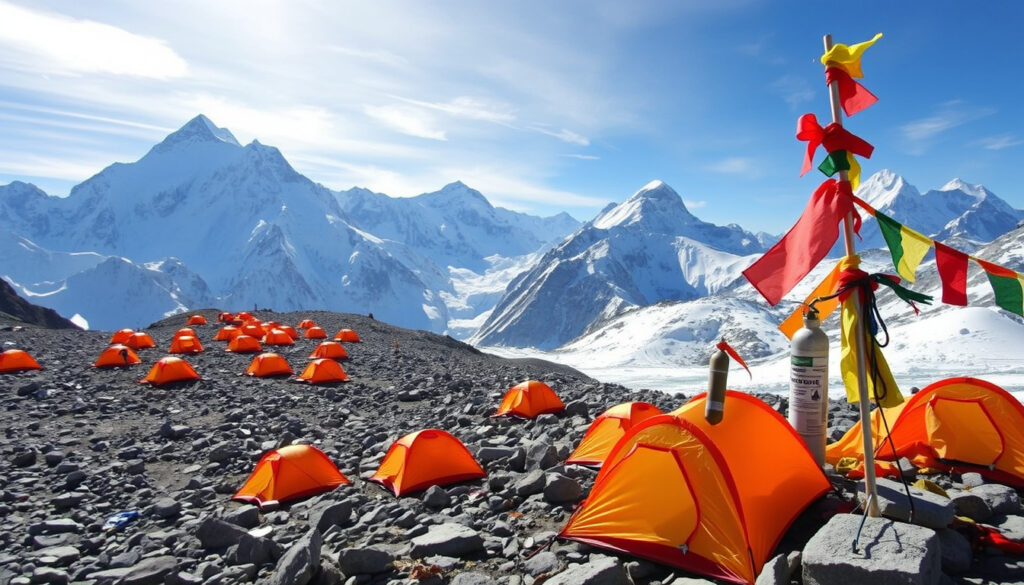
For many travelers, reaching the foot of the world’s tallest mountain is a lifelong ambition. The trek to Everest Base Camp (EBC) in Nepal offers a rare opportunity to walk through the heart of the Khumbu region, surrounded by the highest peaks on Earth. However, planning this journey requires understanding not just the altitude and route, but also the real costs, safety concerns, and logistical details that define the experience in 2025.
The journey is a high-altitude, non-technical trekking route that typically spans 10 to 15 days or more. It is a physical challenge that rewards trekkers with the chance to stand at the base of Everest, but success relies heavily on careful preparation and respect for the mountain environment.
How High Is Everest Base Camp? (Altitude of South and North Camps)
5,364 m / 17,598 ft
5,150 m / 16,896 ft
12–16 days
$1,200–$3,000 (2025)
Altitude sickness
Kala Patthar (5,645 m)
Key Insights
- South Base Camp is higher than North Base Camp by 214 m (702 ft).
- Around 40,000 trekkers visit EBC annually, according to Responsible Travel.
- The trek involves over 24,000 ft of cumulative elevation gain and loss.
- Despite being a non-technical trek, altitude sickness affects up to 50% of trekkers if they do not acclimatize properly.
- Most trekkers do not see Mount Everest from Base Camp itself; Kala Patthar is the iconic viewpoint.
- Permits and flights add significant cost: Lukla flights alone cost around $350 round trip.
Everest Base Camp – Key Facts
| Fact | Value |
|---|---|
| South Base Camp (Nepal) elevation | 5,364 m |
| North Base Camp (Tibet) elevation | 5,150 m |
| Distance from South Base Camp to summit (vertical) | 3,484 m (11,430 ft) |
| Distance from Lukla to EBC (trail) | ~65 km (40 mi) one way |
| Standard trek duration | 12–16 days |
| Peak trekking season | March–May, October–November |
| Average temperature at EBC (daytime) | 0–10°C (32–50°F) |
| Permits required | Sagarmatha National Park + TIMS card |
How Much Does an Everest Base Camp Trek Cost? (2025 Guide)
The cost of an EBC trek in 2025 varies significantly based on the level of service and the route chosen. Published guides place the trek in a wide range: budget, self-supported trekking can be done for around $1,000 to $1,500, while guided treks range from $1,500 to $2,500. Some package operators quote between $1,200 and $2,000 for a 14- to 15-day trip. One 2025 guide also lists a total around USD 1,480 per person for a standard package, showing that pricing varies by inclusions.
What Are the Main Cost Components?
The total price typically includes several key components. Flights to and from Lukla are a major expense. Permits, including the Sagarmatha National Park entry permit and the Trekkers’ Information Management System (TIMS) card, are required. Guide and porter fees, if hired, add to the cost. Lodging and meals at tea houses along the trail, as well as gear rental or purchase, and tips and extras are also common considerations.
Guided Trek vs. Independent Trekking
A guided trek generally costs more but usually includes a guide, porter, permits, accommodation, and logistics. A budget trek can be done more cheaply with tea-house lodging and fewer inclusions. Several 2025 guides explicitly frame the trek as suitable for independent trekking or guided packages, depending on your confidence with logistics and altitude management.
Is the Everest Base Camp Trek Dangerous?
The main safety issue on the EBC trek is altitude sickness, not technical climbing. The condition can affect anyone, regardless of fitness level. One guide states that after 3,000 m, ascent should not exceed 500 m per day to reduce the risk of altitude sickness. The standard route’s repeated acclimatization days in Namche and Dingboche are specifically designed to help the body adapt to the altitude.
Most 2025 guides describe the EBC trek as moderate to strenuous. No ropes or mountaineering skills are required, but the combination of long trekking days, thin air, and cold weather makes fitness and acclimatization essential. The most consistently recommended seasons for trekking are spring (April–May) and autumn (late September–November), as weather is usually more stable and visibility is better.
Altitude sickness is the primary danger on the EBC trek. After 3,000 m, it is recommended to ascend no more than 500 m per day. Acclimatization days in Namche Bazaar and Dingboche are crucial for reducing risk.
How Far Is Everest Base Camp from the Summit (and Can You See Everest from There)?
The vertical distance from South Base Camp to the summit of Mount Everest is 3,484 m (11,430 ft). The horizontal trail distance from Lukla to EBC is approximately 65 km (40 mi) one way. However, it is important to note that most trekkers do not see Mount Everest from Base Camp itself. The terrain blocks the view. Kala Patthar, at about 5,545 m, is the iconic viewpoint for sunrise views of Everest. Many itineraries include a hike to Kala Patthar the day after reaching Base Camp.
While Everest Base Camp is the destination, the best view of Mount Everest is from Kala Patthar (about 5,545 m). This viewpoint is a standard add-on to most itineraries and provides the classic panoramic view.
How Long Does It Take to Trek to Everest Base Camp? (Typical Itinerary)
A common guided itinerary for the Everest Base Camp trek is 13 to 15 days. This includes rest and acclimatization days in Namche Bazaar and Dingboche, a summit day to EBC, and a return trek back to Lukla before flying to Kathmandu.
Typical Day-by-Day Structure
- Day 1: Fly Kathmandu → Lukla (2,860m); trek to Phakding (2,610m)
- Day 2: Phakding → Namche Bazaar (3,440m)
- Day 3: Acclimatization day in Namche; hike to Everest View Hotel
- Day 4: Namche → Tengboche (3,860m)
- Day 5: Tengboche → Dingboche (4,410m)
- Day 6: Acclimatization day in Dingboche; hike to Nagarjun Hill
- Day 7: Dingboche → Lobuche (4,940m)
- Day 8: Lobuche → Gorak Shep (5,164m); hike to Everest Base Camp (5,364m)
- Day 9: Hike Kala Patthar (5,645m) sunrise; return to Pheriche/Phortse
- Day 10-12: Descent to Lukla (via same route or alternative)
- Day 13: Fly Lukla → Kathmandu
South Base Camp vs North Base Camp: Key Differences
The information available on the North Base Camp in Tibet is more limited. Based on the provided research, the south route is the classic trek through Lukla, Namche, and the Khumbu Valley, with established teahouse infrastructure and common acclimatization stops. A direct comparison with the north route is not well supported by the available sources, so it is not possible to reliably confirm route, permit, border, or logistics differences from the provided materials.
| Established Information | Information That Remains Unclear |
|---|---|
| South Base Camp elevation is 5,364 m (official survey). | Exact cost can vary widely based on season, agency, and inclusions. |
| North Base Camp elevation is 5,150 m (official survey). | Success rate of reaching EBC is not officially tracked; estimated >90% for trekkers who acclimate. |
| The trek from Lukla to EBC takes at least 8 hiking days. | Weather can close Lukla flights; delays of 1–2 days are possible. |
| Altitude sickness is a real risk; proper acclimatization is essential. | Guide recommendations: some agencies are more reliable; due diligence is needed. |
| Mount Everest cannot be seen from South Base Camp due to terrain; Kala Patthar is needed. | Future permit costs and trekking regulations may change; check 2025 updates. |
Context and Background
Everest Base Camps were established in the 1920s for early expeditions. The South Base Camp became the standard route after Tenzing Norgay and Edmund Hillary’s historic 1953 ascent. Today, the trek is one of the most popular adventure tourism routes in the world. The Khumbu region is also home to Sagarmatha National Park, a UNESCO World Heritage site. The local Sherpa community heavily depends on trekking tourism, which has brought economic benefits but also raised concerns about overtourism and environmental impact. Garbage management and climber safety have been debated topics in recent years.
Sources and Credible Information
The information in this guide is drawn from several established sources. The Wikipedia entry on Everest base camps provides a factual overview of altitude and location. The National Geographic Everest Base Camp Trek guide offers practical advice. The Nepal Tourism Board and the Sagarmatha National Park official page are authoritative sources for permits and fees. For travel planning, Responsible Travel’s guide to the EBC trek offers additional context on number of trekkers and altitude sickness.
“Despite being a non-technical trekking route, altitude sickness affects up to 50% of trekkers if they do not acclimatize properly.”
— Responsible Travel, EBC Trek Guide
Summary: Planning Your Everest Base Camp Trek in 2025
Reaching Everest Base Camp is a significant achievement that requires careful planning, physical preparation, and respect for the high-altitude environment. The trek offers a non-technical route through the stunning Khumbu Valley, but altitude sickness remains the primary risk. Costs in 2025 range from around $1,000 for a budget trek to over $2,500 for a fully guided package. The best time to go is spring or autumn. For a detailed look at the route, see our Everest Base Camp Trek Guide for 2025.
Frequently Asked Questions
What is the best time of year to trek to Everest Base Camp?
The most popular seasons are pre-monsoon (March–May) and post-monsoon (October–November). Spring offers warmer temperatures and clear skies; autumn has excellent views but cooler nights. Avoid monsoon (June–August) and winter (December–February) due to snow and flight cancellations.
Can a beginner do the Everest Base Camp trek?
Yes, but it requires good physical fitness and prior preparation. The trek is non-technical (no climbing), but altitude and long hours of walking are challenging. Many beginners complete it with proper acclimatization and a guided tour.
What permits do I need for the Everest Base Camp trek?
You need a Sagarmatha National Park entry permit (about $30) and a Trekkers’ Information Management System (TIMS) card (about $20). If going from Tibet, a Chinese visa and mountaineering permit are required.
Do I need a guide for the Everest Base Camp trek?
It is not mandatory for the Nepal side, but highly recommended for safety and logistics. Many trekkers join groups. Independent trekkers must be well-prepared. For Tibet, a guide is required by law.
What is the temperature at Everest Base Camp at night?
Overnight temperatures can drop to -10°C to -20°C (14°F to -4°F) in peak seasons. A proper sleeping bag and layers are essential.
How much does a Lukla flight cost?
A round-trip flight between Kathmandu and Lukla typically costs around $350 per person, but prices vary by season and airline. Budget extra for potential delays.

Oliver Arthur Morgan Harrison is a staff writer for StoryShift.uk, covering UK news, culture, politics and technology. He works under Editor-in-Chief Maarika Tamm and UK Managing Editor Oliver Grant, following the newsroom standards for sourcing, verification and fact-checking set out in our editorial policies.