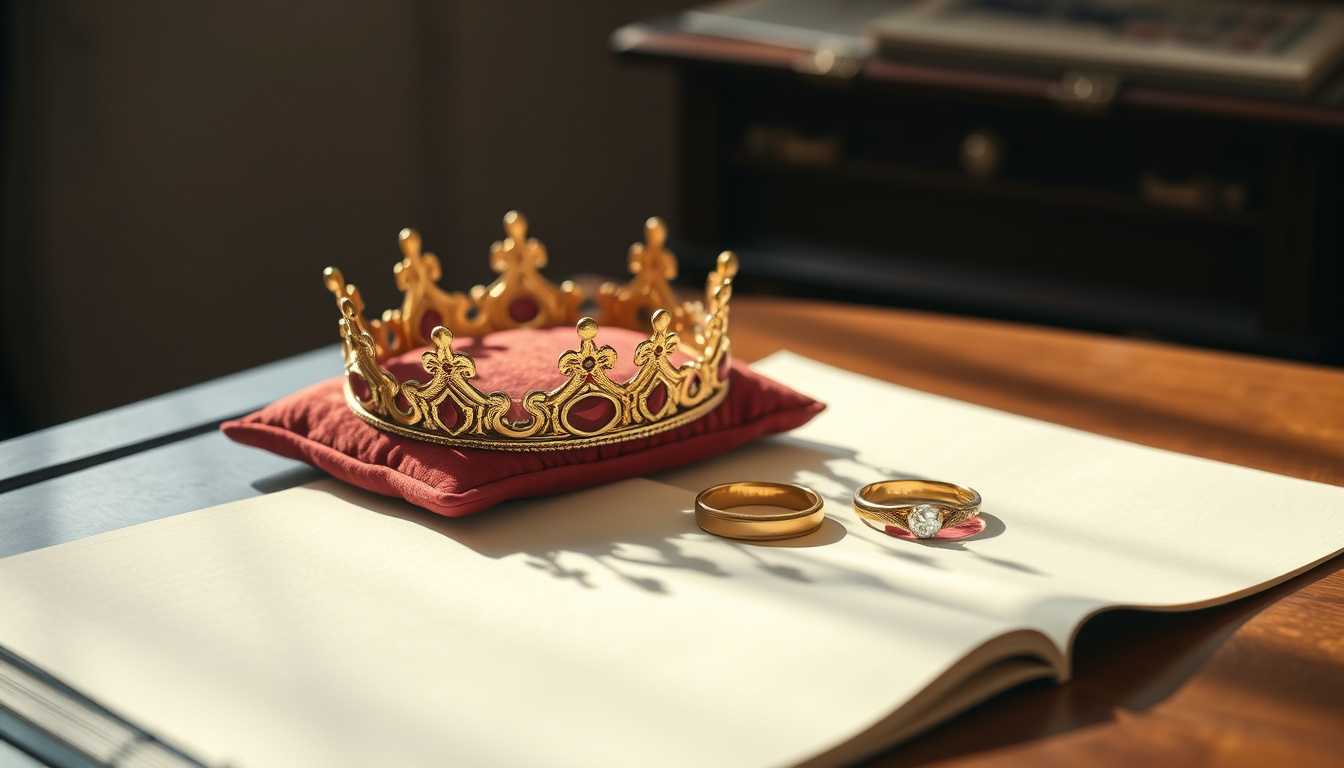
Edward VIII was the King of the United Kingdom and the Dominions of the British Commonwealth for 326 days in 1936, a reign that ended with his voluntary abdication to marry American divorcée Wallis Simpson. His decision to give up the throne over a constitutional and religious crisis made him the only British monarch to ever do so.
His birth name was Edward Albert Christian George Andrew Patrick David, and he was known to his family and close friends as David. He was the eldest son of King George V and Queen Mary, and he died on May 28, 1972, in Paris, France.
Edward’s story is tied to a short reign, a controversial marriage, and a life spent largely in exile. He was also known after his abdication as the Duke of Windsor, a title given to him by his brother and successor, King George VI.
Why Did King Edward VIII Abdicate?
Edward VIII’s abdication was the result of a constitutional crisis caused by his intention to marry Wallis Simpson, an American socialite who was divorced from her first husband and whose second divorce was pending. The Church of England, of which the monarch was the Supreme Governor, did not permit the remarriage of divorced persons.
His intention to marry a divorced woman was met with strong opposition from the British government, the Church, and the public. Prime Minister Stanley Baldwin informed the King that he could not remain on the throne and marry Simpson, and that the government would resign if he refused to back down. Faced with the choice, Edward chose to abdicate in order to marry the woman he loved.
On December 11, 1936, Edward gave his formal assent to the Declaration of Abdication Act, becoming the first British monarch to voluntarily relinquish the throne. The reign of his brother, who became King George VI, began immediately, and the monarchy navigated the crisis while preserving its constitutional integrity.
Key insights into his abdication and its impact:
- Edward VIII was the only British monarch to voluntarily abdicate the throne.
- His reign was the shortest of any British monarch since the 16th century (326 days).
- The abdication was driven by political, religious, and social opposition to marrying a divorced woman.
- The constitutional crisis reinforced the monarchy’s role as a symbol of constitutional rather than personal rule.
- Edward’s father, King George V, had explicitly predicted that Edward would ruin the monarchy within a year.
- The abdication profoundly altered the line of succession, placing Edward’s younger brother, George VI, on the throne.
- Edward and Wallis had no children, ending any direct line from him.
Key Facts About Edward VIII
| Attribute | Details |
|---|---|
| Full Name | Edward Albert Christian George Andrew Patrick David |
| Reign | 20 January 1936 – 11 December 1936 (326 days) |
| Coronation | Never crowned due to abdication |
| Predecessor | King George V |
| Successor | King George VI |
| Born | 23 June 1894, White Lodge, Richmond, London, England |
| Died | 28 May 1972, Paris, France |
| Cause of death | Throat cancer (carcinoma of the pharynx) |
| Net Worth | Estimated at $1 million to $10 million (though historical net worth is difficult to verify) |
| Spouse | Wallis Simpson (married 1937–1972; her death) |
| Children | None |
| Burial | Royal Burial Ground, Frogmore, Windsor, England |
Did Edward VIII Have Children?
No, Edward VIII and Wallis Simpson had no biological children. After his abdication, he did not have any known offspring, and the couple remained childless throughout their marriage. This is a frequently searched question, and the evidence from historical records clearly indicates no surviving children or direct heirs.
Edward VIII had no son, and there is no official record of any child from any relationship, whether before or after his marriage to Simpson. This absence of heirs made the abdication crisis even more significant, as his brother George VI assumed the throne with his own family line to continue the monarchy.
Some speculative claims suggest Edward had illegitimate children, but there is no evidence in official archives or biographies to support such claims. The Duke and Duchess of Windsor had no children, and no public records contradict this.
What Was Edward VIII’s Cause of Death?
Edward VIII died of throat cancer, specifically carcinoma of the pharynx, on May 28, 1972. He died in his Parisian home, where he had lived in exile with his wife, Wallis Simpson, for much of his post-abdication life. He was 77 years old at the time of his death.
His health had declined in his final years, and he was a long-term heavy smoker, which is the primary factor associated with throat cancer. His funeral was held at St George’s Chapel at Windsor Castle, and he was buried in the Royal Burial Ground at Frogmore, Windsor.
How Old Was Edward VIII When He Died?
Edward VIII was 77 years old. He was 42 when he abdicated, and he lived another 35 years after the abdication, spending most of his remaining life in France. His age, manner of death, and the timing of his death just over a decade after his mother Queen Mary’s death in 1953, were significant points in his life narrative.
Who Were Edward VIII’s Siblings and Family?
Edward VIII was the eldest of six children of King George V and Queen Mary. His siblings were Prince Albert (who became King George VI), Princess Mary (the Princess Royal), Prince Henry (Duke of Gloucester), Prince George (Duke of Kent), and Prince John.
His family tree shows that he was the great-grandson of Queen Victoria. He was also the older brother of George VI, who succeeded him, and the uncle of Queen Elizabeth II. His brother Prince John had epilepsy and died in 1919 at the age of 13, while Prince George died in a plane crash in 1942 during World War II.
Edward’s relationship with his family was strained after his marriage and abdication. He was particularly close to his younger brother George, but the abdication created a permanent rift with his mother, Queen Mary, who refused to receive Wallis Simpson.
What Was Edward VIII’s Net Worth?
At the time of his death, Edward VIII’s net worth was estimated to be between $1 million and $10 million. He had a personal fortune amassed from the British taxpayer, property investments, and a generous settlement from the Crown.
Following his abdication, he received a payment of around £25,000 per year from his brother, King George VI, though this wasn’t a simple pension. He was also known to have received income from his substantial Royal Trust and from private assets. He also owned a home in Paris and had expensive tastes, which his finances were frequently stretched to support.
It is important to note that the historical net worth figures are estimates. There are no formal financial records readily available to the public, and the figures provided are derived from historical documents and accounts of the time.
Timeline of Edward VIII’s Life
- June 1894: Born at White Lodge, Richmond, London. He was the eldest son of the Duke and Duchess of York.
- 1910: Served as a midshipman in the Royal Navy, and later served in World War I’s Grenadier Guards.
- January 1936: Became King Edward VIII on the death of his father, King George V.
- December 1936: Abdicated the throne to marry Wallis Simpson. The declaration became effective on December 11.
- March 1937: Married Wallis Simpson at a private ceremony in France, after which he was created Duke of Windsor.
- 1937–1939: Toured Europe and had controversial meetings with Adolf Hitler, which damaged his public image further.
- 1940–1945: Served as Governor of the Bahamas during World War II, a role that kept him away from Europe.
- May 1972: Died in Paris, France, following a battle with throat cancer.
- May 1972: Buried at the Royal Burial Ground, Frogmore, Windsor, England.
Established Information vs. Uncertainty
Edward VIII’s life contains a mix of well-documented historical facts and areas of ongoing speculation.
| Established Information | Information That Remains Unclear |
|---|---|
| Edward had no biological children. | Some myths claim he was murdered or his death was hastened, but no evidence supports this. |
| He died of throat cancer in 1972. | His exact net worth is not publicly documented; figures are estimates based on historical records. |
| He was the only British monarch to voluntarily abdicate. | Details of his personal wealth and any secret overseas assets are not fully disclosed. |
| He never had a coronation. | His actual cause of death, while recorded as throat cancer, lacks full medical details in public archives. |
Context of Edward VIII’s Life and Monarchy
Edward VIII’s desire to modernize the monarchy conflicted with established traditions and the Church of England’s stance on divorce. His affair with Wallis Simpson, and his insistence on marrying her, was unconscionable to the political and religious establishment of the time. He was never crowned, and his reign was too short for any substantial policy or ceremonial impact.
The abdication crisis ultimately strengthened the monarchy by reinforcing its role as a constitutional symbol rather than a personal rule. The crisis demonstrated that the monarchy is not merely a matter of personal preference but a deeply embedded national institution. His actions, and the response, defined the 20th-century monarchy.
After abdicating, Edward and Wallis Simpson lived primarily in France, though they also spent time in the Bahamas (where Edward served as Governor from 1940–1945). They had no children. He remained a controversial figure, with his sympathies towards Nazi Germany and his comments about a “new world order” during his later life cementing a legacy of controversy and political naivety.
Sources and Quotes from Edward VIII’s Life
King Edward VIII’s own words provide an intimate glimpse into his personality and the choices he made. The following quotes are documented from his public statements and interviews.
“I have found it impossible to carry the heavy burden of responsibility, and to discharge my duties as King as I would wish to do, without the help and support of the woman I love.”
Edward VIII, December 1936
“The things that are going to matter most in the future are the things that are going to matter most in the past.”
Edward VIII, statement on his abdication
A Summary of Edward VIII’s Brief Reign
In the end, Edward VIII’s story is one of a monarch who chose personal happiness over the crown. His decision to abdicate, a singular event in British history, created a constitutional and moral dilemma that was only resolved by his departure. He died in 1972, having never made any attempt to explain or justify his controversial political views or his absence from the royal fold. Edward remains a figure of both curiosity and criticism, but his brief reign continues to fascinate and define a pivotal moment in the modern British monarchy.
FAQ about Edward VIII
Why was King Edward VIII not allowed to reign?
He was prevented from reigning because his decision to marry Wallis Simpson, a divorced woman, was rejected by the British government, the Church of England, and the Dominions. The constitutional climate did not allow for a morganatic marriage or for him to retain the throne alongside the marriage.
How many years was Edward VIII king?
He was king for 326 days, from his father’s death on January 20, 1936, until his own abdication on December 11, 1936. This was the shortest reign of any British monarch since the 16th century.
Did Edward VIII have a son?
No, Edward VIII had no son. He and Wallis Simpson had no children, and he had no children from any other relationships, ending any direct male line from him.
Where did Edward VIII die?
He died in Paris, France. He had lived in Paris in exile with his wife Wallis for most of his post-abdication life, before passing away there on May 28, 1972.
What was Wallis Simpson’s maiden name?
Wallis Simpson was born Bessie Wallis Warfield, and she later married first Earl Winfield Spencer Jr. before her third marriage to Edward, the Duke of Windsor.
Who was on the throne when Edward VIII died?
When Edward VIII died in 1972, his niece, Queen Elizabeth II, was on the throne. His brother, King George VI, had reigned for much of his lifetime, but died in 1952.

Oliver Arthur Morgan Harrison is a staff writer for StoryShift.uk, covering UK news, culture, politics and technology. He works under Editor-in-Chief Maarika Tamm and UK Managing Editor Oliver Grant, following the newsroom standards for sourcing, verification and fact-checking set out in our editorial policies.