Mansa Musa, the 14th-century ruler of the Mali Empire, is frequently described as the richest person in history. His wealth, derived from gold and trans-Saharan trade, became legendary after his pilgrimage to Mecca in 1324. But how rich was he really, and what is known about his life, death, and legacy? This article examines the facts, figures, and unanswered questions surrounding one of history’s most fascinating figures.
Modern estimates place Mansa Musa’s net worth at around $400 billion in today’s money, but historians caution that such figures are impossible to verify. The exact value of his empire’s gold reserves, land, and human capital cannot be reconstructed from surviving records. What is certain is that his reign marked the peak of Mali’s power and influence, and his spending during the hajj had measurable economic consequences that lasted years.
Was Mansa Musa Really the Richest Person in History?
The claim that Mansa Musa was the wealthiest person ever appears frequently in popular media. Encyclopædia Britannica refers to him as “widely considered the richest person in history,” while Wikipedia notes that his wealth is impossible to calculate accurately. The figure of $400–500 billion is an inflation-adjusted estimate based on the size of the Mali Empire’s gold production and trade, but it is more illustrative than precise.
To put his wealth in context, consider these key insights from historical records:
- Mansa Musa’s pilgrimage deliberately or inadvertently disrupted North African economies for over a decade.
- His wealth was derived from Mali’s control of nearly half the world’s gold supply at the time.
- No exact cause of death is recorded; historical consensus places it around 1337.
- He established Timbuktu as a center of Islamic learning and trade.
- Modern comparisons to billionaires like Jeff Bezos or Elon Musk are misleading because Musa controlled an entire empire’s resources, not a corporate balance sheet.
- His gold gifts in Cairo were so large that the value of gold fell and did not recover for at least 12 years, according to Britannica.
| Fact | Detail |
|---|---|
| Full Name | Mansa Musa I (Musa Keita I) |
| Born | c. 1280 (Mali Empire) |
| Died | c. 1337 (cause unknown) |
| Reign | 1312 – 1337 |
| Empire Peak | Largest territorial extent of Mali Empire |
| Net Worth (modern) | Estimated $400–$500 billion USD |
| Religion | Islam (Sunni, Maliki) |
| Famous For | Richest person in history, 1324 pilgrimage to Mecca |
Who Was Mansa Musa? Biography, Birth, and Religion
Mansa Musa, also known as Musa I of Mali, was born around 1280 in the Mali Empire. He came to power in 1312, succeeding his predecessor who had launched an exploratory expedition across the Atlantic – a venture from which only one ship returned. Musa’s reign lasted until about 1337, during which the empire reached its greatest territorial extent.
When and where was Mansa Musa born?
Historians place his birth around 1280 in the region that is now Mali. The exact location is not recorded, but it was within the core heartlands of the Mali Empire, an area rich in gold production, particularly in the Bambuk and Bure goldfields.
What religion did Mansa Musa practice?
He was a devout Muslim, following the Sunni tradition of the Maliki school. His commitment to Islam was central to his identity and rule. The hajj to Mecca in 1324 was an act of piety that also served to project imperial power across the Islamic world.
Most biographical details come from oral traditions, Arab chroniclers like Al-Umari (who interviewed people who met Musa’s delegation in Cairo), and later histories. No contemporary portrait of Mansa Musa is known to exist.
What caused Mansa Musa’s death?
The cause of death is not established. Historical sources give differing years – 1332 or 1337 – but no contemporary account describes the circumstances. Historians generally treat it as unknown and possibly the result of natural causes. The lack of a clear record means any specific cause remains speculative.
Why Did Mansa Musa’s Gold Pilgrimage Cripple Economies?
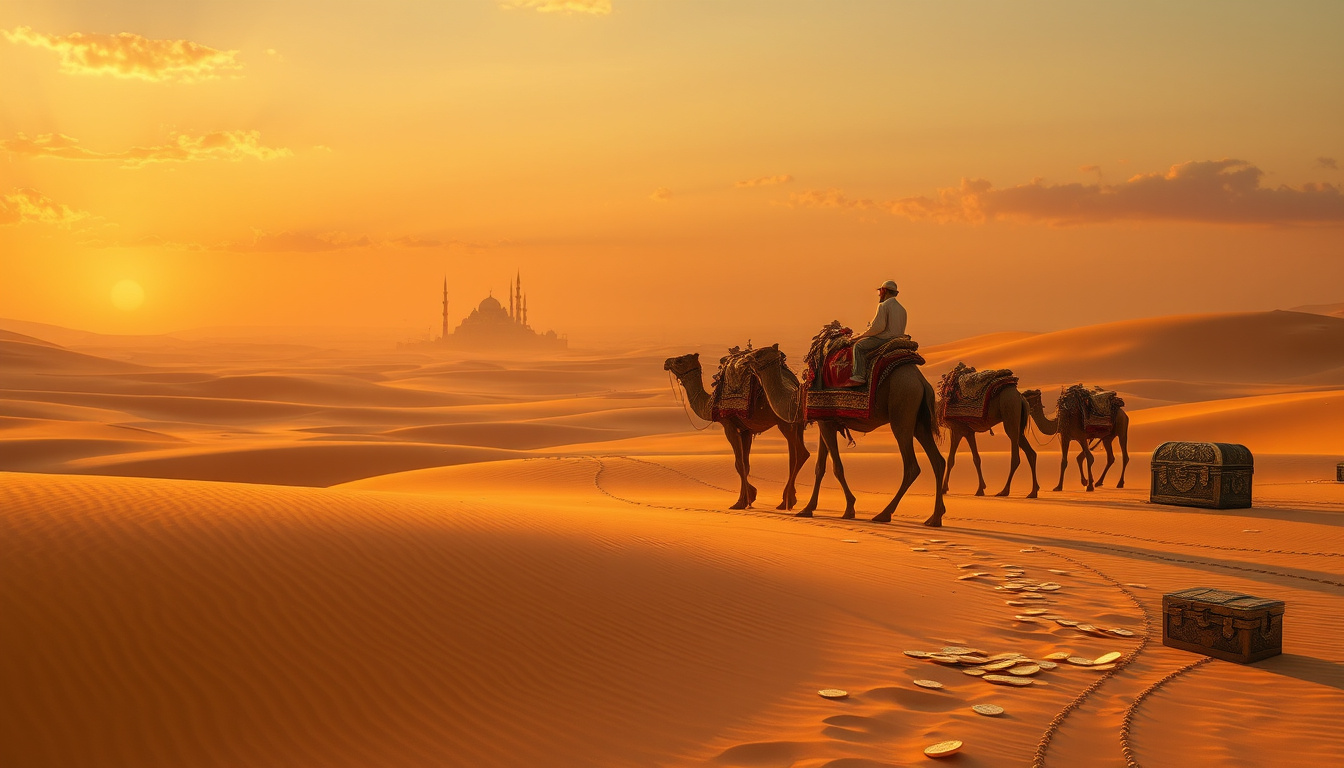
The 1324 pilgrimage to Mecca remains the defining event of Mansa Musa’s public reputation. He traveled with a caravan reported to include 60,000 people and as many as 100 camel loads of gold. Along the way, he distributed gold so lavishly in Cairo, Medina, and Mecca that it depressed the value of gold in Egypt for years.
According to Britannica, the impact on Cairo’s gold market lasted at least 12 years. Northwestern University Magazine notes that contemporary observers described him as having “flooded Cairo with his benefactions,” causing gold prices to fall sharply.
How did Mansa Musa accumulate his wealth?
Mali’s wealth rested on control of trans-Saharan trade routes, especially in gold and salt. The Bambuk and Bure goldfields produced much of the gold that circulated across North Africa and into Europe. The empire taxed every ounce that passed through its territory, giving Musa access to an enormous and steady stream of revenue.
What happened to the Mali Empire after Mansa Musa died?
After his death around 1337, the Mali Empire began a gradual decline. Succession disputes weakened central authority, and rival states like the Songhai Empire eventually absorbed Mali’s eastern territories. However, the cultural and scholarly institutions Musa helped fund, particularly in Timbuktu, continued to thrive for centuries.
Musa’s gold distribution is one of the earliest recorded examples of commodity-driven inflation caused by a single actor. It mirrors modern scenarios where a nation’s sudden influx of foreign currency devalues its own exports.
Mansa Musa in Media: Movies, Books, and Documentaries
Mansa Musa appears in various educational and documentary formats, but no major feature film or definitive documentary title specifically dedicated to him has been identified from the available sources. YouTube content from channels like TED-Ed and People Profiles, as well as lesson materials from study.com, provide accessible introductions for students and general audiences.
For those seeking deeper reading, the work “Caravans of Gold, Fragments in Time” from Northwestern University offers scholarly perspective. The travels of Ibn Battuta, who visited Mali shortly after Musa’s reign, also contain valuable references. No single “best biography” is universally agreed upon, but these resources are often recommended.
Key Events in Mansa Musa’s Life
The following timeline is based on the most commonly accepted dates from historical records:
- c. 1280 – Mansa Musa is born in the Mali Empire.
- 1312 – He becomes Mansa (king) of Mali after the previous ruler’s failed Atlantic expedition.
- 1324 – The pilgrimage to Mecca; unprecedented distribution of gold causes inflation in Cairo.
- 1325 – Return to Mali; commissions the Djinguereber Mosque (Great Mosque) in Timbuktu and recruits scholars and architects.
- 1337 – Death (date uncertain; cause unknown). The empire begins a long period of decline.
What Is Clear — and What Remains Unknown
Historical research separates what can be stated with confidence from what is still uncertain. The table below summarizes the current state of knowledge. For a deeper dive into influential figures, you can explore an Anthony Scaramucci biography.
| Established Information | Information That Remains Unclear |
|---|---|
| Mansa Musa ruled the Mali Empire from 1312 to 1337 | Exact birth year (c. 1280 is a consensus estimate) |
| He was an observant Muslim who performed the Hajj | Cause of death (no contemporary records survive) |
| His wealth came from Mali’s gold and salt trade | Precise inflation-adjusted net worth (estimates range from $400bn to $500bn) |
| His pilgrimage caused a measurable devaluation of gold in Egypt | Full details of the caravan size and exact gold quantity |
Mansa Musa in Historical Context
Mansa Musa’s reign represents the intersection of West African empire-building, global trade networks, and Islamic scholarship. His deliberate gold distribution during the hajj serves as an early historical example of commodity-driven inflation and the economic power of resource monopolies. The Mali Empire, at its peak under Musa, controlled trade routes that connected sub-Saharan Africa to the Mediterranean and the Middle East. His patronage transformed Timbuktu into a renowned center of learning, attracting scholars from across the Islamic world. The legacy of his rule continues to inspire scholarly interest in re-evaluating the economic contribution of medieval Africa to the global economy.
Sources and Notable Quotes
The following sources were consulted for this article. A selected quote illustrates the impact of Mansa Musa’s generosity.
“He flooded Cairo with his benefactions”
– Northwestern University Magazine, describing the aftermath of the 1324 pilgrimage.
- Encyclopædia Britannica: Musa I of Mali
- BBC: Meet the richest person who ever lived
- Northwestern Magazine: A Golden Age
- Wikipedia: Mansa Musa
- Our Ancestories: Mansa Musa’s Gold Economy
- Study.com: Mansa Musa lesson
What’s Next in Mansa Musa Scholarship and Pop Culture
Ongoing scholarly interest focuses on re-evaluating Mali’s GDP relative to the 14th-century global economy, archaeological work near Timbuktu and Niani, and the potential for expanded popular culture coverage from streaming platforms. While no major biopic has been announced from the available sources, the subject remains a compelling candidate for future film or series projects. For a modern perspective on extreme wealth and legacy, see the biography of another figure whose story continues to fascinate: Brad Pitt – 2025 Net Worth, Movies, and Biography.
Frequently Asked Questions About Mansa Musa
Did Mansa Musa really give away so much gold that he crashed the economy?
Yes. During his 1324 pilgrimage, he distributed so much gold in Cairo, Medina, and Mecca that the value of gold fell and did not recover for over a decade.
Is Mansa Musa richer than modern billionaires like Jeff Bezos or Elon Musk?
By inflation-adjusted GDP wealth, yes. Estimates place his net worth at $400–$500 billion, surpassing any modern individual when accounting for the size of the controlled economy.
How did Mansa Musa die?
The exact cause of death is unknown. Historical records suggest he died around 1337, possibly from natural causes, but no detailed account survives.
Was Mansa Musa a Muslim?
Yes. He was a devout Sunni Muslim of the Maliki school, and his pilgrimage to Mecca is one of the most documented events of his reign.
What is the best book about Mansa Musa?
Popular recommendations include “The Travels of Ibn Battuta” (which mentions Musa) and “Caravans of Gold, Fragments in Time” from Northwestern University.
Did Mansa Musa have any descendants?
Yes, his son Maghan I succeeded him, but the empire began to decline under later rulers.
Where is Mansa Musa buried?
The burial site is not known. No tomb has been securely identified.
Is there a Netflix documentary about Mansa Musa?
No major streaming documentary has been confirmed from the available sources, but educational videos exist on YouTube.
What was Mansa Musa’s real name?
His full name was Musa Keita I. “Mansa” means “king” or “emperor” in Mandinka.
How long did the Mali Empire last?
The Mali Empire existed from around 1235 to 1600, with its peak under Mansa Musa in the early 14th century.
For another story of a life that shaped an industry, read about Gianni Versace – Life, Murder, and Lasting Legacy in Fashion.

Oliver Arthur Morgan Harrison is a staff writer for StoryShift.uk, covering UK news, culture, politics and technology. He works under Editor-in-Chief Maarika Tamm and UK Managing Editor Oliver Grant, following the newsroom standards for sourcing, verification and fact-checking set out in our editorial policies.