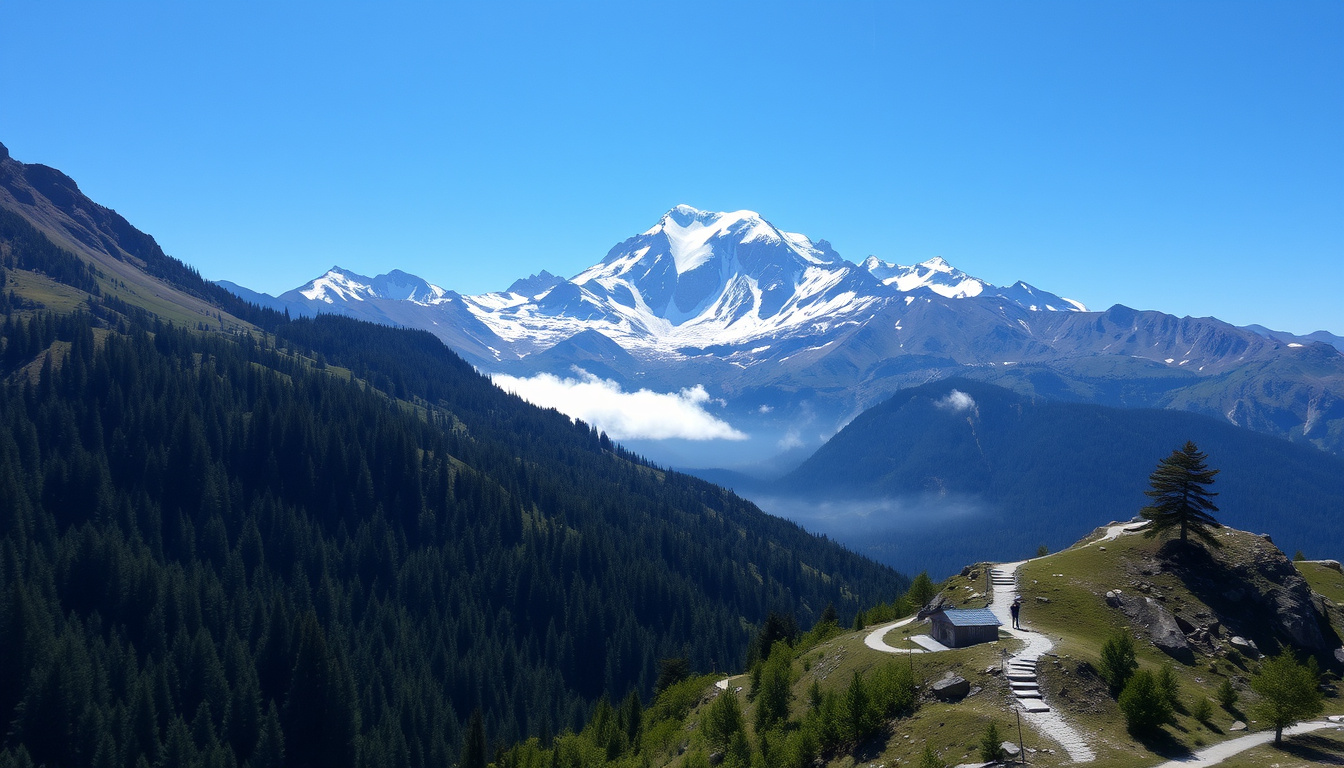
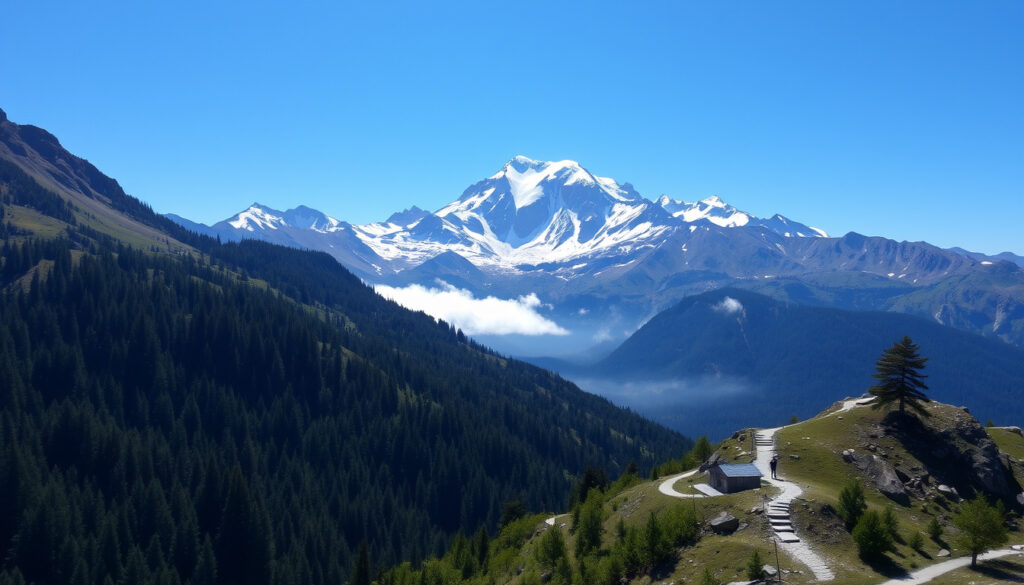
How Tall is Mount Olympus? Height and Geology
| Attribute | Value |
|---|---|
| Elevation | 2,917.727 m (9,570 ft) |
| Peaks | 52 named peaks, highest: Mytikas |
| Location | Thessaly / Central Macedonia, Greece |
| Type of Attraction | Mountain, National Park, UNESCO Biosphere Reserve |
Several key facts help situate Mount Olympus in its wider context:
- Mount Olympus is not only the highest mountain in Greece but also the legendary abode of the twelve Olympian gods.
- The mountain comprises 52 peaks with deep gorges and rich biodiversity, making it a UNESCO Biosphere Reserve.
- Climbing to the summit of Mytikas is a popular but challenging activity, with a base-to-summit hike typically taking 2 days.
- Confusion often arises between Earth’s Mount Olympus and Olympus Mons on Mars — the largest volcano in the solar system.
- The height of Mount Olympus has been measured precisely to 2,917.727 metres (9,570 ft) in recent surveys, slightly varying from older measurements.
The table below summarises essential statistics about the mountain, based on data from official Greek surveys and international sources such as Wikipedia.
| Fact | Value |
|---|---|
| Highest peak | Mytikas |
| Height | 2,917.727 m |
| First ascent | 1913 by Christos Kakkalos, Frédéric Boissonas, and Daniel Baud-Bovy |
| National Park established | 1938 |
| UNESCO status | Biosphere Reserve since 1981 |
| Number of peaks | 52 |
Where is Mount Olympus Located? Geography and Maps
Mount Olympus lies in northern Greece near the Thermaic Gulf, on the boundary between Thessaly and Macedonia, approximately 80 km southwest of Thessaloniki. The main gateway is Litochoro, a town on the mountain’s eastern side. Common approach points include Myli, Prionia, Gortsia, and Krevatia Vrontous.
The mountain is protected as Olympus National Park, established in 1938, and is also recognised as a UNESCO Biosphere Reserve. Key summits include Mytikas at approximately 2,918 m, Skolio at roughly 2,911 m, Stefani at about 2,909 m, and Skala at around 2,866 m. The name Mytikas means “nose,” referring to the summit’s shape.
What Region is Mount Olympus In?
The massif straddles the border between the administrative regions of Thessaly and Central Macedonia in northern Greece. It lies within the prefectures of Pieria and Larissa. The nearest major city is Thessaloniki, about 80 km to the northeast. The town of Litochoro, located on the eastern flank, serves as the main base for most climbing expeditions.
Is Mount Olympus Part of a Mountain Range?
Mount Olympus is not part of a continuous mountain range in the conventional sense. It is a standalone massif that rises directly from the Aegean coast. However, it is sometimes grouped with the broader Greek mountain system that includes the Pindus range to the west. The Olympus massif covers an area of roughly 500 square kilometres and includes numerous subsidiary peaks, ridges, and deep river gorges such as the Enipeas Gorge.
Olympus National Park was the first national park established in Greece (1938) and covers an area of about 238 square kilometres. The park was later designated a UNESCO Biosphere Reserve in 1981, recognising its exceptional biodiversity and cultural importance. Source: Visit Greece.
What is the Mythological Significance of Mount Olympus?
In ancient Greek religion, Mount Olympus was believed to be the residence of the Twelve Olympian gods, ruled by Zeus, god of the sky and thunder and king of the gods. Olympus was imagined as a divine palace hidden among clouds, where the gods gathered, held banquets, and observed the mortal world.
Which Gods Lived on Mount Olympus?
Traditional Olympians associated with Olympus include Zeus, Hera, Athena, Poseidon, Apollo, Artemis, Ares, Aphrodite, Hermes, Demeter, Hephaestus, and Hestia or Dionysus, depending on the tradition. The mountain’s association with the gods appears prominently in ancient Greek literature, including Homeric poetry. In myth, the summit was not treated simply as a geographic peak but as a supernatural realm separated from ordinary human access. For more detail, see the dedicated page on Greek mythology.
Why is Mount Olympus Important in Greek Mythology?
Olympus functioned as the symbolic centre of the Greek pantheon. It was not merely a location but a conceptual space where divine authority resided. The mountain’s towering, often cloud-covered peak reinforced the idea that the gods dwelt beyond the reach of mortals. This mythological framing gave Olympus a significance that extended far beyond its physical geography, influencing Greek art, literature, and religious practice for centuries. Source: National Parks of Greece.
Can You Climb Mount Olympus? Hiking and Summit Guide
Olympus offers routes ranging from forest walks and gorge hikes to demanding alpine climbs. The classic approach begins near Litochoro, at Myli, where the international E4 trail enters the mountain. The Enipeas Gorge route runs from Litochoro to Prionia for about 12 km, takes approximately 6–8 hours, gains about 700 m in elevation, and is generally considered moderately difficult.
How Long Does It Take to Hike Mount Olympus?
From Prionia, hikers commonly continue to the Spilios Agapitos Refuge, then ascend toward the high peaks. The full Litochoro–Mytikas route is about 23 km when the main sections are combined, with a quoted total hiking time of roughly 13–16 hours; many hikers divide it over two or more days. From Spilios Agapitos, the most common route to Mytikas goes via Skala. The alternative through Louki is more difficult and exposed. Other established routes include Gortsia–Petrostrouga–Plateau of the Muses and Krevatia Vrontous–Papa Aloni–Agia Triada.
What is the Best Time to Climb Mount Olympus?
The most accessible climbing season is generally June through October. Winter conditions can involve snow, ice, severe weather, and the need for specialist mountaineering equipment and experience. Hikers should account for rapid weather changes and cloud cover, exposure and steep terrain above the refuges, the technical nature of the Mytikas summit section, the need for suitable footwear, navigation, water, and weather information, and the value of using an experienced mountain guide for difficult or unfamiliar routes. Lower-elevation trails, including sections around Enipeas Gorge, are more accessible than the high-summit routes. For a practical guide to planning an ascent, see hiking Mount Olympus.
Even in summer, the upper mountain can experience sudden weather changes. Carry warm layers, sufficient water (at least 2 litres per person), sturdy hiking boots, and a map or GPS device. The final section from Skala to Mytikas is technically challenging and should not be treated as an ordinary walking trail. Source: Much Better Adventures.
What Are the Main Summits of Mount Olympus?
The principal high summits are Mytikas (2,918 m), Skolio (2,911 m), Stefani (2,909 m), and Skala (2,866 m). Each offers different levels of climbing difficulty. Mytikas, the highest, requires a technical scramble on the final approach. Skolio is often used as an alternative high point when conditions on Mytikas are unsafe. Stefani, also known as the “Throne of Zeus,” is a dramatic pinnacle visible from many lower routes. Source: Greece Moments.
The Mytikas summit section involves exposed scrambling on rocky terrain. Hikers with no prior mountaineering experience are strongly advised to hire a certified guide. Check current trail conditions and weather forecasts before setting out, and always register your hiking plan with the national park authorities or your accommodation.
How Has Mount Olympus Been Explored and Protected Over Time?
- Prehistory: Settlements and religious sites appear in the foothills; worship of Zeus and other gods becomes associated with the mountain.
- Classical Era: Olympus solidifies as the mythological home of the gods in Greek literature, particularly the works of Homer and Hesiod.
- 1913: First recorded ascent to the Mytikas summit by Christos Kakkalos, Frédéric Boissonas, and Daniel Baud-Bovy.
- 1938: Mount Olympus is declared Greece’s first national park.
- 1981: Designated a UNESCO Biosphere Reserve, recognising its unique ecosystems and cultural heritage.
- 2000s–2020s: Modern measurement efforts refine the mountain’s official height; tourism and hiking infrastructure grow significantly.
- Ongoing: Climate change impacts, conservation measures, and updates to climbing regulations continue to shape the mountain’s management.
Is Mount Olympus on Mars? Clearing the Confusion
A common point of confusion arises because a vastly larger volcano on Mars shares the name Olympus — Olympus Mons. The Martian feature is a shield volcano approximately 21.9 km high and 600 km in diameter, making it the largest known volcano in the solar system. The name was chosen by astronomers because of the mythological fame of the Greek Mount Olympus. The two are entirely separate: one is a terrestrial alpine massif in Greece, the other a planetary-scale volcanic mountain on Mars.
Established Information
- Mount Olympus is the highest mountain in Greece at 2,917.727 m (official 2023 survey).
- It is located on the border of Thessaly and Central Macedonia in northern Greece.
- It is the mythological home of the Greek gods.
- Mytikas is the highest summit of Mount Olympus.
Information That Remains Unclear
- Previous surveys recorded heights between 2,917 m and 2,919 m due to varying measurement methods; the current official figure is 2,917.727 m but may be refined with future surveys.
- Whether the mountain has any permanent glaciers is debated; some small ice patches exist but are not considered true glaciers.
- The exact number of named peaks can vary between sources, though most cite 52.
For authoritative information about Olympus Mons and its distinction from the Greek mountain, refer to NASA’s overview of Olympus Mons.
What Makes Mount Olympus Culturally and Naturally Significant?
Mount Olympus holds dual significance: geological — as Greece’s highest peak and a biodiversity hotspot — and cultural, as the sacred mountain of Greek mythology. Understanding both dimensions helps visitors appreciate why Olympus attracts hikers, historians, and mythology enthusiasts alike.
The mountain’s accessibility, with proximity to Thessaloniki and the gateway town of Litochoro, and the moderate difficulty of its main climbing routes make it one of the most popular multi-day treks in Europe. The protected status of Olympus National Park and the UNESCO Biosphere Reserve requires visitors to follow specific trails and regulations, helping preserve the mountain’s diverse habitats, which range from Mediterranean vegetation and dense forest to high alpine environments.
Nearby attractions include the archaeological site of Dion, an ancient sanctuary city associated with the worship of Zeus, traditional villages around the mountain, waterfalls and gorge landscapes along the Enipeas River, mountain refuges and high-elevation plateaus, and the coastal and Aegean landscapes visible from eastern routes. Source: Visit Greece blog.
What Do Authoritative Sources Say About Mount Olympus?
“Olympus is the sacred mountain and a landmark of Greek mythology, a universal symbol, and a global cultural monument.”
– visitgreece.gr (Greek National Tourism Organisation)
“Mount Olympus has 52 peaks and deep gorges. The highest peak, Mytikas, rises to 2,917.727 metres.”
– Wikipedia (citing the Hellenic Military Geographical Service)
“Mount Olympus, mountain peak, the highest (9570 feet [2917 metres]) in Greece. It is part of the Olympus massif near the Gulf of Thermai.”
– Encyclopedia Britannica
For an encyclopedic overview, Encyclopedia Britannica’s entry on Mount Olympus provides a concise factual summary covering geography, mythology, and modern significance.
What is the Lasting Significance of Mount Olympus?
Mount Olympus stands as both a physical landmark and a cultural symbol. As Greece’s highest mountain and a UNESCO Biosphere Reserve, it offers exceptional biodiversity and recreational opportunities. As the legendary home of the gods, it carries a mythological weight that few other mountains can match. Whether approached as a hiking destination, a subject of historical study, or a site of mythological fascination, Olympus remains a place where nature and storytelling converge. Its protected status ensures that future generations can continue to explore and appreciate this singular mountain, while ongoing scientific surveys may refine our understanding of its exact dimensions and ecological dynamics.
Frequently Asked Questions
Is Mount Olympus real?
Yes, Mount Olympus is a real mountain in Greece, the highest in the country. It is not a myth, though it is famous in Greek mythology.
What is the meaning of Mount Olympus?
In Greek, “Olympus” likely means “shining” or “the luminous one.” In mythology, it is the home of the gods.
How many peaks does Mount Olympus have?
Mount Olympus has 52 peaks, with Mytikas being the highest at 2,917.727 metres.
Is Mount Olympus the highest mountain in Greece?
Yes, at 2,917.727 metres it is the highest mountain in Greece.
What is the elevation of Mount Olympus in feet?
Approximately 9,570 feet.
Where can I find a map of Mount Olympus?
Detailed maps are available from the Mount Olympus National Park website, tourist information in Litochoro, and online hiking platforms like AllTrails.
What is the national park status of Mount Olympus?
Mount Olympus was established as Greece’s first national park in 1938 and is also a UNESCO Biosphere Reserve.

Oliver Arthur Morgan Harrison is a staff writer for StoryShift.uk, covering UK news, culture, politics and technology. He works under Editor-in-Chief Maarika Tamm and UK Managing Editor Oliver Grant, following the newsroom standards for sourcing, verification and fact-checking set out in our editorial policies.