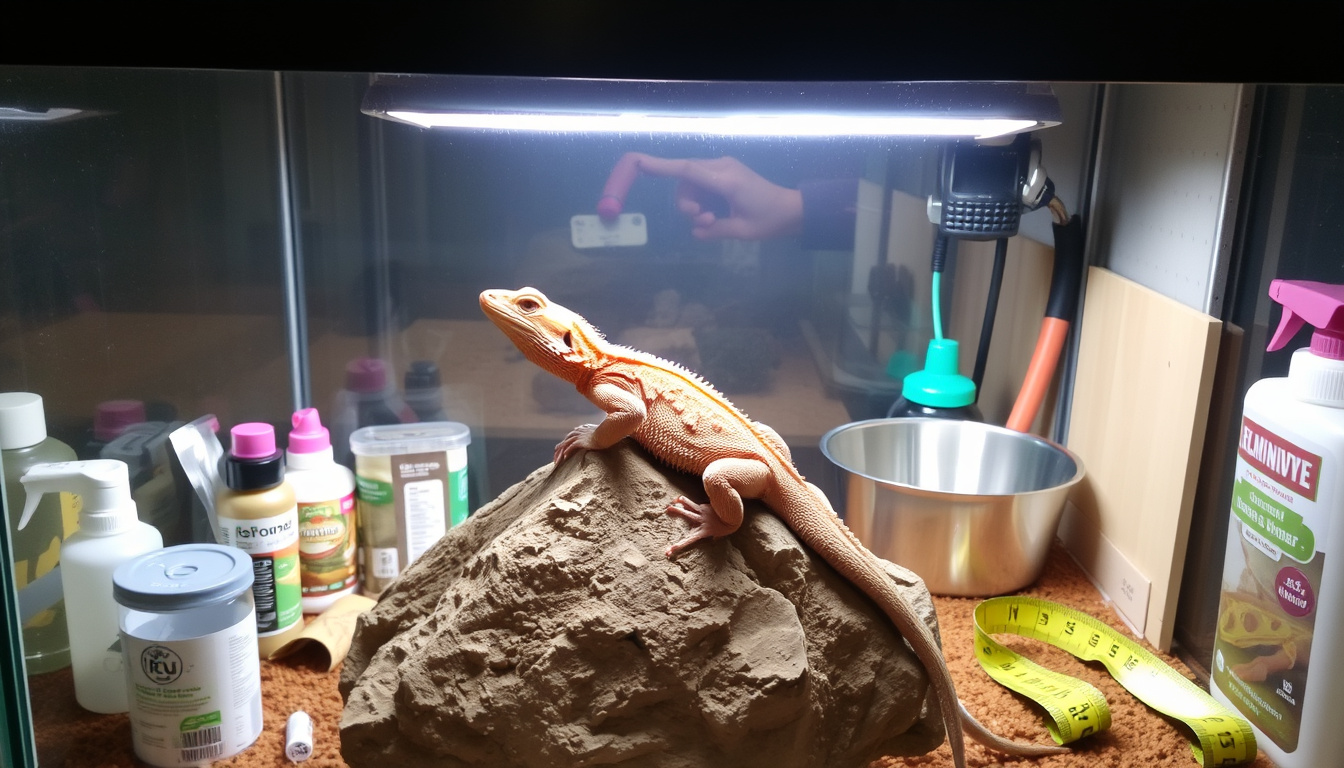
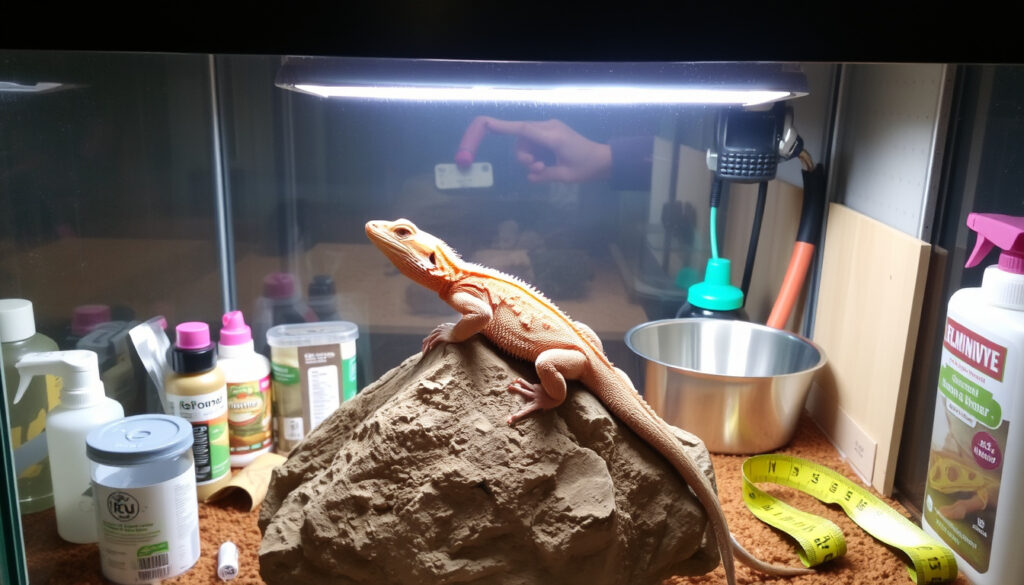
Bearded dragons are among the most popular pet reptiles, and the red bearded dragon has become one of the most requested color morphs. The purchase price, however, is only the beginning. Enclosure, lighting, food, and veterinary care turn a seemingly small investment into a long-term responsibility.
A red bearded dragon is usually a color morph of the central bearded dragon (Pogona vitticeps), not a separate species. In 2025, a realistic budget was roughly $400–$1,000 for the dragon and a complete initial setup, with ongoing expenses for insects, vegetables, supplements, electricity, replacement bulbs, and veterinary care.
Current care guidance favors buying the adult enclosure first rather than paying for a small starter tank and later upgrading. Enclosure size, UVB, basking temperatures, diet, and access to an exotic veterinarian are the major priorities rather than the dragon’s color alone.
How Much Does a Bearded Dragon Cost?
Costs vary by morph, source, and equipment choices, but pet store prices for a standard baby or juvenile typically fall between $30 and $100. Breeder prices vary.
| Aspect | Key Fact | Source |
|---|---|---|
| Average cost | $30–$100 for a standard baby or juvenile; complete setups commonly $400–$1,500 | Reptile specialty sites |
| Tank size | Adult minimum 4 × 2 × 2 ft (about 120 gallons) | RSPCA |
| Lifespan | 10–15 years | Veterinary sources |
| Common morphs | Red, orange, yellow, hypo, leatherback | Breeder databases |
- The initial cost of the dragon is small, but the enclosure and equipment add significant expense.
- Tank size must increase as the dragon grows; adults need at least 4 × 2 × 2 ft.
- Red bearded dragons are a popular color morph produced through selective breeding, not a separate species.
- Buying locally allows you to inspect the dragon’s health and avoid shipping stress.
- A complete initial setup commonly runs $400–$1,500, including the animal and equipment.
- Monthly care costs roughly $30–$150 for feeders, greens, supplements, electricity, and veterinary savings.
| Item | Typical cost | Notes |
|---|---|---|
| Standard baby or juvenile | $30–$100 | Pet store prices; breeder prices vary |
| Red or other specialty morph | $150–$500+ | Depends on lineage, color, rarity, and breeder reputation |
| Rescue adoption | $50–$150 | Sometimes includes basic veterinary care |
| Adult enclosure | $200–$700 | Glass, PVC, or custom construction |
| UVB and basking lighting | $150–$300 | Fixtures, tubes, bulbs, replacement equipment |
| Complete initial setup | $400–$1,500 | Includes the animal and equipment |
| Monthly care | $30–$150 | Feeders, greens, supplements, electricity, veterinary savings |
| Minimum adult tank size | 4 × 2 × 2 ft | Roughly 120 gallons |
| Lifespan | 10–15 years | With proper care |
| Red morph | Selectively bred color variant | No special care required |
What Does a Full Setup Actually Cost in 2025?
The most economical approach is usually to buy the 4 × 2 × 2 ft enclosure immediately, then purchase quality UVB and heating equipment rather than repeatedly upgrading small tanks.
- Dragon: $80–$300 for many red or red-line animals.
- Enclosure: $250–$700.
- Lighting and heating: $150–$300.
- Interior, thermostat, thermometers, substrate, and supplements: $100–$250.
- Initial veterinary visit and testing: budget separately.
That puts a responsible initial purchase commonly around $600–$1,500, with rare or high-quality red morphs potentially costing more.
What Ongoing Costs Should Owners Expect?
Monthly care typically runs approximately $30–$150. That covers feeders, greens, supplements, electricity, replacement bulbs, and a veterinary savings buffer.
Where Can You Find Bearded Dragons for Sale?
The safest options are specialist breeders, reptile rescues, established expos, local independent stores, and large chain pet stores. Buying locally lets you inspect the animal’s health in person and avoids the stress of shipping.
Specialist Breeders
A reputable specialist breeder is usually the best source for a documented red morph. Look for transparent lineage information, clear parent photos, established husbandry, health guarantees, and records of feeding and parasite checks.
Reptile Rescues
Rescue adoption is another option and often costs about $50–$150, sometimes including basic veterinary care. The dragon’s morph and genetic history, however, may be unknown.
Pet Stores, Expos, and Online Listings
Established reptile expos and local independent reptile stores allow buyers to inspect the animal and its housing in person. Large chain pet stores are convenient, but husbandry quality and animal history can vary; price alone should not be the deciding factor.
Avoid sellers who cannot provide a hatch date, feeding details, lineage information, or a health guarantee. Be cautious with listings that offer many rare morphs at suspiciously low prices or use stock photos instead of current images.
A red animal advertised at an unusually low price should be evaluated carefully. Color intensity can change with age, lighting, stress, and shedding, and labels such as “red,” “ruby,” or “blood red” are not always standardized. Ask for the parents’ photos, hatch date, feeding history, health records, and information about genetic traits before buying.
What Health Checks Should Buyers Do First?
Look for a dragon that is alert, active, well hydrated, and able to move normally.
- Clear eyes and nostrils.
- A firm jaw and normal grip.
- No swollen limbs, tremors, kinks, or soft bones.
- No retained shed constricting toes or tail.
- A clean vent and formed stool.
- Good body condition without extreme thinness.
- No visible mites, wounds, discharge, or severe lethargy.
Arrange an appointment with an exotic-animal veterinarian soon after purchase, especially for a fecal parasite examination.
Keep a new dragon separate from other reptiles until its health status is established.
What Size Tank Does a Bearded Dragon Need?
For an adult, use at least a 4 × 2 × 2 ft enclosure, roughly equivalent to 120 gallons. Dimensions matter more than the nominal gallon rating because the dragon needs floor area for walking and a usable heat gradient.
Why Dimensions Matter More Than Gallons
Bearded dragons are terrestrial lizards. A long enclosure with a proper basking-to-cool gradient supports natural movement and thermoregulation better than a tall tank with less usable floor space.
Enclosure Sizes by Life Stage
- Baby: A 40-gallon enclosure can work temporarily, but an adult-sized enclosure is usually more economical.
- Juvenile: About 40–75 gallons, with 75 gallons providing more room.
- Adult: Minimum 4 × 2 × 2 ft; some welfare-focused guidance recommends approximately 6 × 2 × 2 ft where space allows.
- Avoid: Keeping an adult permanently in a 20- or 40-gallon tank.
Glass, PVC, or Wood?
A front-opening PVC or wood enclosure generally retains heat better and provides more usable floor space than a standard glass aquarium. A 4 × 2 × 2 ft PVC habitat commonly costs about $300–$700.
For a detailed breakdown of the habitat, see the Bearded Dragon Tank Setup guide.
Current care guidance favors buying the adult 4 × 2 × 2 ft enclosure first rather than paying for a small starter tank and later upgrading. The larger habitat is usually more economical and gives the dragon a stable environment from the start.
What Else Belongs Inside the Enclosure?
- UVB: Use a high-output T5 UVB tube spanning a substantial portion of the enclosure; replace the tube according to the manufacturer’s schedule.
- Basking area: Provide a basking surface around 100–110°F, measured with an infrared temperature gun.
- Cool side: Create a noticeably cooler retreat so the dragon can thermoregulate.
- Heating control: Use a properly regulated basking lamp and thermostat where appropriate; ceramic heaters or deep-heat emitters may be needed if nighttime temperatures fall too low.
- Substrate: Use paper towels, tile, or another stable, non-particulate option for young or unwell dragons. Adult keepers may use suitable naturalistic substrate only when husbandry and monitoring are reliable.
- Furnishings: Include a stable basking platform, shaded hide, climbing or enrichment features, food and water dishes, and digital thermometers.
- Humidity: Maintain a generally dry environment with good ventilation, while providing appropriate hydration through food and occasional supervised bathing if needed.
What Is a Red Bearded Dragon?
A red bearded dragon is usually a color morph of the central bearded dragon (Pogona vitticeps), not a separate species. Breeders select for red coloration, and the trait does not change the animal’s basic care requirements.
How Red Coloration Is Produced
Labels such as “red,” “ruby,” and “blood red” are breeder and seller terms rather than standardized genetic categories. Color intensity can change with age, lighting, stress, and shedding. Before paying a premium, ask for the parents’ photos, hatch date, feeding history, health records, and details about genetic traits.
A red bearded dragon is a selectively bred color variant of the central bearded dragon, not a separate species. It needs the same enclosure size, UVB lighting, basking temperatures, diet, and veterinary care as any other morph.
Does a Red Morph Need Different Care?
No. The color of the animal does not change its husbandry. Enclosure size, UVB, basking temperature, diet, and veterinary care remain the same for red morphs and standard morphs alike.
Feeding and Diet Basics
Young dragons typically eat more appropriately sized insects, while adults should receive a larger proportion of leafy greens and vegetables.
- Properly sized dubia roaches, crickets, black soldier fly larvae, or similar feeders.
- Daily leafy greens and suitable vegetables, especially for adults.
- Calcium supplementation according to age, diet, and veterinary guidance.
- A varied diet rather than relying on one feeder insect.
- No wild-caught insects, toxic plants, avocado, or foods that are difficult to digest.
Remove uneaten live insects, particularly overnight, because they can injure a sleeping dragon. Monitor weight, appetite, stool quality, shedding, and activity.
How Do Care Requirements Change with Age?
According to the Bearded Dragon Care Guide and current husbandry references, care needs shift across three broad life stages. Tank size, diet, and UVB requirements change accordingly.
- Hatchling (0–6 months): frequent feeding, a smaller tank, and higher humidity.
- Juvenile (6–12 months): a growth spurt, a larger tank, and a more varied diet.
- Adult (12+ months): a full-size enclosure, a stable diet, and less frequent feeding.
What Cost and Care Information Should Be Treated as Approximate?
Some figures are consistent across current sources, while others vary by region, seller, and individual animal.
| Established information | Information that remains unclear |
|---|---|
| Red bearded dragons are a color morph of Pogona vitticeps, not a separate species. | Exact prices vary by region, breeder reputation, and morph rarity; published cost figures are estimates. |
| The widely accepted adult minimum is a 4 × 2 × 2 ft enclosure (about 120 gallons). | Tank size recommendations differ between sources; larger enclosures are generally better when space allows. |
| UVB lighting, a basking temperature near 100–110°F, and a suitable diet are core health priorities. | Color labels such as “red,” “ruby,” or “blood red” are not standardized. |
| A complete initial setup commonly ranges from $400 to $1,500. | Red morph pricing runs $150–$500+ depending on lineage, color rarity, and breeder reputation. |
Why Are Bearded Dragons So Popular as Pets?
Bearded dragons are among the most popular pet reptiles because of their docile nature and relatively simple care.
First-time owners often underestimate the setup cost and the length of the commitment. With proper care, these animals can live 10–15 years.
Online classifieds can show lower prices, but health guarantees and seller accountability are often missing. Breeders and pet stores generally provide more support, which matters for a pet that requires specific lighting, temperature, and diet.
What Do Expert Sources Recommend for Bearded Dragon Care?
Veterinary and reptile organizations consistently emphasize the same essentials: adequate enclosure size, UVB lighting, a proper heat gradient, a balanced diet, and regular health checks.
“The minimum sized vivarium for an adult bearded dragon is 120cm length x 60cm height x 60cm width.”
RSPCA
“A proper UVB light and heat gradient are non-negotiable for bearded dragon health.”
Reptile specialist
“Red morphs are popular but can cost 2–3x more than standard colors.”
Bearded dragon breeder
What Should a First-Time Owner Budget For?
A responsible initial purchase commonly lands around $600–$1,500, including the dragon, an adult-sized enclosure, lighting, heating, interior furnishings, and supplements. Rare or high-quality red morphs can cost more. The priorities that matter most are enclosure size, UVB, basking temperatures, diet, and access to an exotic veterinarian. For a full walkthrough, see the Bearded Dragon Care Guide.
Frequently Asked Questions About Bearded Dragons
What do bearded dragons eat?
Bearded dragons are omnivores. They eat insects such as crickets and dubia roaches, plus vegetables including collard greens and squash. Young dragons need more insects, while adults eat a larger proportion of greens.
How long do bearded dragons live?
With proper care, bearded dragons typically live 10–15 years. That makes them a long-term commitment, so the initial budget should include veterinary care and ongoing supplies.
Are bearded dragons good pets for beginners?
Yes, they are generally docile and handleable, but they require specific habitat, UVB lighting, temperature control, and diet. New owners should research enclosure setup before bringing one home.
Do bearded dragons need a friend?
No. Bearded dragons are solitary, and housing them together can cause stress and aggression. Each dragon should have its own enclosure.
How often should UVB tubes be replaced?
Replace the T5 UVB tube according to the manufacturer’s schedule. The tube should span a substantial portion of the enclosure to support healthy digestion and bone development.
Can a baby bearded dragon start in a small tank?
A 40-gallon enclosure can work temporarily for a baby, but an adult-sized enclosure is usually more economical. Buying the 4 × 2 × 2 ft habitat first avoids the cost of upgrading later.

Oliver Arthur Morgan Harrison is a staff writer for StoryShift.uk, covering UK news, culture, politics and technology. He works under Editor-in-Chief Maarika Tamm and UK Managing Editor Oliver Grant, following the newsroom standards for sourcing, verification and fact-checking set out in our editorial policies.