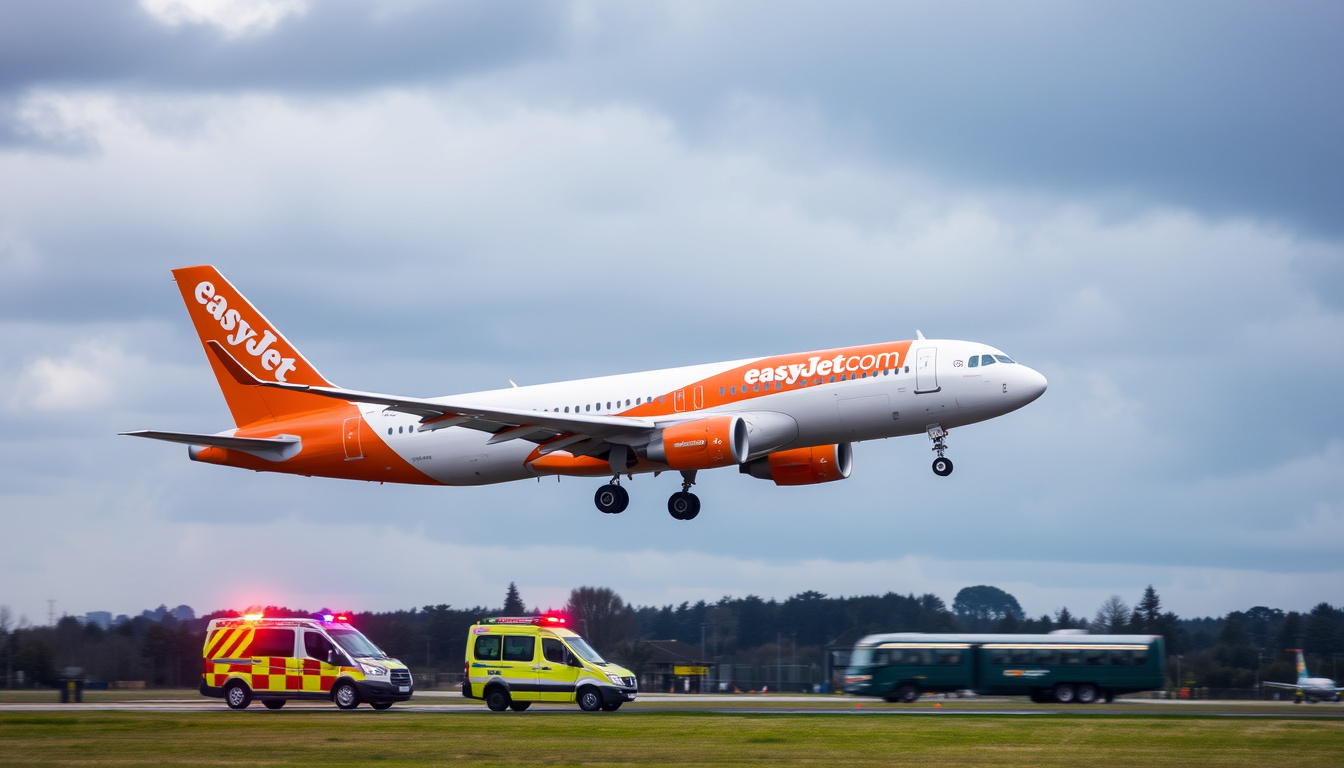
An easyJet aircraft operating flight U22768 from Nice, France to Bristol declared an emergency and diverted to London Gatwick Airport on 14 July 2025. The Airbus A320, registered G-EZPB, squawked 7700—the international emergency code—while flying over the English Channel. The aircraft landed safely on runway 26L at Gatwick and taxied to gate 574. According to information provided by easyJet to aviation news outlet AirLive, a medical situation on board prompted the emergency declaration. Passengers were transported to their originally intended destination following the diversion.
The flight had departed Nice Airport approximately one hour behind schedule at 17:44 CEST. Emergency services at Gatwick were apparently prepared for the aircraft’s arrival, though official reports did not specify whether paramedics or fire crews were specifically mobilised. The incident highlights how airlines and airports coordinate rapid responses when passengers experience medical emergencies mid-flight. The aviation industry treats such situations with extreme caution, with pilots empowered to declare emergencies and divert immediately whenever a passenger’s health may be at risk.
Those seeking current information about this specific flight will find that U22768 has already completed its journey—landing at Gatwick on 14 July 2025. However, for passengers affected by diversions on any route, or individuals tracking active easyJet flights, several tracking tools and contact methods exist to stay informed about flight status and rebooking options.
What Happened with easyJet U22768 Emergency Diversion to Gatwick Today?
On the afternoon of 14 July 2025, easyJet flight U22768 (also identified as EZY2768) was operating its scheduled service from Nice, France to Bristol, United Kingdom. The Airbus A320 aircraft entered UK airspace over the English Channel when the crew made the decision to divert. The pilots transmitted the 7700 squawk code—the universal transponder signal indicating a declared emergency—to air traffic control. This code immediately alerted controllers at multiple facilities and prompted coordination with emergency services at the nearest suitable airport: London Gatwick.
The aircraft touched down on runway 26L at Gatwick Airport at approximately 18:26 BST. After landing, the Airbus taxied to gate 574 in the South Terminal. easyJet confirmed to AirLive that a medical situation involving a passenger had triggered the emergency declaration. The airline did not disclose details about the nature of the medical emergency, citing passenger privacy. Fire crews and paramedics in the United Kingdom are typically placed on standby when aircraft squawk 7700, though official Gatwick communications did not detail the specific emergency response deployed for this arrival.
Flight tracking data shows the aircraft registration as G-EZPB, a standard identifier that allows aviation enthusiasts and passengers to research the specific aircraft’s service history. easyJet operates a large fleet of Airbus A320 and A321neo aircraft across European routes, with the Nice to Bristol service forming part of the carrier’s regional network connecting UK cities with continental European holiday destinations.
Aircraft crews can declare emergencies for various reasons, including medical situations involving passengers, technical malfunctions, fuel emergencies, or weather-related safety concerns. International aviation regulations require pilots to prioritise passenger safety, meaning diversions to the nearest suitable airport occur whenever the captain determines they are necessary. Medical emergencies account for a significant portion of in-flight emergencies reported to aviation authorities annually.
Key Facts About the easyJet U22768 Diversion
- The aircraft involved was an Airbus A320 with registration G-EZPB
- The flight departed Nice approximately one hour late at 17:44 CEST
- Pilots transmitted emergency code 7700 while over the English Channel
- The diversion was initiated due to a reported medical situation on board
- easyJet officially confirmed the medical emergency to aviation news outlet AirLive
- After landing, the aircraft taxied to gate 574 in Gatwick’s South Terminal
| Fact | Details |
|---|---|
| Origin | Nice, France (Côte d’Azur Airport) |
| Destination | Bristol, United Kingdom |
| Aircraft Type | Airbus A320 |
| Registration | G-EZPB |
| Flight ID | U22768 / EZY2768 |
| Diversion Airport | London Gatwick (LGW) |
| Landing Runway | 26L |
| Arrival Gate | 574 (South Terminal) |
| Scheduled Departure | 16:44 CEST (approximately) |
| Actual Departure | 17:44 CEST |
| Landing Time | 18:26 BST (approximately) |
| Reported Reason | Medical situation on board |
What is the Current Status of EZY2768 Flight from Nice to Bristol?
Flight U22768/EZY2768 completed its journey on 14 July 2025. The aircraft landed safely at London Gatwick Airport following the medical emergency, and passengers were subsequently transported to Bristol via alternative arrangements managed by easyJet. This specific flight number is no longer active, meaning those searching for current status information for “U22768 today” will not find an ongoing journey. The incident occurred on a single date and has been fully resolved.
For passengers wishing to track easyJet flights on the Nice to Bristol route or any other services, the airline operates an official flight tracker available on the easyJet website. This tool provides real-time position data for active flights, including estimated arrival times, current altitude, and any delays. Third-party platforms such as Flightradar24 also archive historical flight data and offer live tracking for aircraft currently in the air.
Passengers who experience flight diversions typically have several options depending on the circumstances. When a flight diverts due to a medical emergency, airlines generally assist affected passengers with rebooking to their intended destination at no additional cost. Documentation from the airline explaining the delay may also be useful for travellers requiring proof for insurance claims or employers.
Real-time flight tracking data is available through easyJet’s official tracker, Flightradar24, and FlightAware. These platforms update continuously and can show whether a flight is airborne, on the ground, or scheduled. Searching by flight number (U22768 or EZY2768) or route (Nice to Bristol) will yield current information for active services on that route.
How Diversions Affect Passenger Journeys
When an aircraft diverts to an airport other than its destination, passengers do not automatically continue to their planned endpoint. In the case of U22768, easyJet coordinated transport from Gatwick to Bristol for those whose journey was interrupted. The specific arrangements—whether coach transfer, rebooked flights, or hotel accommodation for overnight delays—would have been communicated to passengers by easyJet ground staff at Gatwick Airport.
EU flight compensation regulations (EC 261) provide certain protections for passengers affected by flight disruptions, though diverted flights occupy a complex category. Passengers who wish to make claims for delays, cancellations, or expenses incurred due to diversions should document all receipts and retain written confirmation from the airline detailing the nature of the disruption.
Tracking This Route Going Forward
The Nice to Bristol route remains part of easyJet’s scheduled services, with flights operating multiple times per week during the summer season. Travellers planning journeys on this route can monitor upcoming flight schedules through Gatwick Airport’s official website or the easyJet booking platform. FlightAware and Flightradar24 both archive historical flight data, meaning U22768 from 14 July 2025 remains searchable in their databases for those researching the incident.
How to Contact easyJet in Case of Emergency?
For passengers currently experiencing issues with easyJet flights—whether affected by a diversion like U22768 or facing other disruptions—multiple contact channels exist. The airline operates a 24-hour customer service line, though wait times may be significant during major disruption events. The official easyJet website provides options to manage bookings, request callbacks, and access live chat support. Social media teams also respond to direct messages and public mentions, often providing faster responses than telephone support during active incidents.
Passengers with medical emergencies during travel should alert cabin crew immediately. The crew is trained to provide initial medical assistance, including using onboard defibrillators and first aid equipment. Cabin crew can also communicate with the pilot, who may decide to divert if a passenger requires hospital-level care. In cases where passengers become unwell after landing, airport medical services are available at all major UK airports, including Gatwick.
For travellers concerned about potential disruptions to upcoming bookings, purchasing travel insurance with appropriate coverage is strongly recommended. Comprehensive policies typically cover expenses incurred due to flight diversions, including accommodation, meals, and rebooking costs. Those with pre-existing medical conditions should ensure their policy explicitly covers any conditions relevant to their health profile.
Emergency Contact Numbers for easyJet
- UK general enquiries: Available through the easyJet website contact section
- For passengers currently at an airport: speak directly to easyJet ground staff at the service desk
- Medical emergencies: alert cabin crew immediately during flight or airport staff upon landing
- Flight disruption claims: accessible via the easyJet customer relations portal online
Passenger Rights During Diversions
Aviation regulations establish certain obligations for airlines when flights divert. Passengers are entitled to refreshments, communication facilities, and accommodation if overnight stays become necessary. The specific entitlements depend on the reason for diversion—technical issues or crew unavailability generate stronger passenger protections than weather-related diversions. Medical emergencies fall into a grey area, as the airline is not considered to have caused the disruption.
Those affected by diversions who incur expenses should retain all receipts and submit claims to their travel insurance provider in the first instance. Airlines may offer goodwill gestures such as travel vouchers or seat upgrades following diversions, though these are discretionary rather than legally mandated in medical emergency situations.
Timeline of the easyJet U22768 Emergency Diversion
The following chronological sequence reconstructs the key moments of the easyJet U22768 incident based on available flight tracking data and reports from aviation news sources.
- Approximately 16:44 CEST: Original scheduled departure time from Nice Airport (Côte d’Azur).
- 17:44 CEST: Flight U22768 departs Nice Airport, running approximately one hour behind schedule.
- Over the English Channel: At some point during the crossing of the Channel, cabin crew identify a passenger requiring medical attention.
- Emergency declaration: The flight crew transmits the 7700 emergency code to air traffic control, indicating a declared emergency aboard the aircraft.
- Air traffic coordination: Controllers at Swanwick (UK en-route centre) and potentially other facilities coordinate the diversion, directing the aircraft toward London Gatwick.
- 18:26 BST: Airbus A320 G-EZPB touches down on runway 26L at London Gatwick Airport.
- Post-landing: The aircraft taxis to gate 574 in the South Terminal. easyJet confirms a medical situation on board prompted the diversion.
- Passenger care: Affected passengers receive assistance from crew and ground staff. easyJet organises onward transport to Bristol.
This timeline reflects the sequence of events as reported by AirLive and consistent with standard aviation protocols for in-flight emergencies. Times are approximate based on available reports and may not represent exact moments of each event. Norwegian Air Sweden halpalentoyhtiö on ruotsalainen tytäryhtiö, ja voit lukea lisää sen toiminnasta Norwegian Air Sweden halpalentoyhtiö.
What We Know—and What Remains Unclear
Investigative reporting and source verification require distinguishing between confirmed facts and information that has been reported but not independently verified. The following analysis separates established information from areas where uncertainty persists.
| Established Information | Information That Remains Unclear |
|---|---|
| Flight U22768 diverted from Nice to Bristol route to London Gatwick | The specific medical condition affecting the passenger |
| Airbus A320 registration G-EZPB was the aircraft involved | Whether additional emergency services were specifically deployed |
| Emergency code 7700 was transmitted by the crew | The identity or demographic details of the affected passenger |
| Landing occurred on runway 26L at approximately 18:26 BST | Whether the diverted passenger required hospitalisation after landing |
| easyJet confirmed a medical situation on board prompted the diversion | How many other passengers were affected by the diversion (beyond the person requiring medical attention) |
| The flight taxied to gate 574 in Gatwick South Terminal | Whether other flights were delayed as a result of the emergency response |
| Passengers were transported onward to Bristol | The specific arrangements made for onward transport |
All information in this article derives from reports published on 14 July 2025 by aviation news sources and airline communications. Details regarding passenger health, medical response specifics, and operational impacts on Gatwick Airport remain unreported. This article does not speculate on the nature of the medical emergency and respects passenger privacy regarding health information.
The Context: Why Medical Diversions Happen in Aviation
Medical diversions are relatively common occurrences in commercial aviation. Data from aviation safety organisations indicates that airlines report hundreds of in-flight medical emergencies annually across European networks. Most involve passenger illnesses such as cardiac events, respiratory distress, or diabetic emergencies. Cabin crews are trained to handle initial response, including administering first aid, using onboard medical equipment such as automated external defibrillators (AEDs), and consulting with ground-based medical support services available to pilots.
The decision to divert rests with the aircraft captain, who weighs multiple factors including the severity of the medical situation, proximity to suitable airports with adequate medical facilities, fuel remaining, and weather conditions at potential diversion airports. London Gatwick is well-equipped for handling medical diversions, with direct access to emergency services and proximity to hospital facilities in the Greater London area.
From a safety perspective, emergency diversions represent the aviation system’s correct functioning—prioritising human welfare over schedule convenience. The UK Civil Aviation Authority oversees standards for airline medical preparedness and emergency response protocols. Incidents like the U22768 diversion, while disruptive for passengers, demonstrate that established procedures for managing in-flight emergencies are operational throughout the network.
Sources and Official Statements
The primary source for this incident is AirLive’s live coverage of the emergency declaration and diversion. The aviation news outlet reported the emergency as it unfolded, providing updates including the landing time, runway information, and confirmation from easyJet regarding the medical nature of the emergency.
“easyJet U22768 from Nice to Bristol is declaring an emergency and diverting to Gatwick.”
— AirLive.net, 14 July 2025
“The aircraft landed on runway 26L and taxied to gate 574. easyJet has reported to AirLive that a medical situation on board prompted the emergency declaration.”
— AirLive.net, updated report
Secondary sources referenced in this article include the easyJet flight tracker, Flightradar24’s flight data archive, and Gatwick Airport’s official website. The UK Civil Aviation Authority website provides context on regulatory oversight of airline emergency procedures. No independent verification beyond these published sources has been possible given the nature of the event.
Summary
easyJet flight U22768 (EZY2768) diverted safely to London Gatwick Airport on 14 July 2025 after the crew declared an emergency due to a medical situation involving a passenger. The Airbus A320 landed on runway 26L and taxied to gate 574. easyJet confirmed the medical nature of the emergency to aviation news outlet AirLive. Passengers were subsequently transported to their intended destination of Bristol. This specific flight has completed its journey, and those seeking current flight information should use the easyJet flight tracker for active services. For passengers affected by flight disruptions, comprehensive travel insurance coverage is recommended to protect against unexpected expenses arising from diversions or other operational disruptions.
Frequently Asked Questions
What happened to easyJet flight U22768?
easyJet flight U22768 from Nice to Bristol declared an emergency and diverted to London Gatwick on 14 July 2025 due to a medical situation on board. The aircraft landed safely and taxied to gate 574.
Why did flight U22768 divert to Gatwick?
easyJet confirmed that a medical situation involving a passenger prompted the emergency declaration and diversion. The specific nature of the medical emergency was not disclosed, in line with passenger privacy protections.
What is the current status of flight EZY2768?
Flight U22768/EZY2768 has completed its journey. The aircraft landed at Gatwick on 14 July 2025. To track current easyJet flights, visit the easyJet flight tracker or Flightradar24.
How can I track easyJet flights in real time?
The easyJet flight tracker on their official website provides live updates for active flights. Third-party platforms such as Flightradar24 and FlightAware also offer real-time tracking and historical flight data.
How do I contact easyJet during a flight emergency?
During a flight emergency, passengers should alert cabin crew immediately. Ground staff at airports can also assist passengers requiring support during or after diversions.
What are passenger rights during a flight diversion?
Passengers affected by diversions may be entitled to refreshments, communication facilities, and accommodation depending on the circumstances. Compensation regulations vary based on the reason for diversion. Retaining receipts is essential for claiming expenses.
Does travel insurance cover flight diversions?
Comprehensive travel insurance policies typically cover expenses incurred due to flight diversions, including meals, accommodation, and rebooking costs. Policies vary, so passengers should review their specific coverage details.
What happens to passengers when a flight diverts?
Airlines typically arrange alternative transport to the passenger’s original destination. In the case of U22768, easyJet arranged onward transport to Bristol from Gatwick. Passengers should contact airline staff at the diversion airport for assistance.
Can I check Gatwick Airport arrivals for diverted flights?
Gatwick Airport’s official website provides live arrivals information. However, diverted flights that land outside their normal schedule may not immediately appear in standard arrival displays. Direct contact with the airline provides the most reliable information.
Are medical diversions common on commercial flights?
Medical diversions occur regularly across commercial aviation networks. Cabin crews receive training to manage in-flight medical situations, and pilots may divert when passengers require hospital-level care that cannot be provided aboard the aircraft.

Oliver Arthur Morgan Harrison is a staff writer for StoryShift.uk, covering UK news, culture, politics and technology. He works under Editor-in-Chief Maarika Tamm and UK Managing Editor Oliver Grant, following the newsroom standards for sourcing, verification and fact-checking set out in our editorial policies.